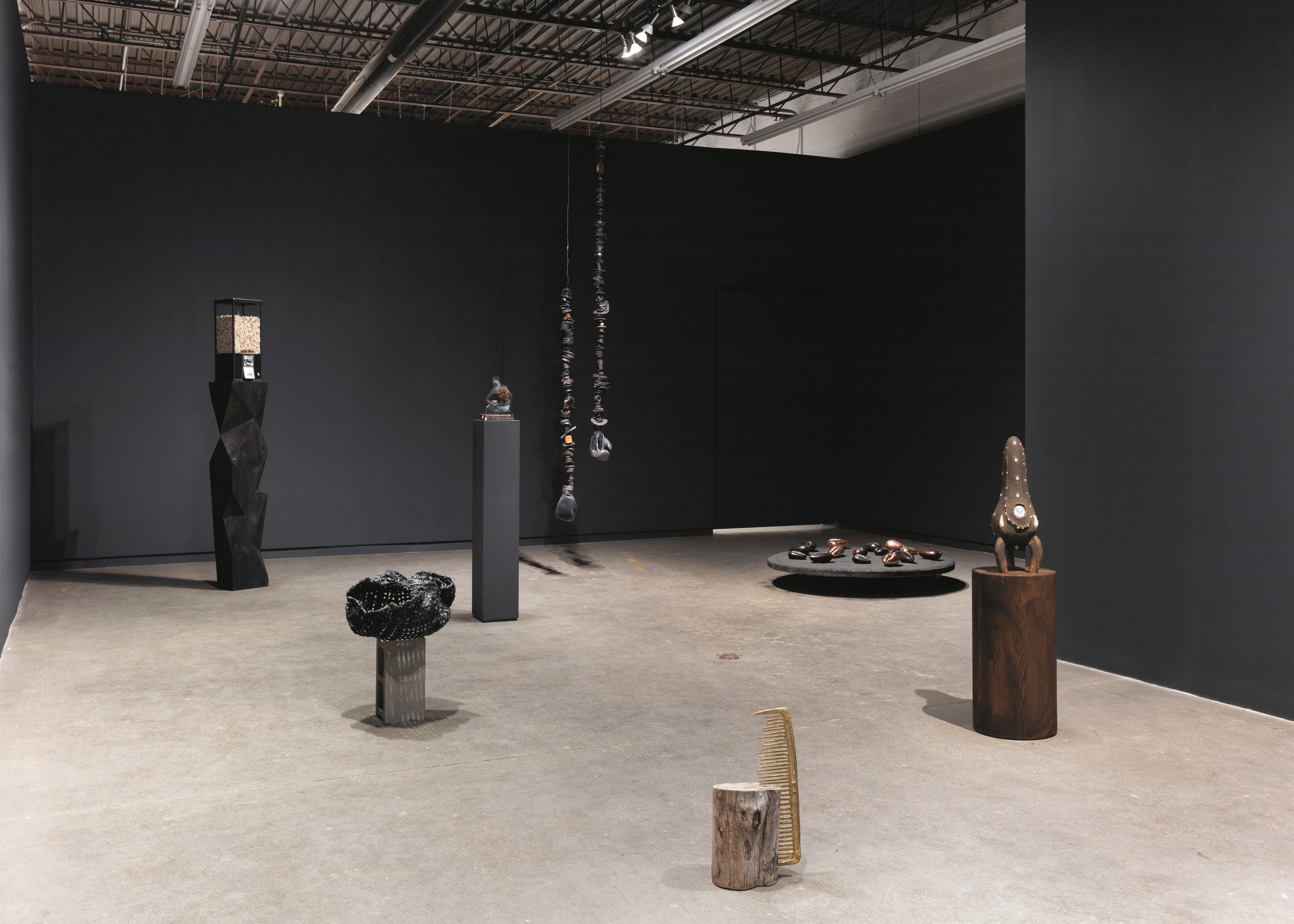
photo : © Gillian Wearing, courtesy of Maureen Paley, London
[En anglais]

The difference between the private and the public self has long been a source of fascination for Gillian Wearing, who has been making video and photography investigating the notion of identity for over twenty years. Best known for Signs that say what someone else wants you to say (1992 – 93), photographs of people in the street revealing their inner-most thoughts, she once summarized the drive behind her practice as an attempt “to find ways of discovering new things about people, and in the process discover more about myself.” The comprehensive survey of her work at the Whitechapel Gallery raises questions about how much an artist can achieve within this realm of investigation without becoming too self-referential or resorting to manipulative representations of others.
The exhibition is divided between two floors, marking a distinction between the more narrative works and those that derive from portraiture. Starting with the iconic video Dancing in Peckham only seems appropriate. It shows the artist shedding her own inhibitions to dance in a shopping cen-tre, to the indifference of bystanders. Unadulterated moments of release are not commonly observed in the British public realm and, although this one is scripted, there is an uncomfortable tension involved in the pull that such an unusual sight exerts. It’s akin to watching someone being publi-cally humiliated, but it’s unclear whether it’s the artist or the unsuspecting audience who is targeted. The other video works range from the playful mimicry of 10-16, in which adults lip-synch the voices of children, to the heart-rending Prelude showing images of a woman who has passed away since the film was made. The grainy, expressive footage is accompanied by a voice recording of her sister discussing the aftermath of her death.
Pour avoir accès à ce contenu, vous devez vous connecter ! C’est gratuit et sans achat ultérieur requis. Créez un compte ou connectez-vous :
À noter que les Éditoriaux, les Résidences numériques, les Capsules et les Archives sont toujours libres d’accès.
Vous en voulez plus ? Certains contenus sont offerts avec un abonnement Numérique ou Premium seulement (Dossiers, Hors-Dossiers, Portfolios, Chroniques).