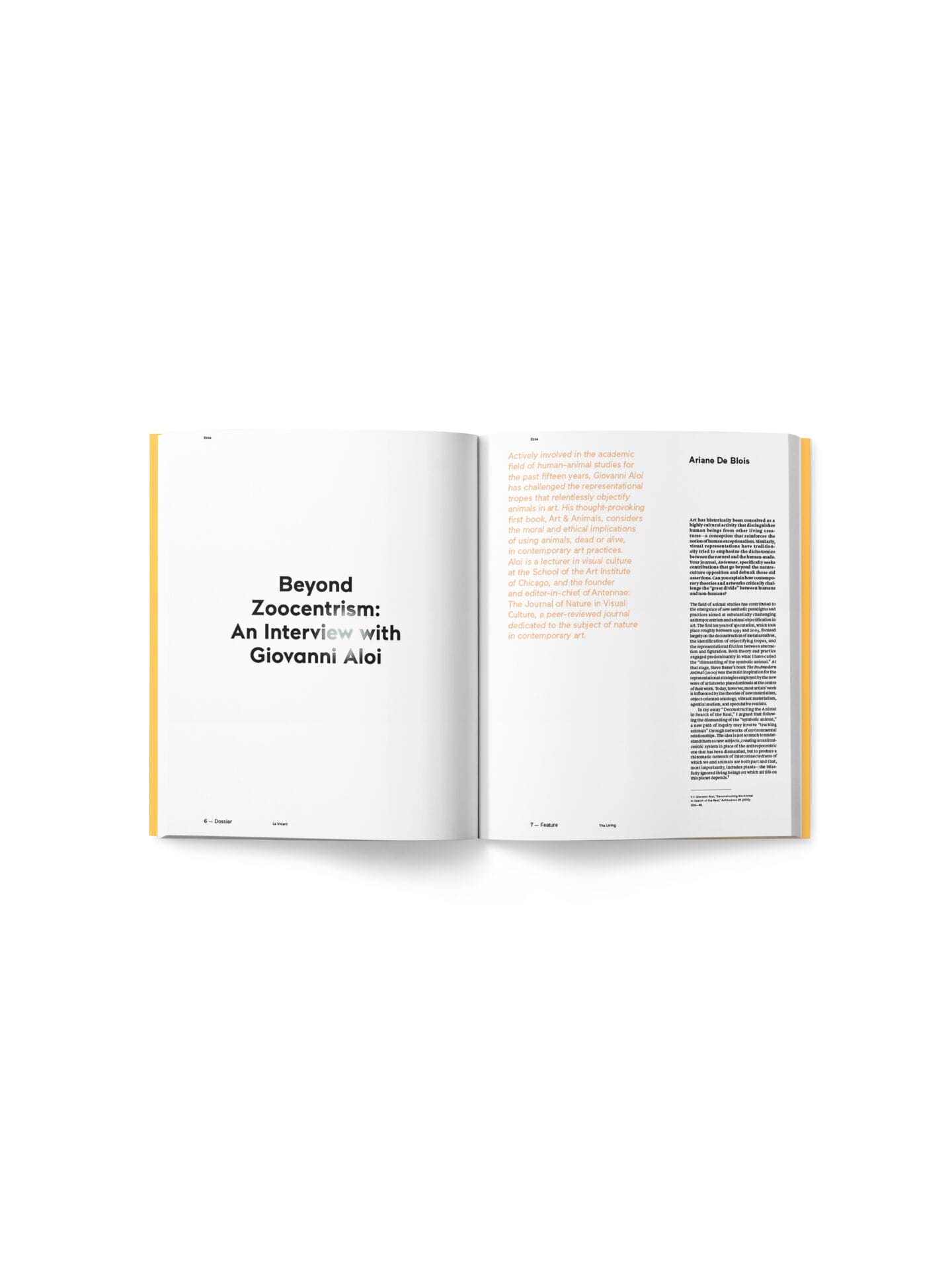
Beyond Zoocentricism : An Interview with Giovanni Aloi
Ariane De Blois : Art has historically been conceived as a highly cultural activity that distinguishes human beings from other living creatures — a conception that reinforces the notion of human exceptionalism. Similarly, visual representations have traditionally tried to emphasize the dichotomies between the natural and the human-made. Your journal, Antennae, specifically seeks contributions that go beyond the nature-culture opposition and debunk those old assertions. Can you explain how contemporary theories and artworks critically challenge the “great divide” between humans and non-humans?
This content is available with a Digital or Premium subscription only. Subscribe to read the full text and access all our Features, Off-Features, Portfolios, and Columns!
Already have a Digital or Premium subscription?
Don’t want to subscribe? Additional content is available with an Esse account. It’s free and no purchase will ever be required. Create an account or log in:
Just want this one? Get instant access for $8.00.


