
photo : Guy L’Heureux, permission de | courtesy of the artist & Galerie René Blouin, Montréal
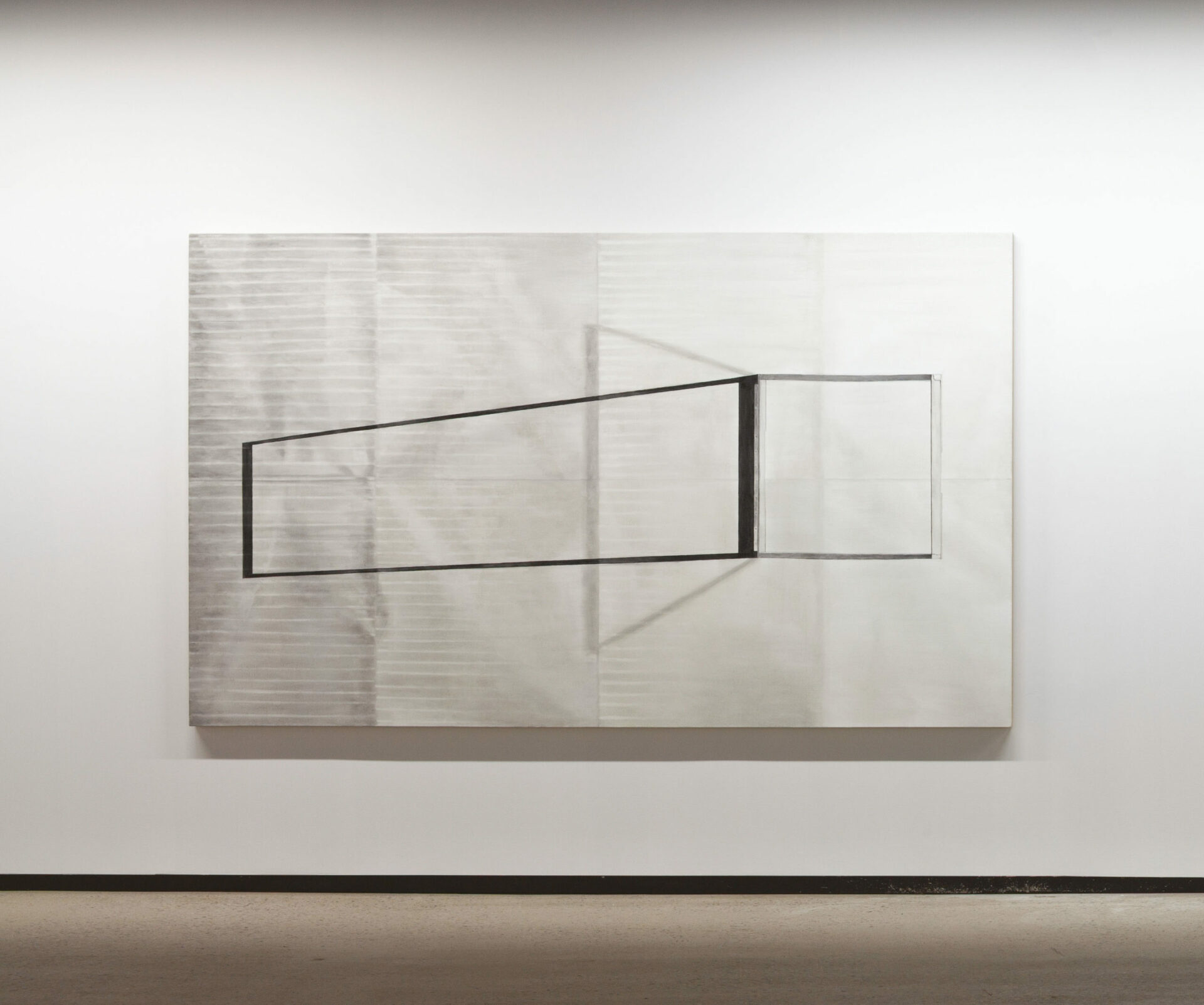
Modern Sundays, 2010. Exhibition view, Walter Phillips Gallery, “Perspective Correction Hinged, Corrected by the Lens Sigma DC 17-70 mm 1:2.8-4.5” and “Even Space Does Not Repeat”, 2011. Perspective Correction Hinged, Corrected by the Lens Sigma DC 17-70 mm 1:2.8-4.5, 2010.
photos : Guy L’Heureux, permission de | courtesy of the artist & Galerie René Blouin, Montréal
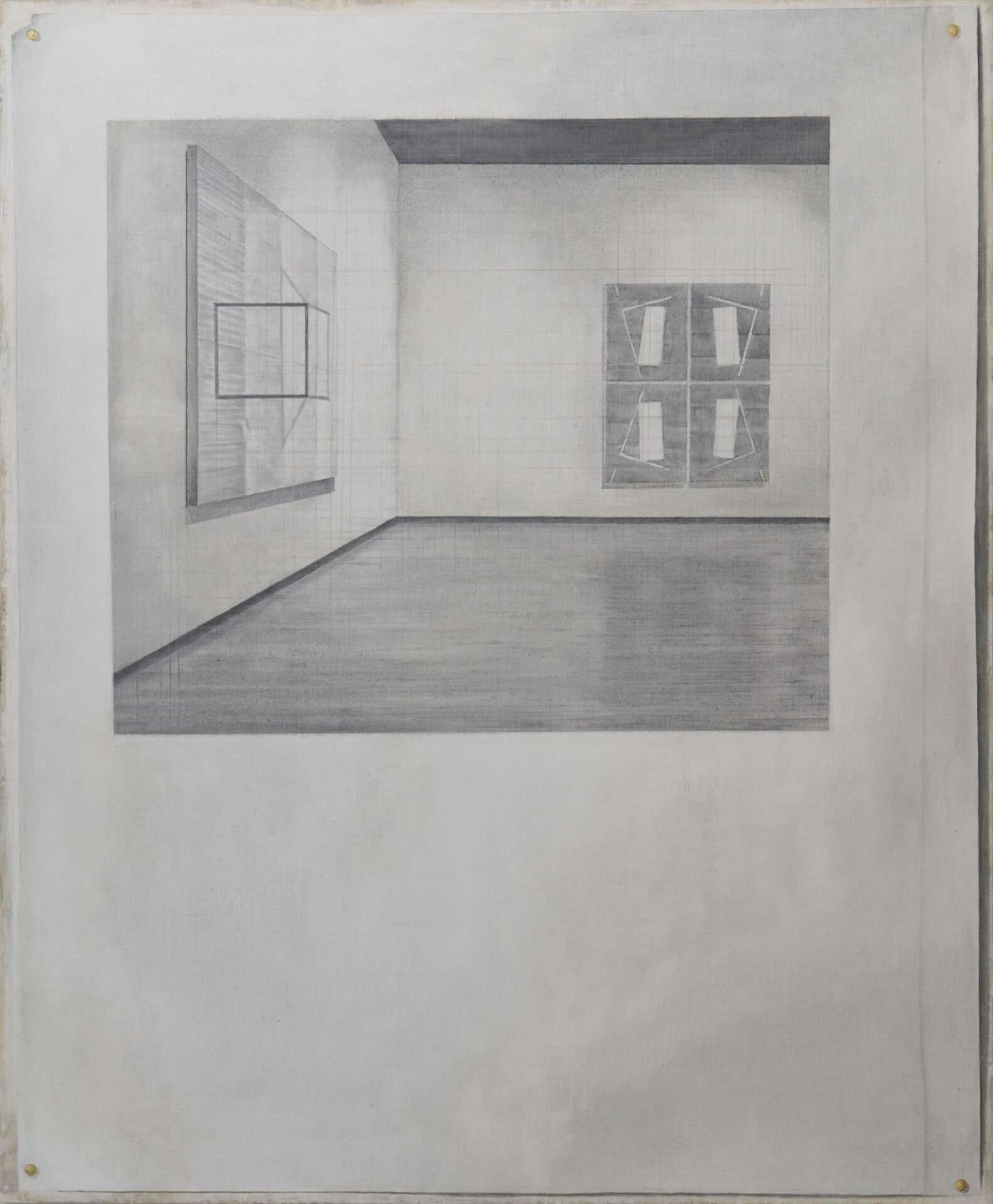
Arriving at painting having previously produced relational works, Anthony Burnham is still addressing issues of otherness and interdependence. His painting emerges from mutually supportive processes of sculpture, drawing, photography, and installation; it is the deceptively smooth surface of a heterogeneous artistic universe in which the elements and time collide, thus participating in “the same conversation.”1 1 - Interview with Oli Sorenson, “Painting Through Other Forms: In Conversation with Anthony Burnham.” M-kos. Accessed May 25, 2012. www.m-kos.net. If at first glance his painting seems conceptual, it is that it brings into intimate dialogue themodernist Idea of the autonomous painting, the painted embodiment of an artist’s idea, andthe world of ideas evoked by the black and white document. Yet, it is equally concrete, seeing that we — eyes, body, and neurons — are party to this indeed spatial and physical conversation, our perceptions put on alert, rendering every idea subject to material contingencies. Adding to the “layers” of projected objects and produced images is our ever-changing experience, a key element in this inseparable conception of painting. We no longer stand before what we see; we are in it, strangely at ease, as though the painted wall between the world of the image and ourselves had been lifted. In this sense, Burnham’s work is exemplary of an ongoing paradigmatic shift: painting today is resolutely connected, and it is in the vertiginous complexity of its artistic and social connections that sincere ideals resurface, even though they can henceforth only be articulated in relative terms.
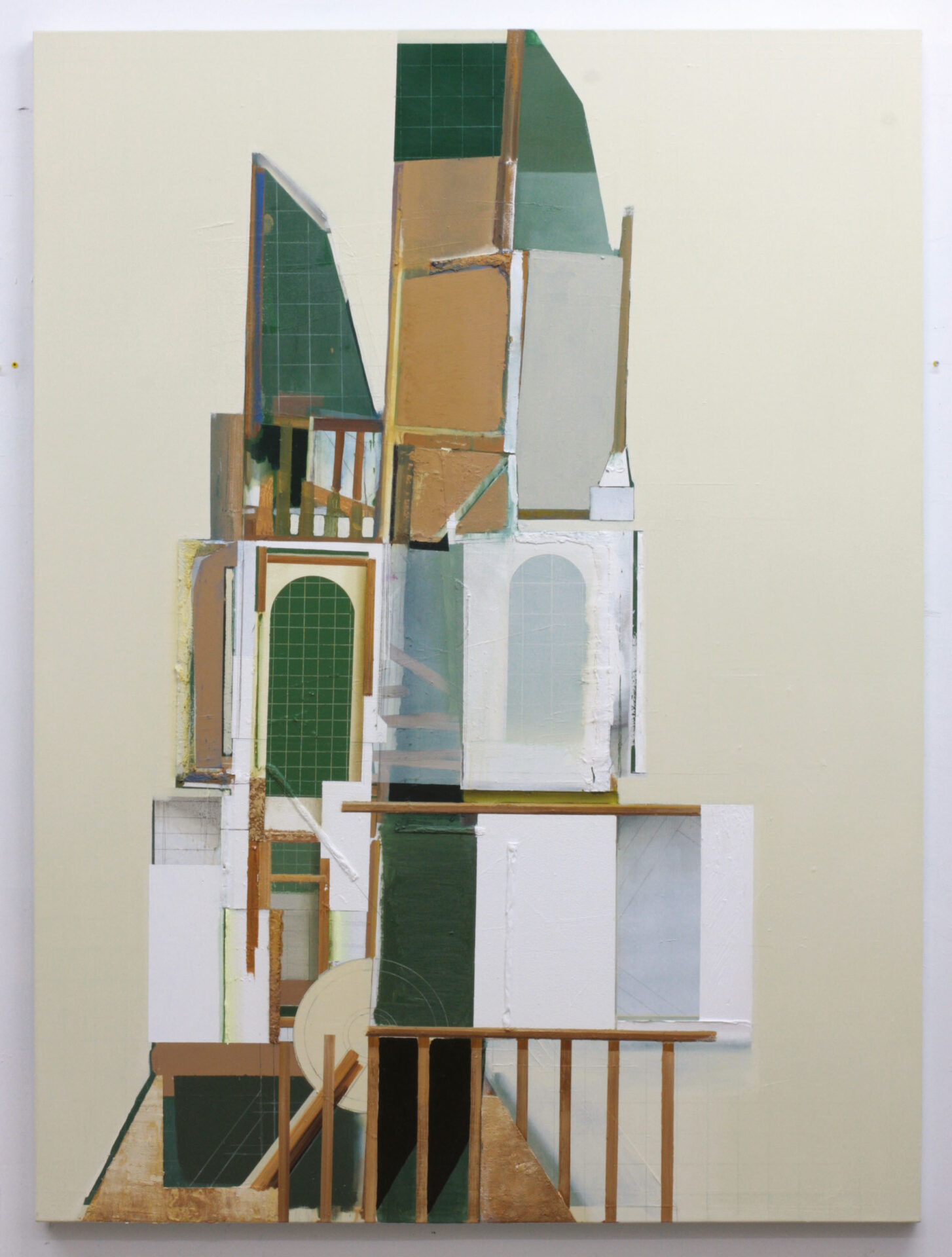
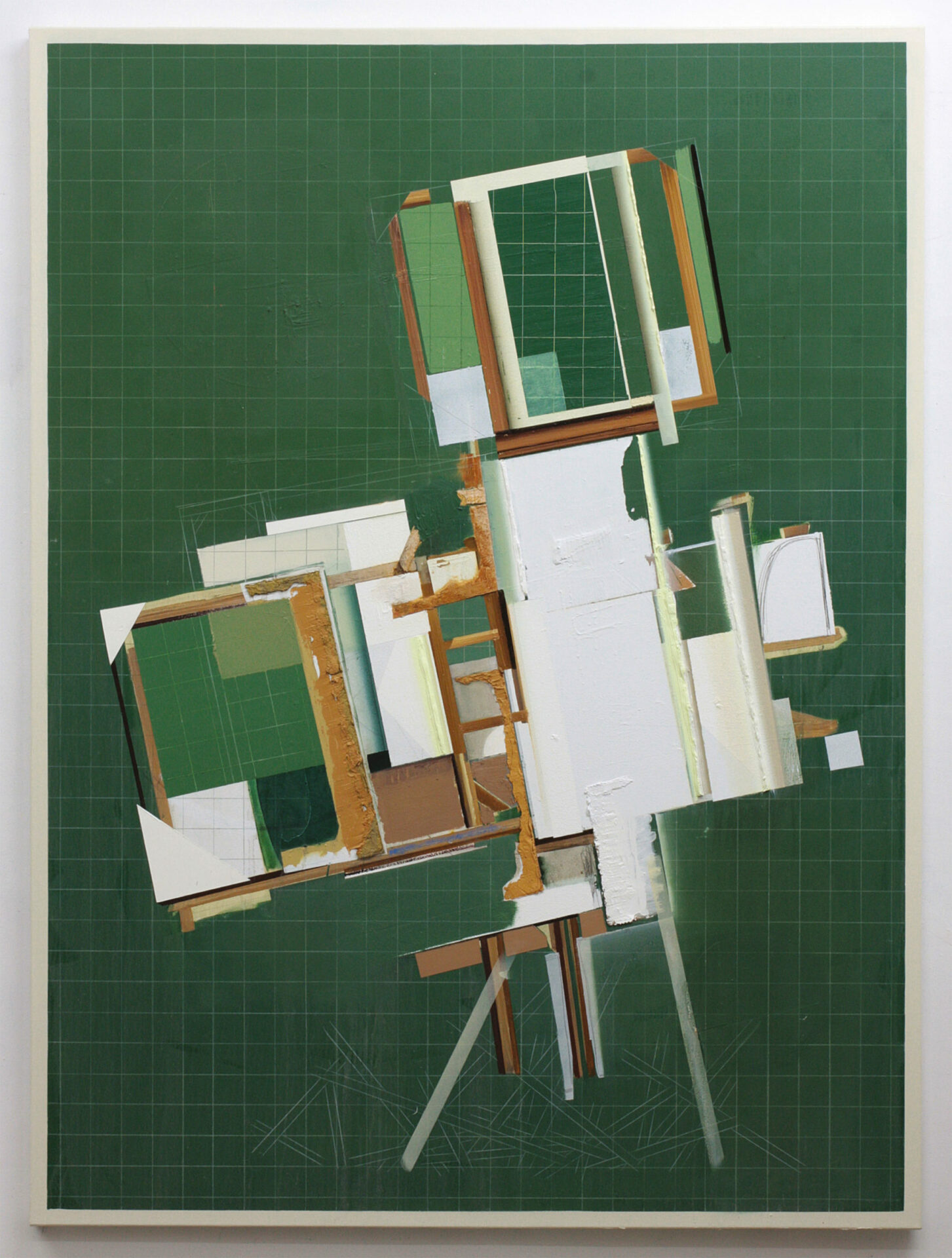
Contraption, 2012.
Spire, 2012.
Parabola, 2011.
photos : permission de | courtesy of the artist & Pierre-François Ouellette art contemporain, Montréal
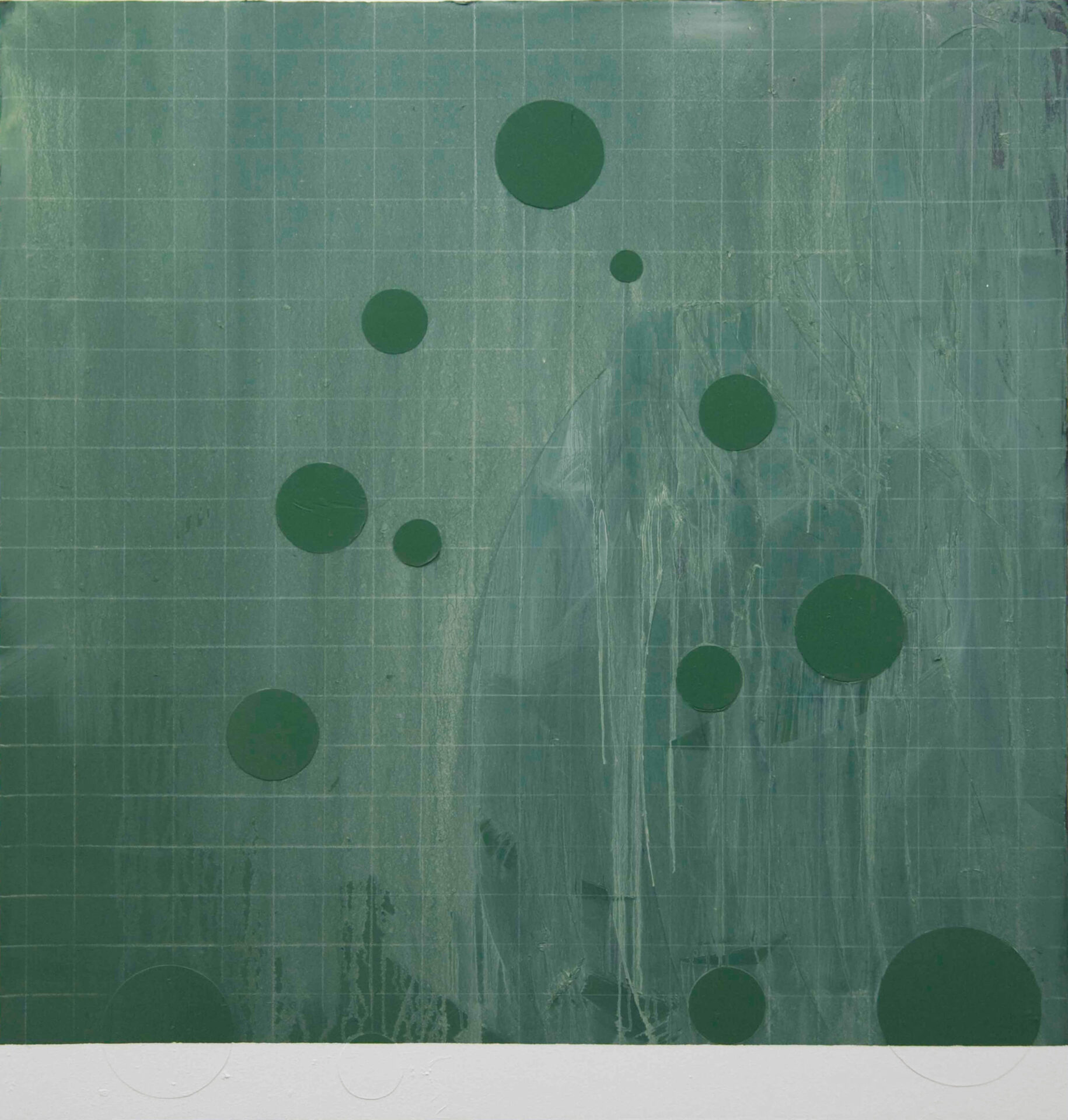
This opening up of painting is generally expressed by Dil Hildebrand through trompe-l’œil, which is “meant to draw you in — in a very physical way. . . . The trompe l’œil is like a hand gesturing out from within the painting to pull you in,”2 2 - Interview with Christine Redfern in Long Drop: The Paintings of Dil Hildebrand, (Victoria: Anteism Press, 2010), 50. as he explains. Here, the place to which this hand guides us is nowhere other than the place where the painting is created: a green surface for exploration evocative of the chalkboard and the cutting mat, a work table on which all the creative resources available to the artist are assembled — from the engineering of Leonardo da Vinci, to Constructivist visions, architectural projections, and modernist painting — and constructed from the simplest studio materials affixed with masking tape. Calling upon the leading ideals of Western tradition to better evaluate our current capacity for edification, these illusory makeshift structures in a sense point to our lot: to the humble yet ambitious stance of anyone who dares to tackle a problem, who endeavours to develop valuable theories — regardless of their fallibility, and who, for the benefit of others, is willing to expose less the final results than his very processes of trial, success, and error.
Fertilité 03, 2010.
Les Sinistrés, 2011.
Royaume 02, 2009.
photos : Éliane Excoffier, permission de l’artiste | courtesy of the artist
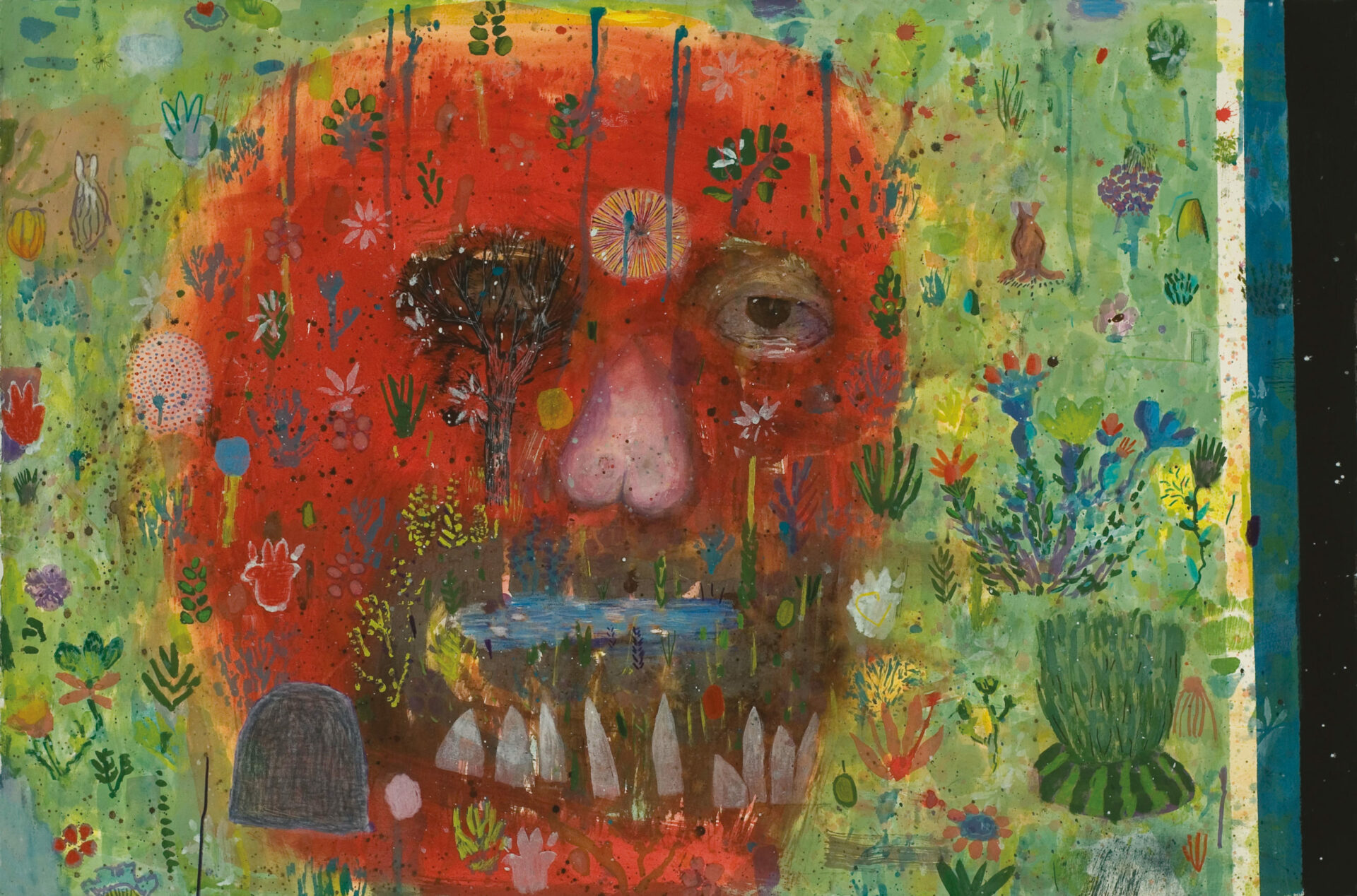
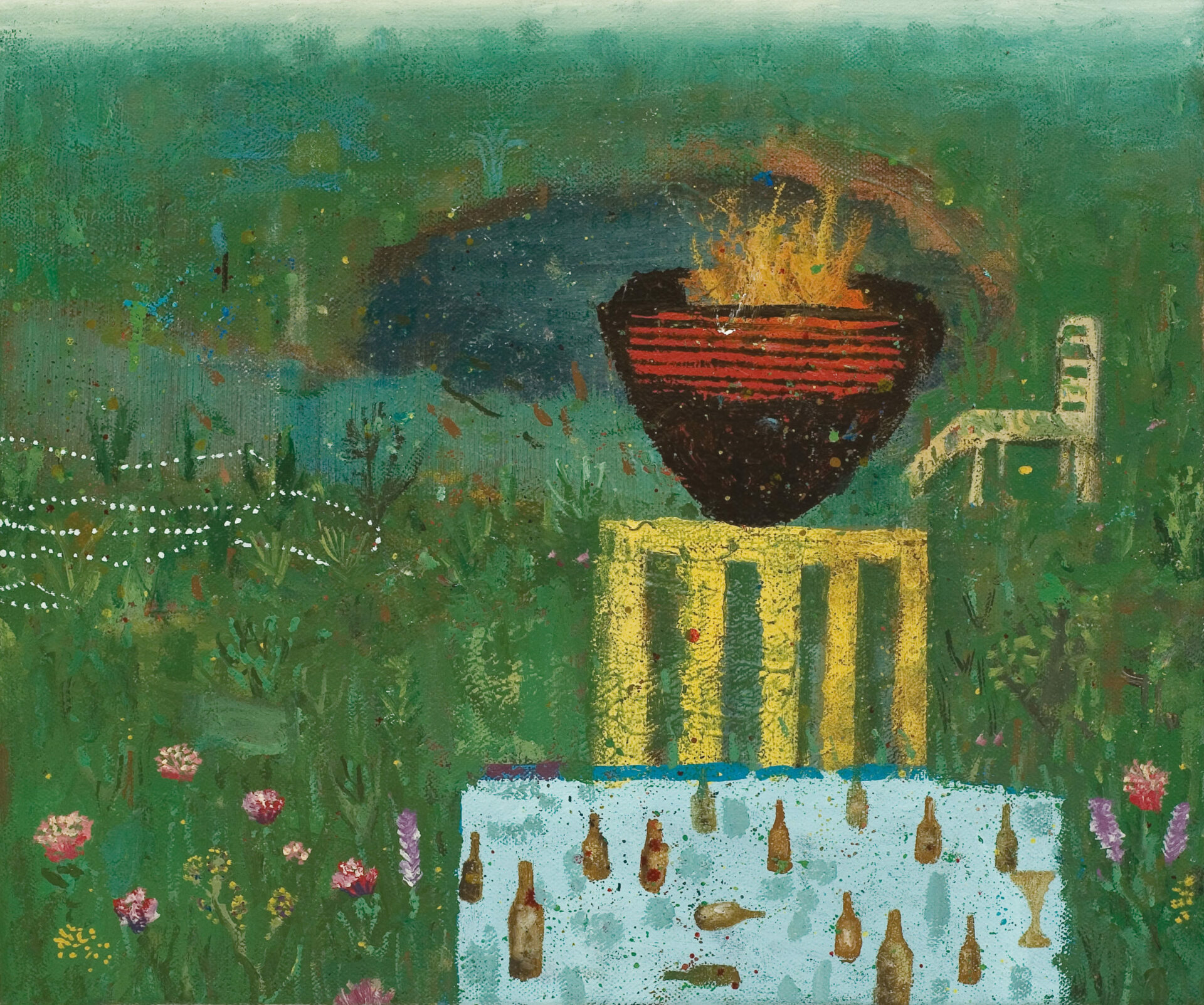
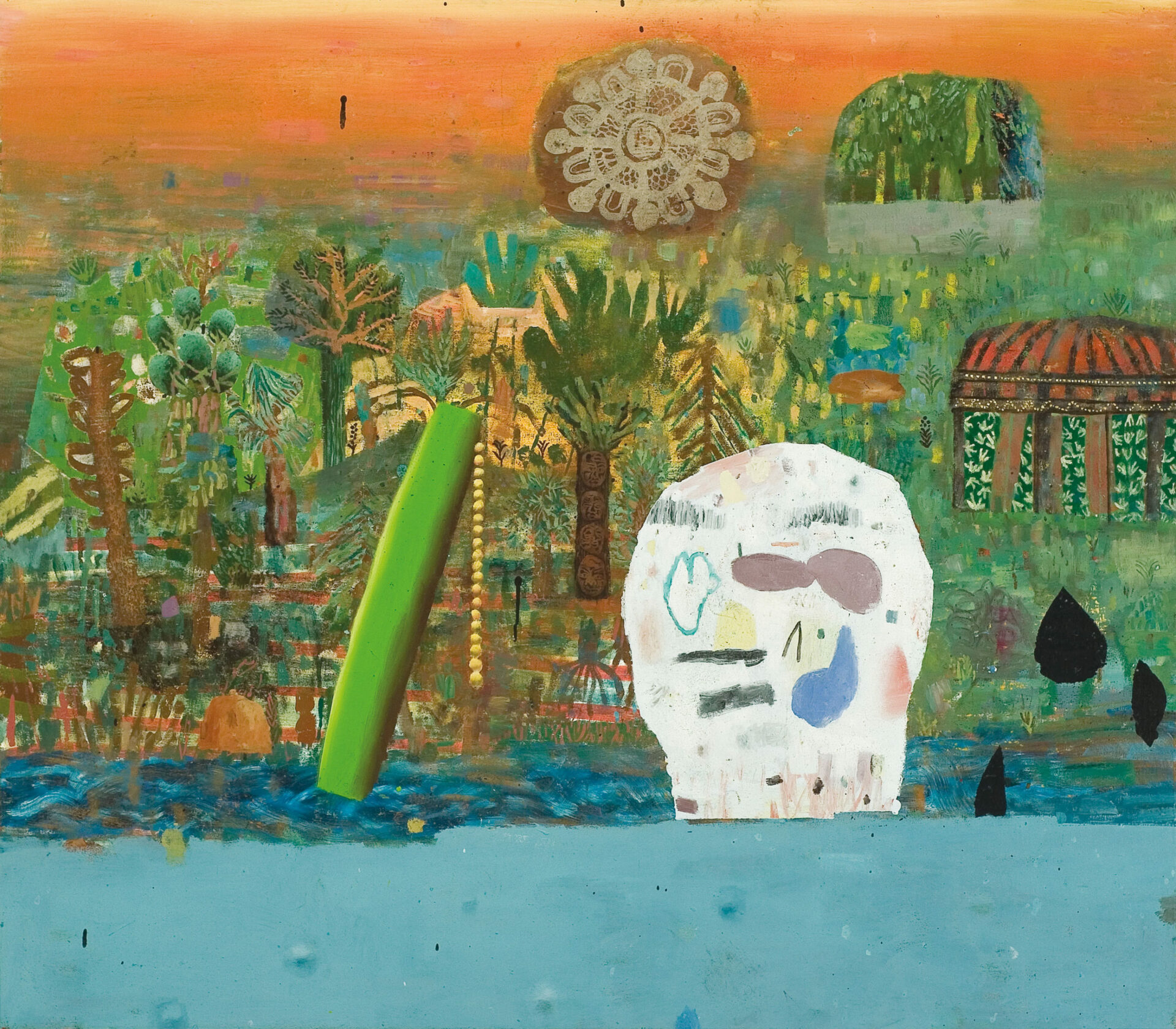
David Lafrance likewise insists that his scenes of a post-apocalyptic Eden derive from “an equally constructive and destructive process,”3 3 - Artist’s statement in David Lafrance: décoration du paysage, Drummondville, Galerie d’art de la Maison des arts Desjardins Drummondville, 2011. Own translation. that is to say from an artistic risk that remains inscribed in the very matter of the painting. For in his painting as well, the background bears a relation to the creative process. Often green, sometimes black, mauve, or midnight blue, it is without doubt the fertile and pulsating foundation of nature on which the artist gathers the recurrent symbols of his inner universe. “A weft of small structures, flowers, twigs, and heaps … organise the painting and desperately support the principal subjects,”4 4 - Ibid. Our translation. he explains. Yet this background without horizon is innocuous in appearance alone, for the ambiguous atmosphere of the scenes erected on it suggests that these principal subjects created by civilisation — enlightening and trivial alike — have perhaps already been engulfed by it, including our idealized conception of Nature. If Lafrance’s painting is indeed a place of refuge, it is not, however, a simple, idyllic retreat far removed from the real world and its threats. On the contrary, it offers a foreboding image of what grows there where everything has been annihilated in a vertiginous loss of meaning. And its latent eroticism may suggest to those who wish to find new meaning that they awaken their senses, that they become intimate with their own nature.
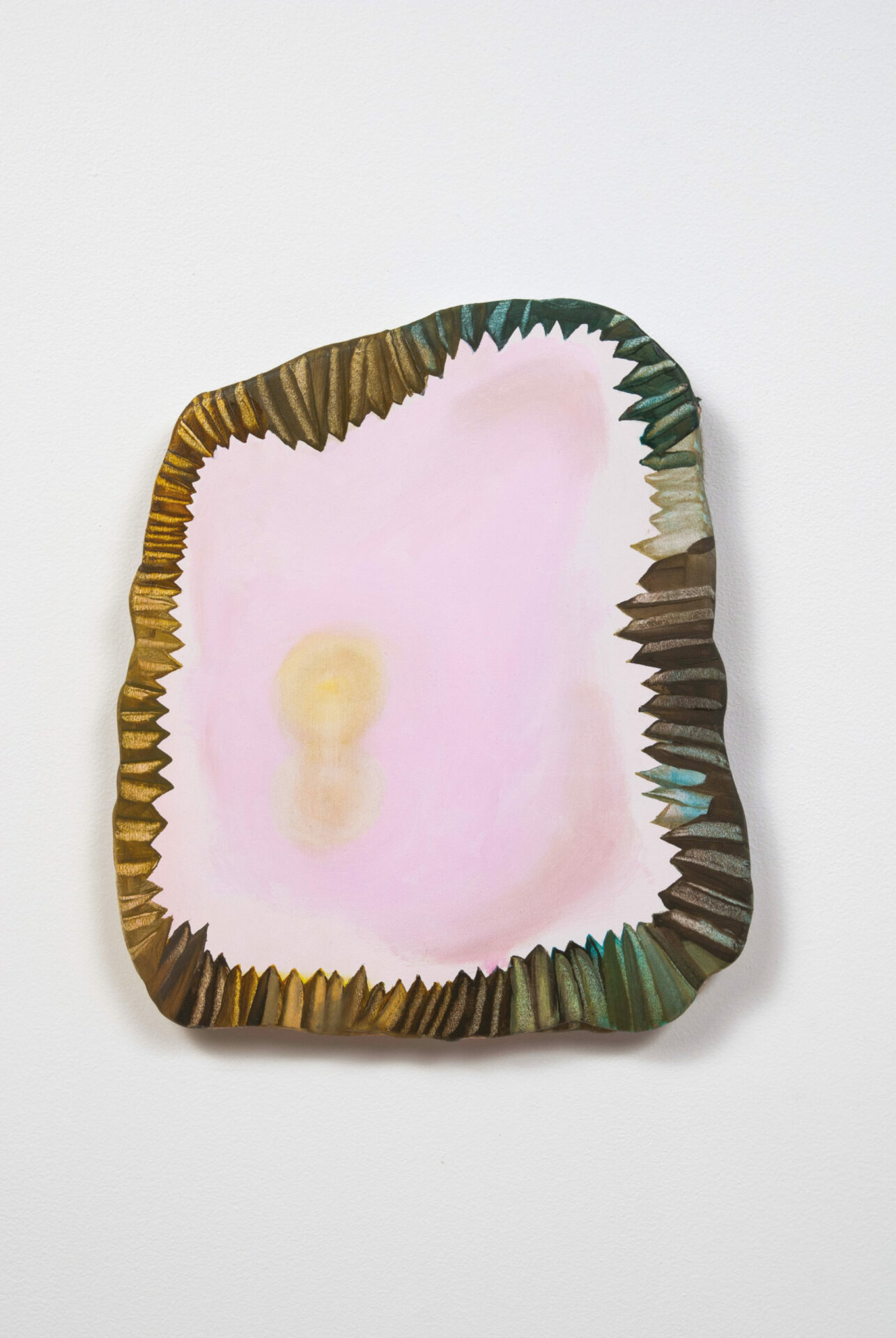
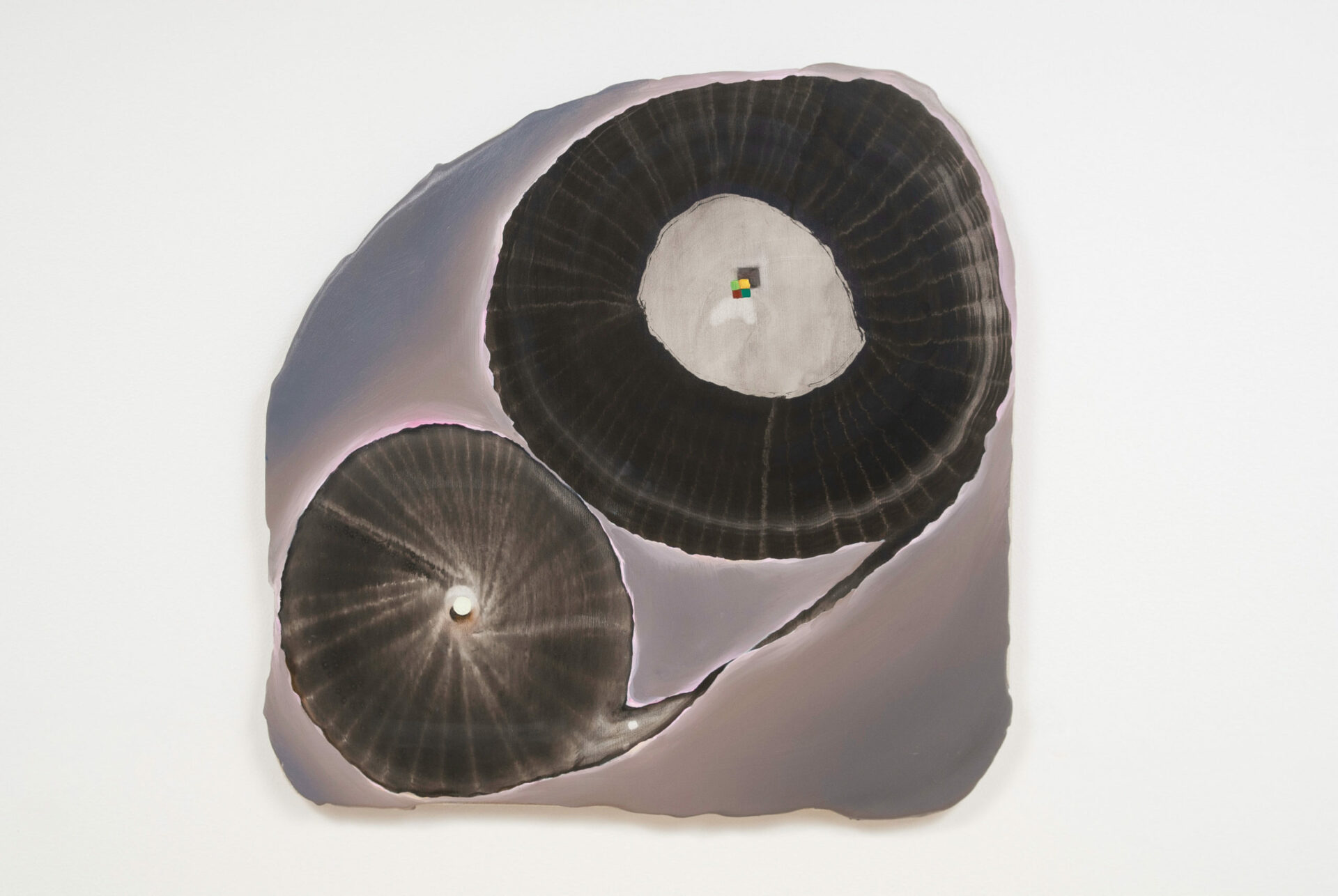
The Yoke, 2010.
The Mending, 2010.
First Blush, 2010.
photos : Éliane Excoffier, permission de | courtesy of the artist & Erin Stump Projects, Toronto
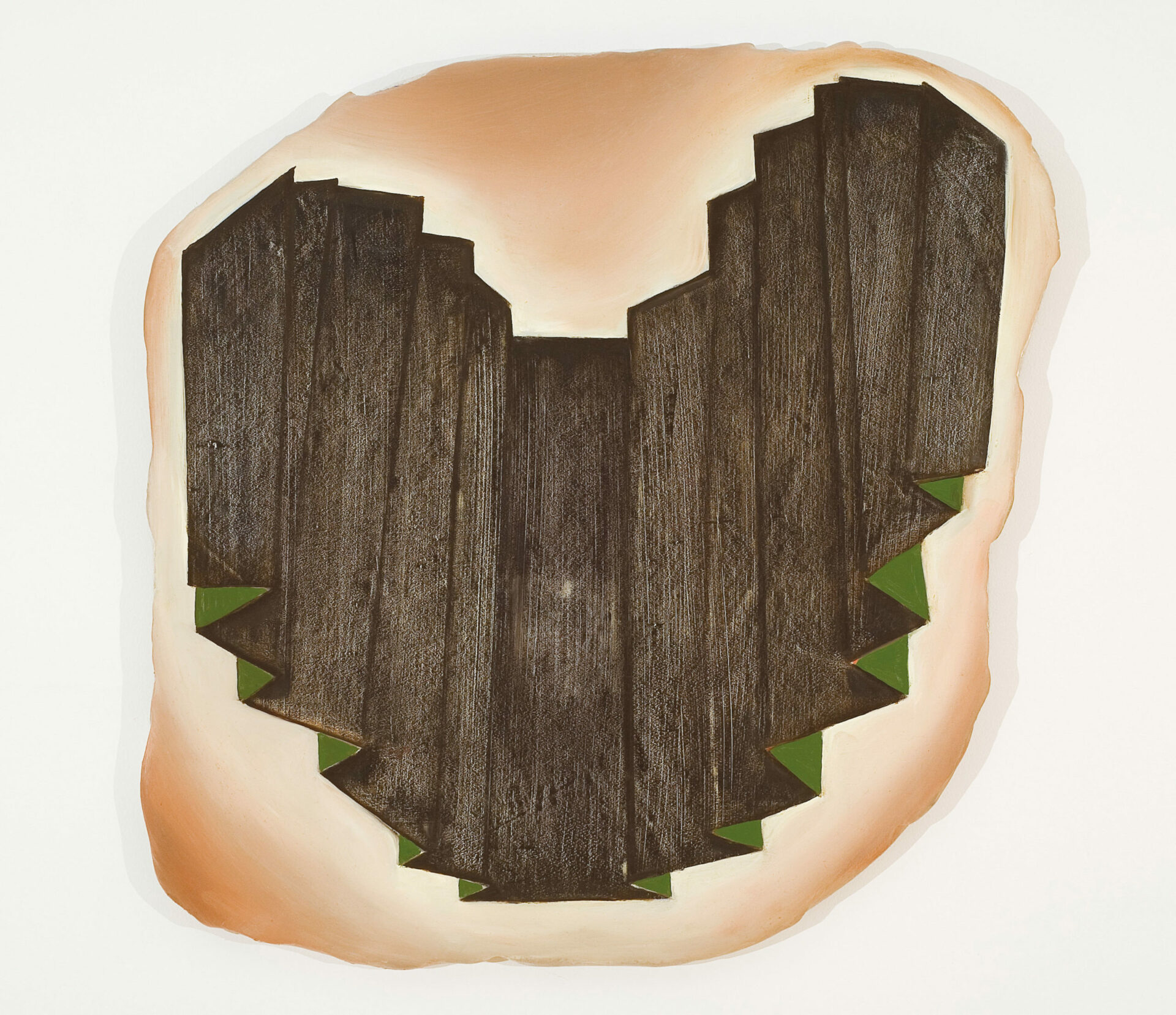
This perhaps explains why Beth Stuart so passionately digs for inner sensations and the texture of emotions, seeking an all the more proprioceptive manner to tap into what she calls “a sub-lingual level.”5 5 - Cited from “Artist of the Week: Beth Stuart” [interview], Chicago, LVL3. Accessed May 25, 2012. http://lvl3.tumblr.com/post/1517793783/artist-of-the-week-beth-stuart. Her paintings, and increasingly her sculptures, are of evoked bodies and fragmentary views, of open orifices and connections with the other, of tangible materials and finishes intriguing to the touch, of malleable yielding matter and synaesthetic shifts of perceptive registers. For Stuart, however, this plastic eroticization serves as a stimulus to the nervous system, searching to excite the body, heart, and mind. The ideal she is in quest of here, as she suggests through the intermediary of Paul Klee, is a nuanced ecology which makes “these three quantities impart character, each according to its individual contribution. Three interlocked compartments.”6 6 - Paul Klee, On Modern Art, cited by Beth Stuart in “Joinery/Menuiserie: A Vignette,” Montreal, Battat Contemporary, 2011. Accessed May 25, 2012. http://www.bethstuart.ca/site/images/webresize/twosticks/MASTERJOINER % 20p1-p16.pdf. Intentionally discreet and indefinable, Stuart’s endeavour nevertheless consciously calls for a shift in the hyper-rational culture which is our own; it could even be interpreted as the fertile ground in which a revolution driven by the emergence of the feminine principle is fomenting.
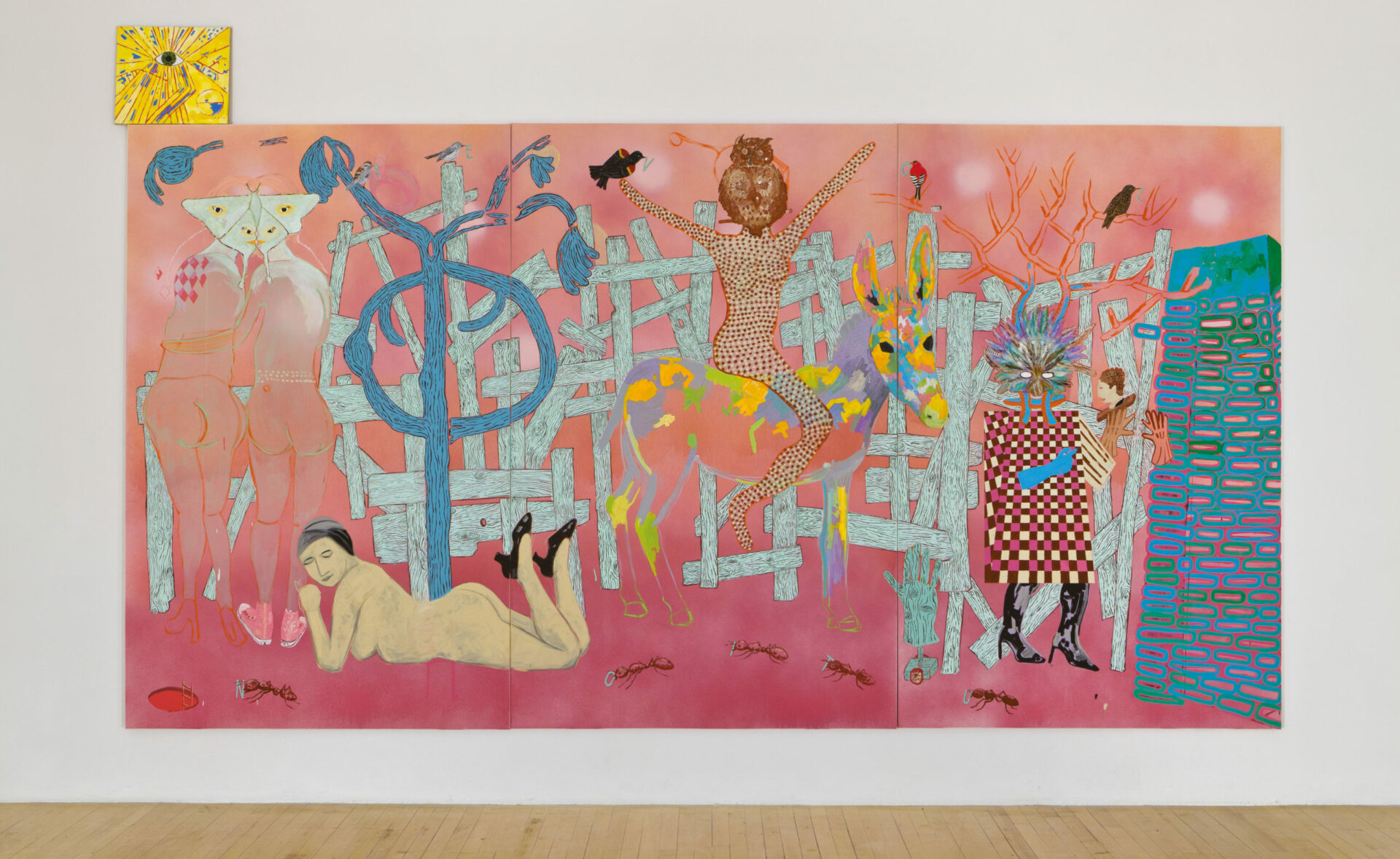
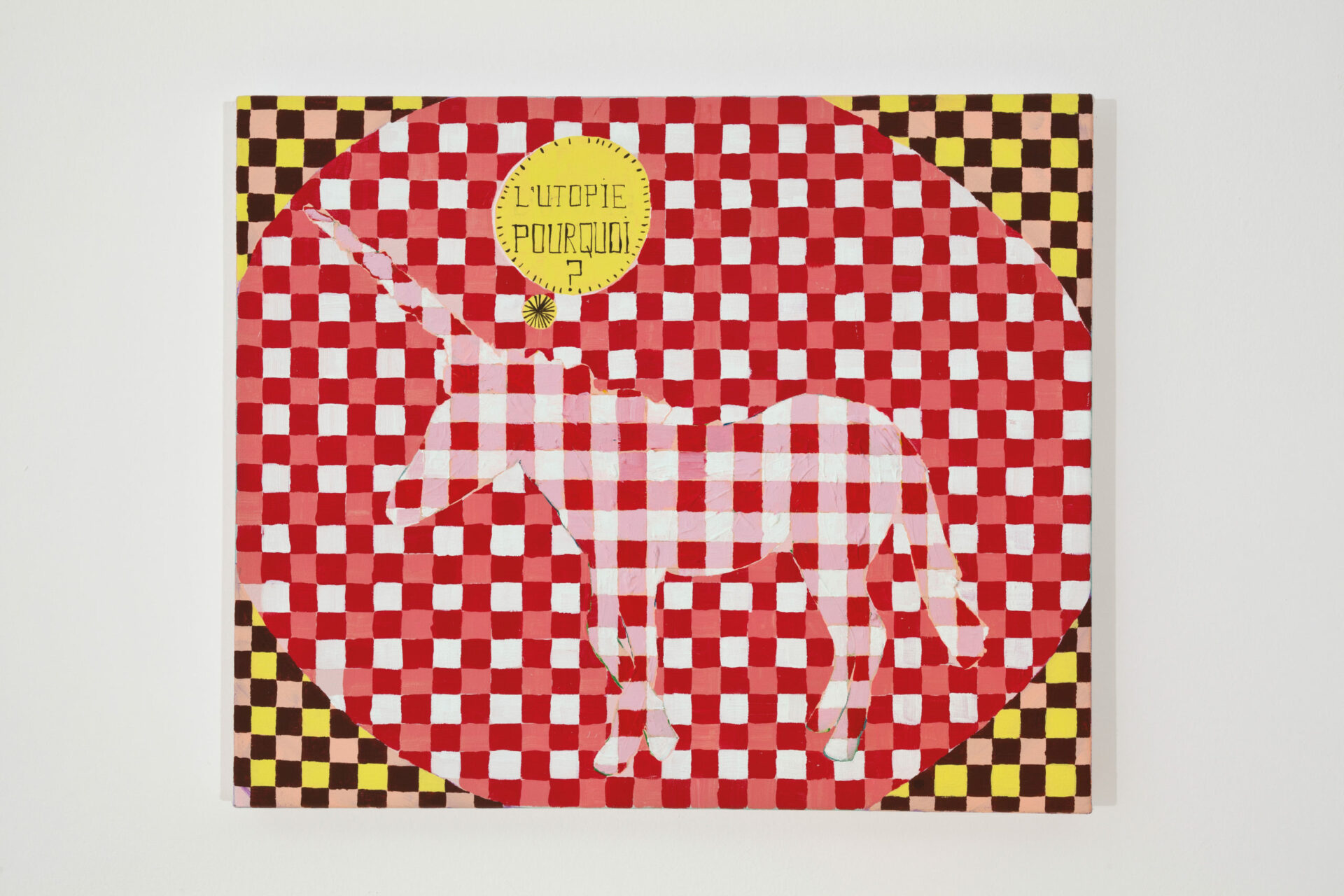
Victoire sur la barricade, 2012.
L’utopie, pourquoi ?, 2012.
Pierre Vallières et Josée Yvon (vue d’exposition | exhibition view), Optica, Montréal, 2012.
photos : Guy L’Heureux, permission de l’artiste | courtesy of the artist
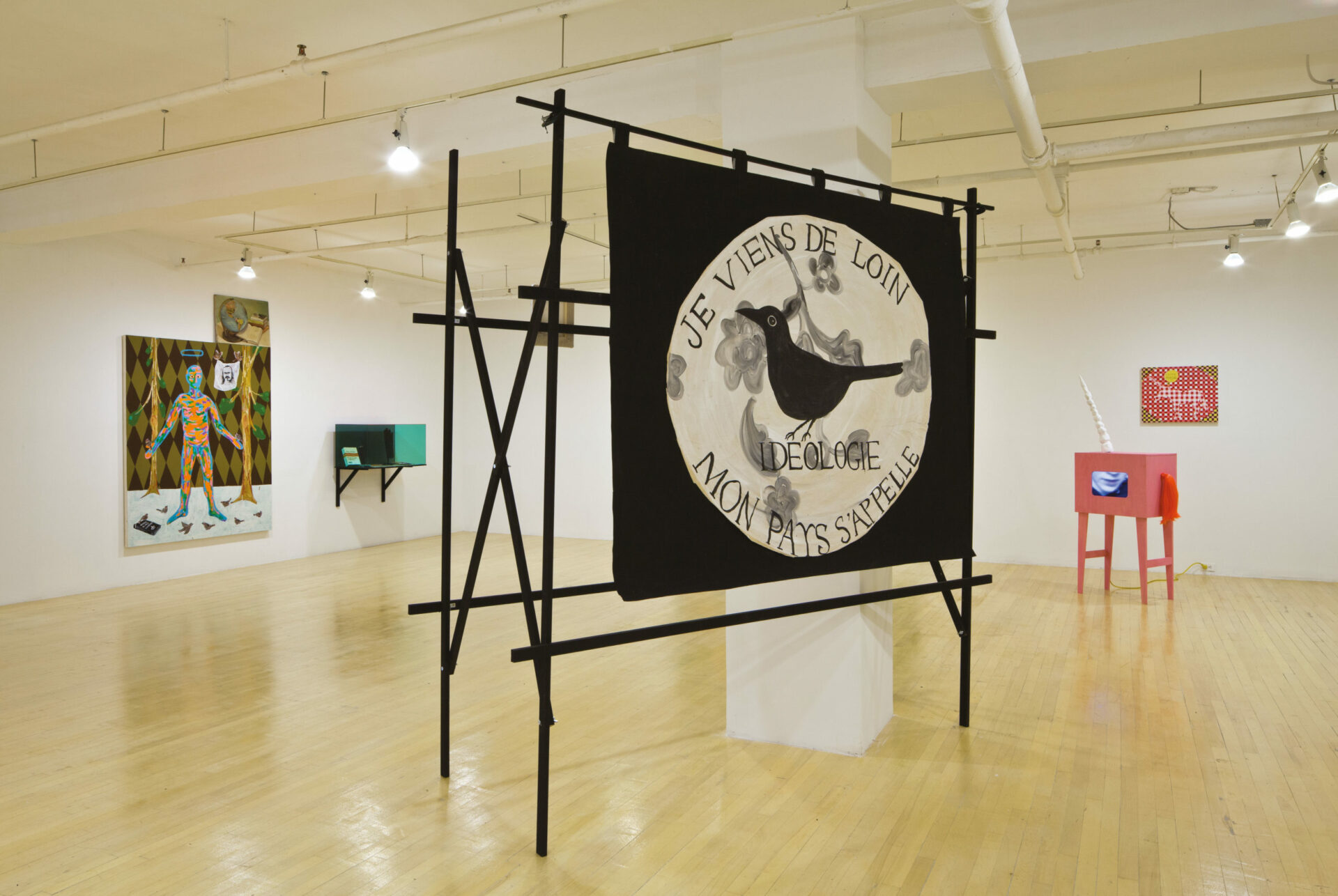
This connection between the heart, sexual body, and mind, between grounding strength, woman, and revolution is made explicit in the work of Cynthia Girard — which is far from saying that her work is literal. Of a radicalism full of love, her paintings of Québec history realized with detachment and humour — “as though I were making muffins,”7 7 - Interview with Oliver Koerner von Gustorf, “I am a Wanderer.”, in Be Magazine 16, Berlin (2010). Accessed May 25, 2012. http://www.cynthiagirard.ca/index.php? /interview/the-artist-with-oliver-k-von-gustorf/. she says — set the incorruptible liberty of poetry against insidious capitalist ideology, here embodied by the black crow, notorious scavenger and “harbinger of bad luck.” By paying homage to the visions of politically engaged essayist Pierre Vallières (1938-1998) and poet of nonconformity Josée Yvon (1950-1994) — stimulating political choices for a visual arts milieu suffering from self-referential suffocation — Girard, like the domesticated unicorn asking itself “Why Utopia?”, questions very directly what we can still possibly expect from life in society and what role art can indeed play in this quagmire. The luminous victory of a revolution achieved through the solidarity of insects and birds, and celebrated by surrealist female figures under the utopian gaze of the first abstract painters, brings one to believe that she — as a painter, poet, feminist, and activist — has never stopped believing that art, when it is open to the other and engages the whole of individual existence, remains a necessary place of interaction, protest, and construction of identity.
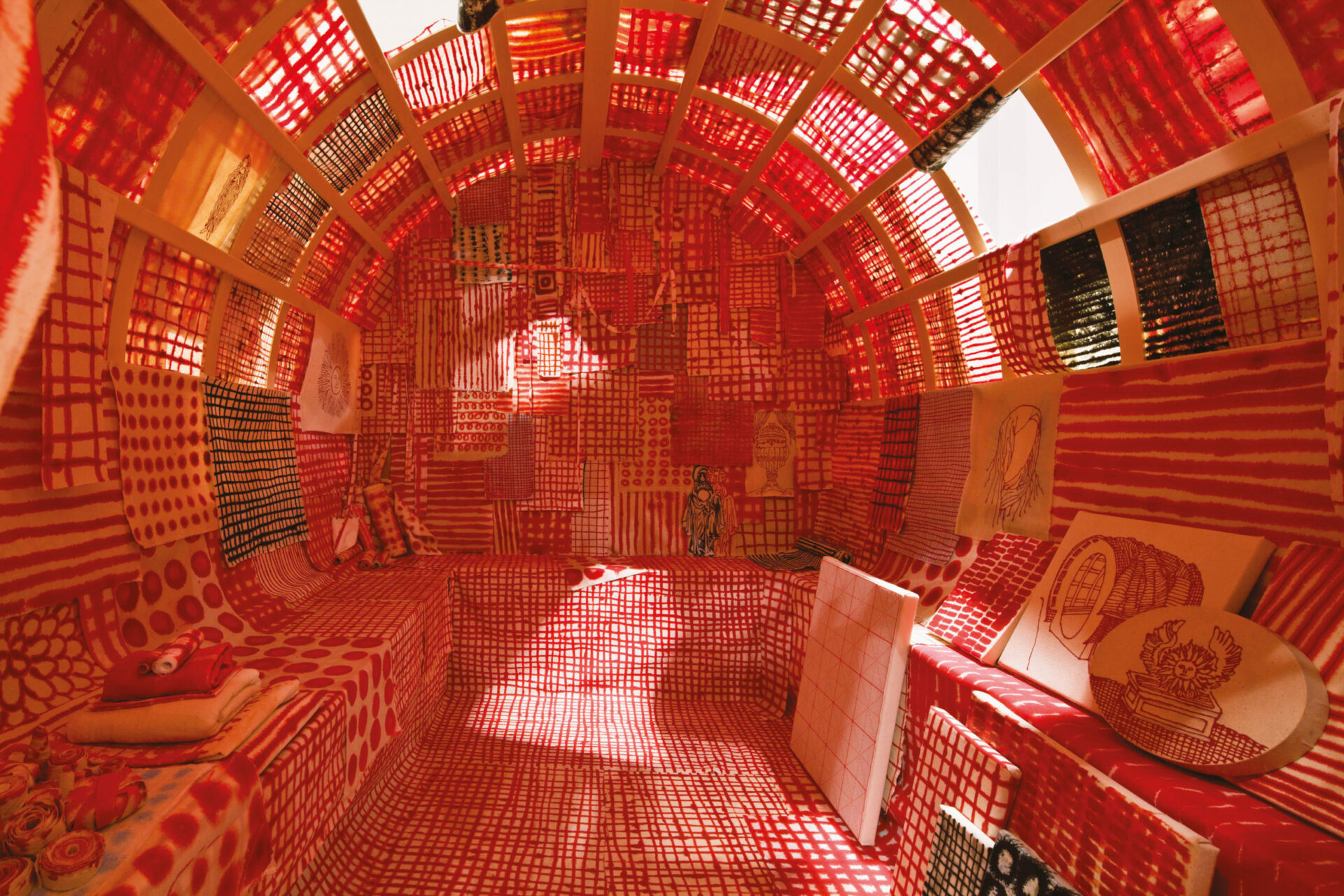
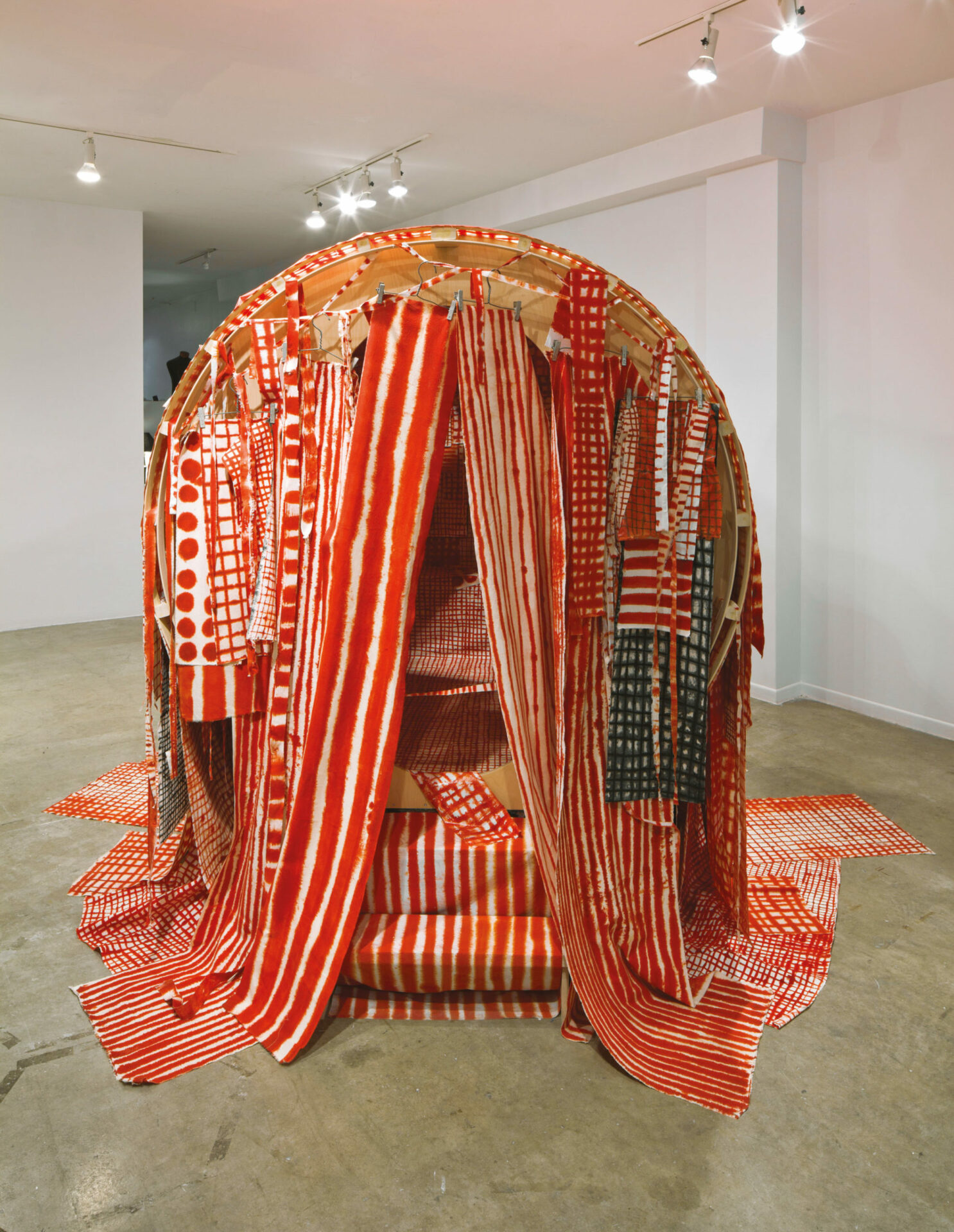
La bonne aventure, La Centrale Galerie Powerhouse, Montréal, 2011.
photos : Guy L’Heureux, permission de l’artiste | courtesy of the artist
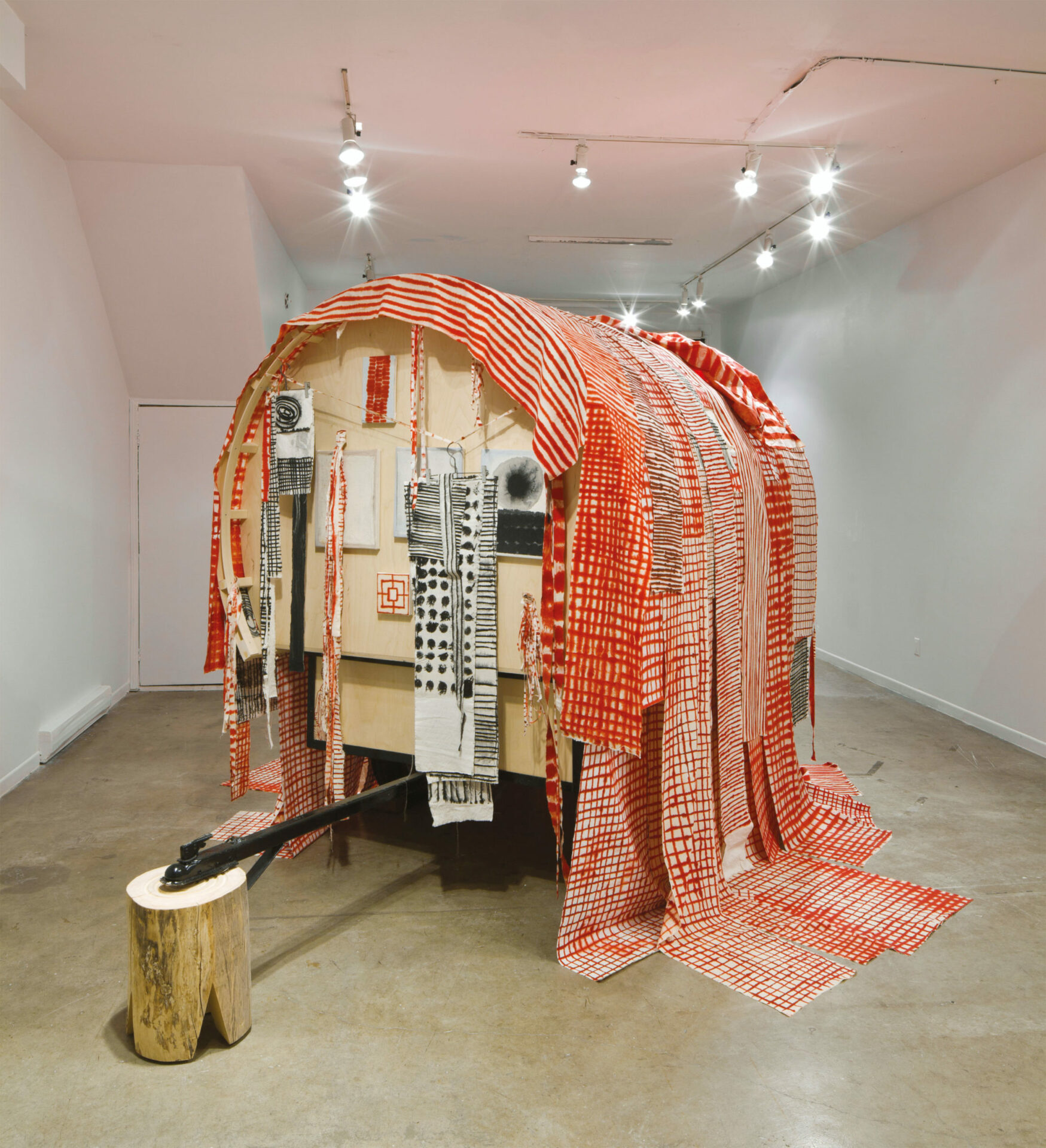
Yet it is necessary to fully understand what artists represent in a community to question their role and activity. In an historico-cultural excavation of her own, Marie-Claude Bouthillier has long studied how literature has described the visual artist, especially the painter. She has construed that the artist — despite sometimes exceptional achievements — emerges as someone who errs, stumbles, and fails, to the extent that his successes as much as his failures contribute towards his marginalization. Bouthillier’s caravan La bonne aventure effectively embodies the roaming nature of the solitary artist who takes to the road, trailing with her her display of ragged works. But the traditional question of the artist’s destiny — Is one thus condemned to create? — is extended here in a development whose outcome one would like to be able to predict — Are we condemned to perpetrate this restricted idea of the artist? Bouthillier seems to suggest that it is only through exposing these images, subconscious yet active in our collective psyche — including the minds of artists, that the creator of art may become something more for society than a scapegoat or public entertainer. For this to happen, we will nonetheless have to step into the intimacy of the artist’s luminous red tent and become aware of the fact that this inner haven, rich in symbols, that the free and solitary artist creates for herself and secretly transports everywhere with her, on the whole constitutes a worthy adventure — modest perhaps, yet likely to awaken a few spirits to themselves along the way.
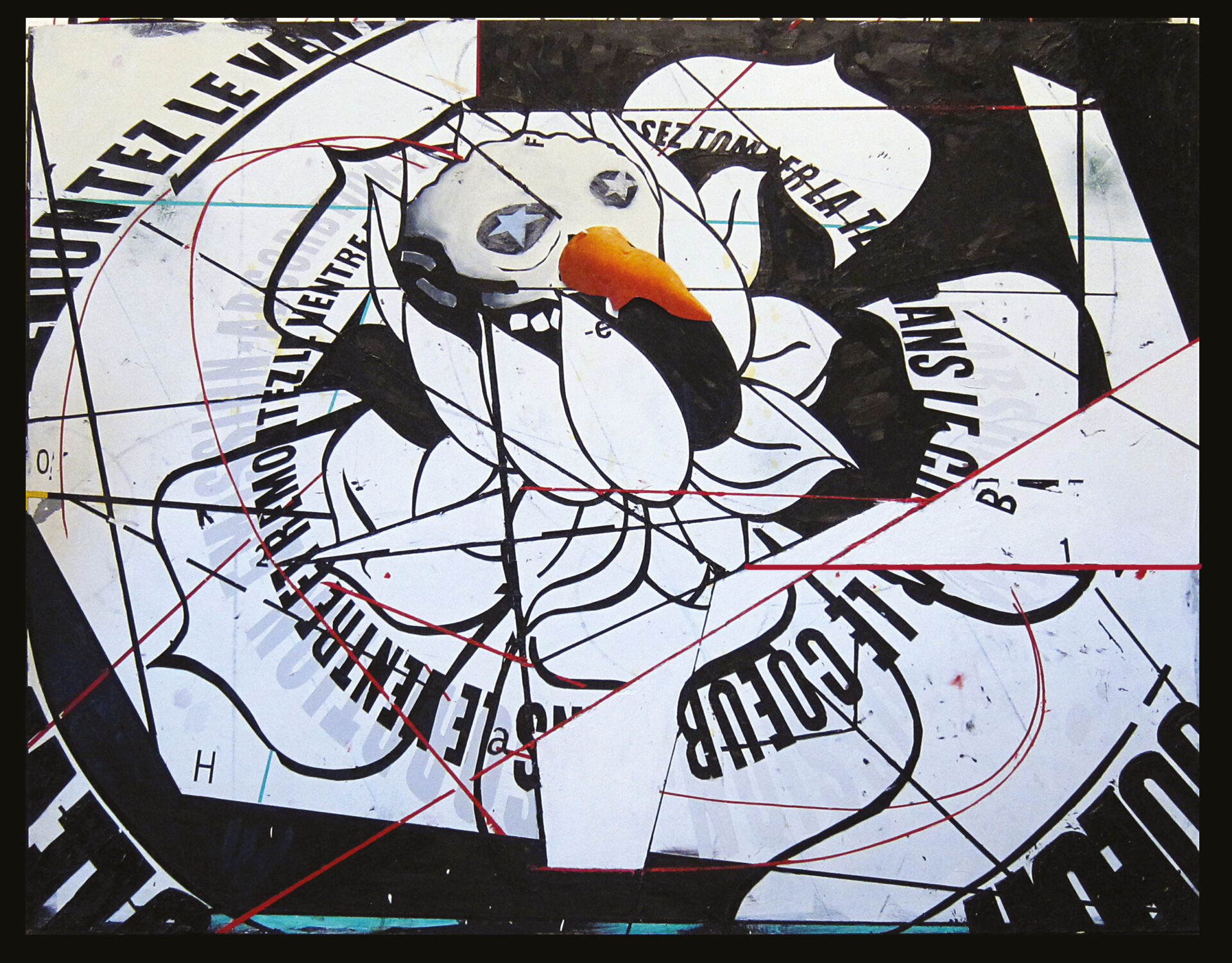
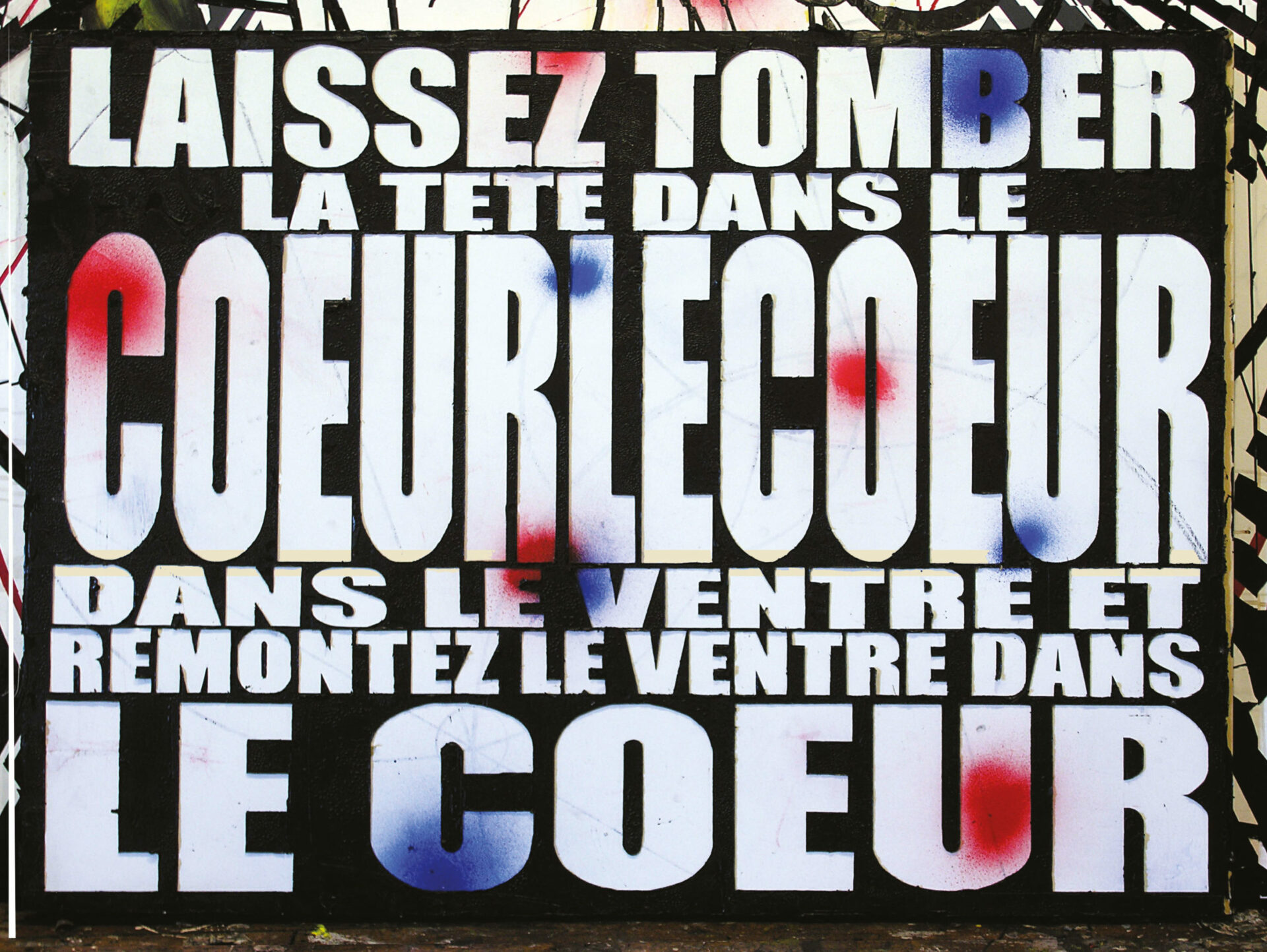
Sans titre, 2012.
Coeur (pour CB), 2012.
DWTC, 2010.
photo : permission de l’artiste | courtesy of the artist
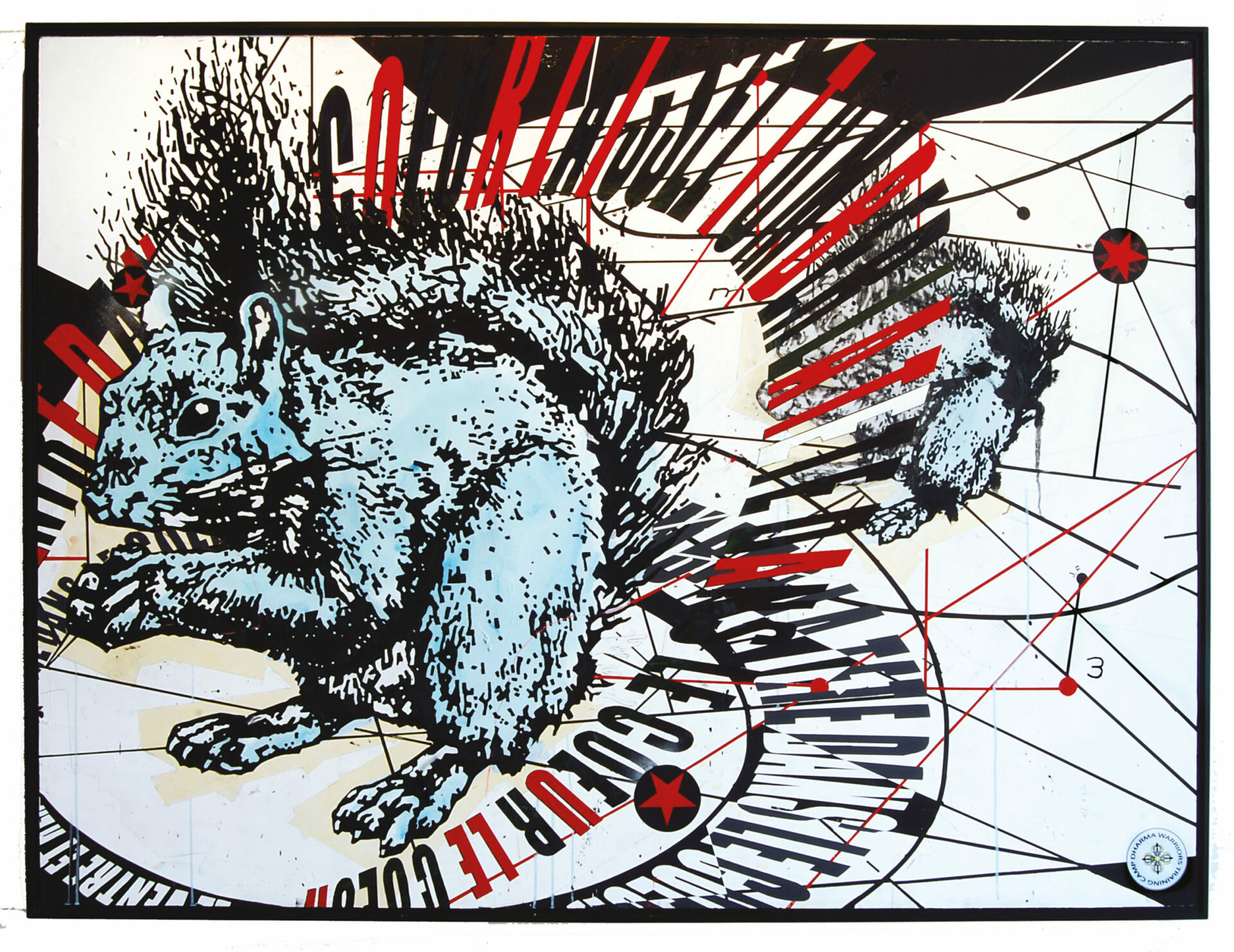
Humanity’s capacity for awakening has long preoccupied Sylvain Bouthillette. He explains that he lives “with the utopian or idealistic proposition (or rather conviction) that it is possible to awaken the supreme power lying dormant within each individual.”8 8 - Artist’s statement accompanying the exhibition Doodaa, Quebec, Esthésio art contemporain, 2004. Own translation. If his paintings seem so agitated, it is perhaps that they seek to offer a realistic portrayal of the energies residing within us. “Had I wished to present the man ‘as he is’ then I should have had to use such a bewildering confusion of line … vagueness beyond recognition,”9 9 - Klee cited by Stuart, op. cit. observed Klee. Yet Bouthillette also turns to gyratory movements, a confusion of planes, multiple inscriptions, militant slogans, and a general explosion of the image to shake up our perceptions with a great visual howl and to force us to abandon our comfort zone. The avowed objective of this compassionate aggression is, in fact, nothing less than the dismantling of the ego’s cocoon, and it is to this cause that the little animals — like masters of fate, deprived of the “I” narrative to which we are prisoner — devote themselves. To those who still may be tempted to take themselves seriously, as to those too closely attached to certain ideals — be it an artist on a quest for enlightenment, the painter dons a ridiculous carrot nose, achieving liberation through humour.
[Translated from the French by Louise Ashcroft]


