
photo : © Mohamed Bourouissa, permission de l’artiste | courtesy of the artist & kamel mennour, Paris
A defining movement of contemporary art in the 2000s, relational art, as formulated by Nicolas Bourriaud in his essay Relational Aesthetics, has left its mark on our consciousness by integrating the spectator into the artistic process. Largely criticized today for its apoliticism and elitism, relational art has laid the foundation, nonetheless, for a practice that made site-specific relationships into material for works of art. A decade later, one sees the emergence of artists who, while investing themselves in this artistic “tradition,” conceive of relations with the other differently, outside the domain of the museum, even outside any “memory of the relationship,” which had until Bourriaud consisted of upholding traces of the “experience of the social relationship.” Mohamed Bourouissa, an emerging figure in French contemporary art, is a perfect example of this trend. Bourouissa seems to be developing a new paradigm of relational art, in which the rapport with the other is not an end in itself, but a means for setting up a filmic and photographic device. In this respect, one video of his is especially characteristic; taking as its subject the trafficking of contraband cigarettes, it focuses on relationships generated through commerce.
Légende (2010)
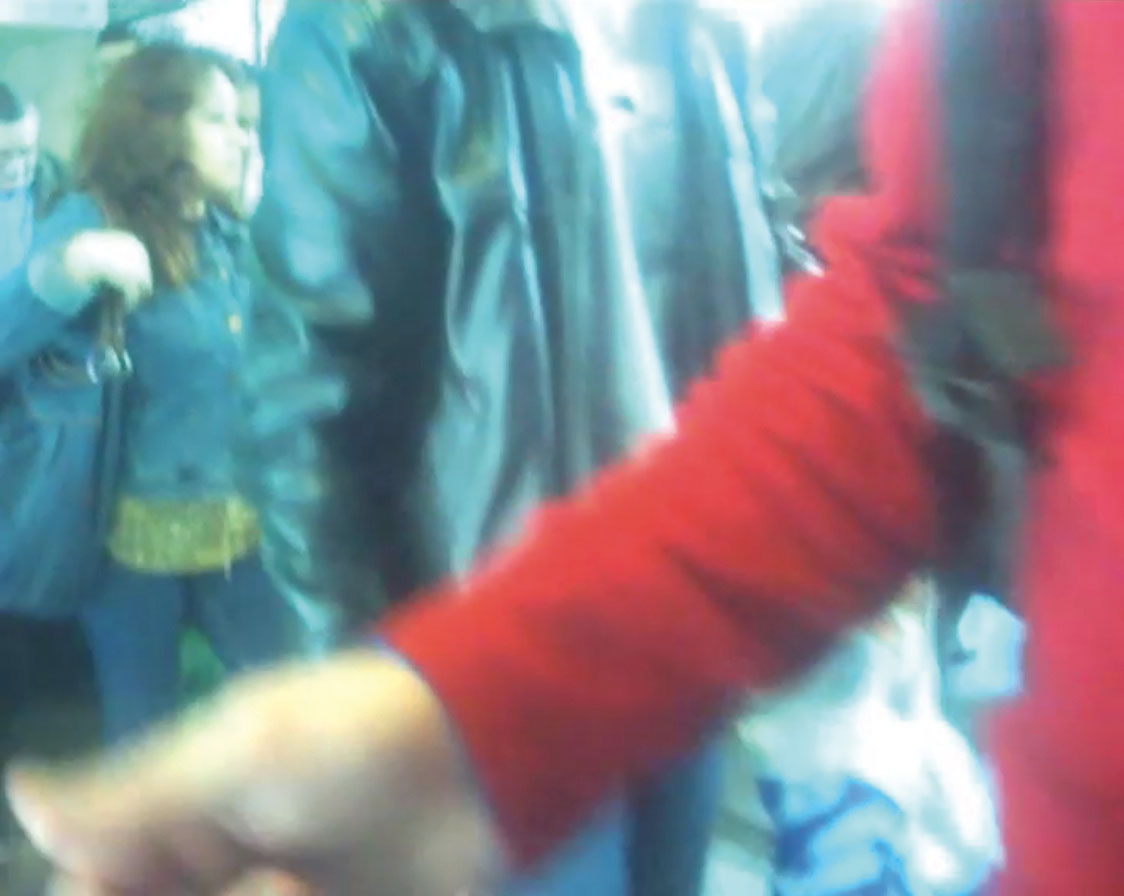
Barbès-Rochechouart metro station, 18th arrondissement, Paris. In the passageway, street sellers repeatedly and hastily chant “Légende, Légende, Légende!” referring to American Legend cigarettes which they are peddling to passersby. The refrain, familiar to the station’s regular commuters, traverses Bourouissa’s latest video and lends it its title. Filmed using spy cams placed at chest level on several of the peddlers, Légende exclusively presents their point of view. Borrowing his aesthetic from televised news media rhetoric, which tends to report illegal activity through the lens of hidden cameras strapped to journalists, the artist adopts the same surveillance techniques, the same confused, jittery images, while shifting the perspective: here, the supply is filming the demand.
Posted throughout the station platforms, the sellers positioned themselves in transitional spaces — high-traffic areas most conducive to sales: at the top or the foot of escalators, in front or behind the turnstiles. Their cameras captured the flow of commuters streaming before them, as well as the trade in merchandise that took place. As they moved about the station, these cinematic sellers outlined a geography in motion. Certain scenes were thus captured from several points of view, generating a fragmented image of the exchange. But while the encounters between the protagonists appear to be real, the clients are fictional. They had been directed by the artist to suddenly appear at various times and places and to buy cigarettes from certain street peddlers — who had also been directed, though to a lesser extent, since Bourouissa allowed for some degree of chance in this video on the threshold of reality and fiction.
Directing the game while allowing himself to be carried along by it, he set up a complex filmic process based on the relational dynamics generated by illegal trade. And because he involved himself in the course of this illicit sale of little red packets, Bourouissa had to go undercover himself to produce his video, generally forgoing the required authorizations to film in a public space under the jurisdiction of the Régie autonome des transports parisiens. Breaching the law was also necessary for the production of Bourouissa’s previous video, Temps mort (2009), for which he received images of a penal environment taken by a prisoner with a cell phone, an object strictly forbidden in prison. Temps mort and Légende have transgressive devices in common, in the strict legal sense as well as the figurative: they transgress boundaries.
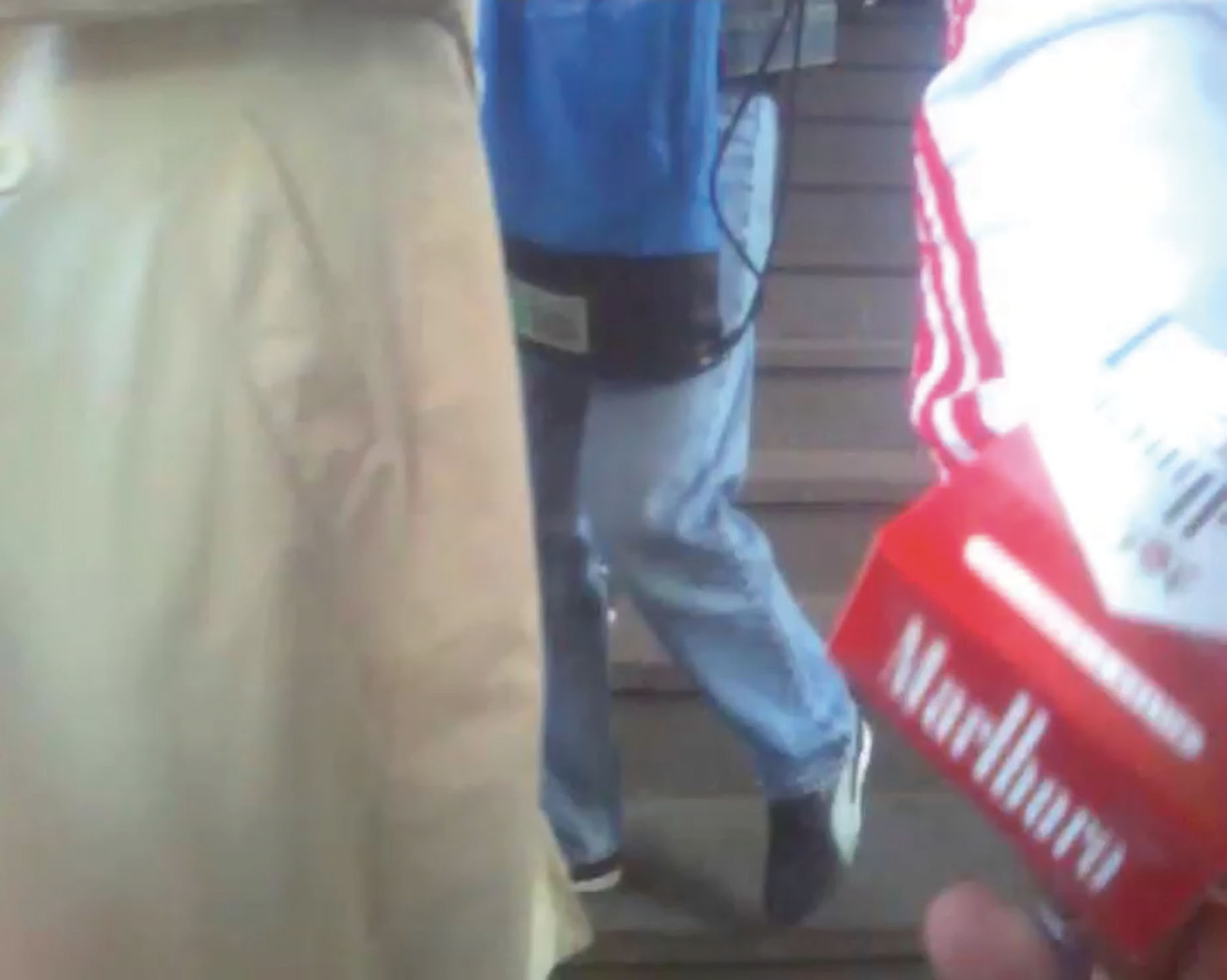
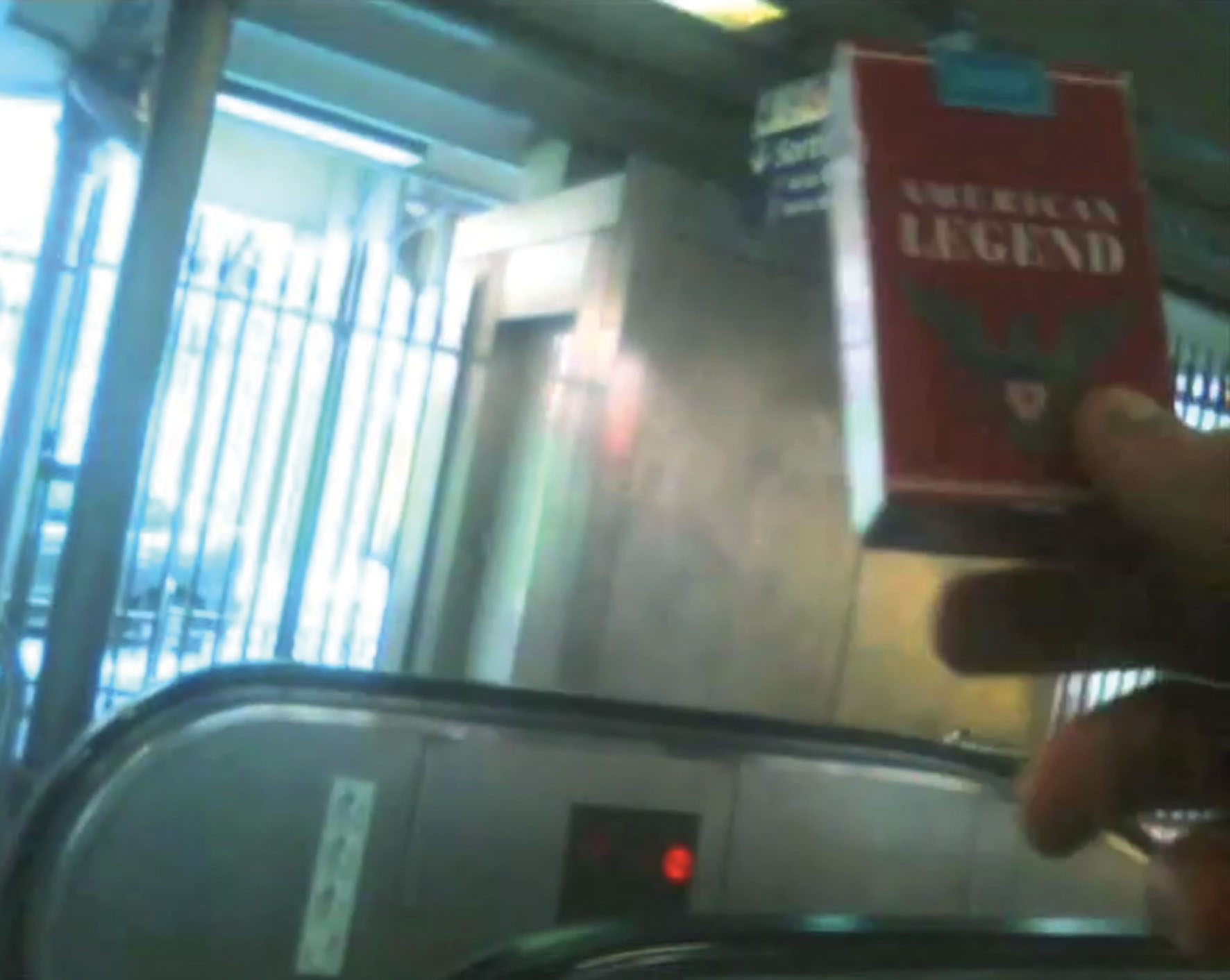
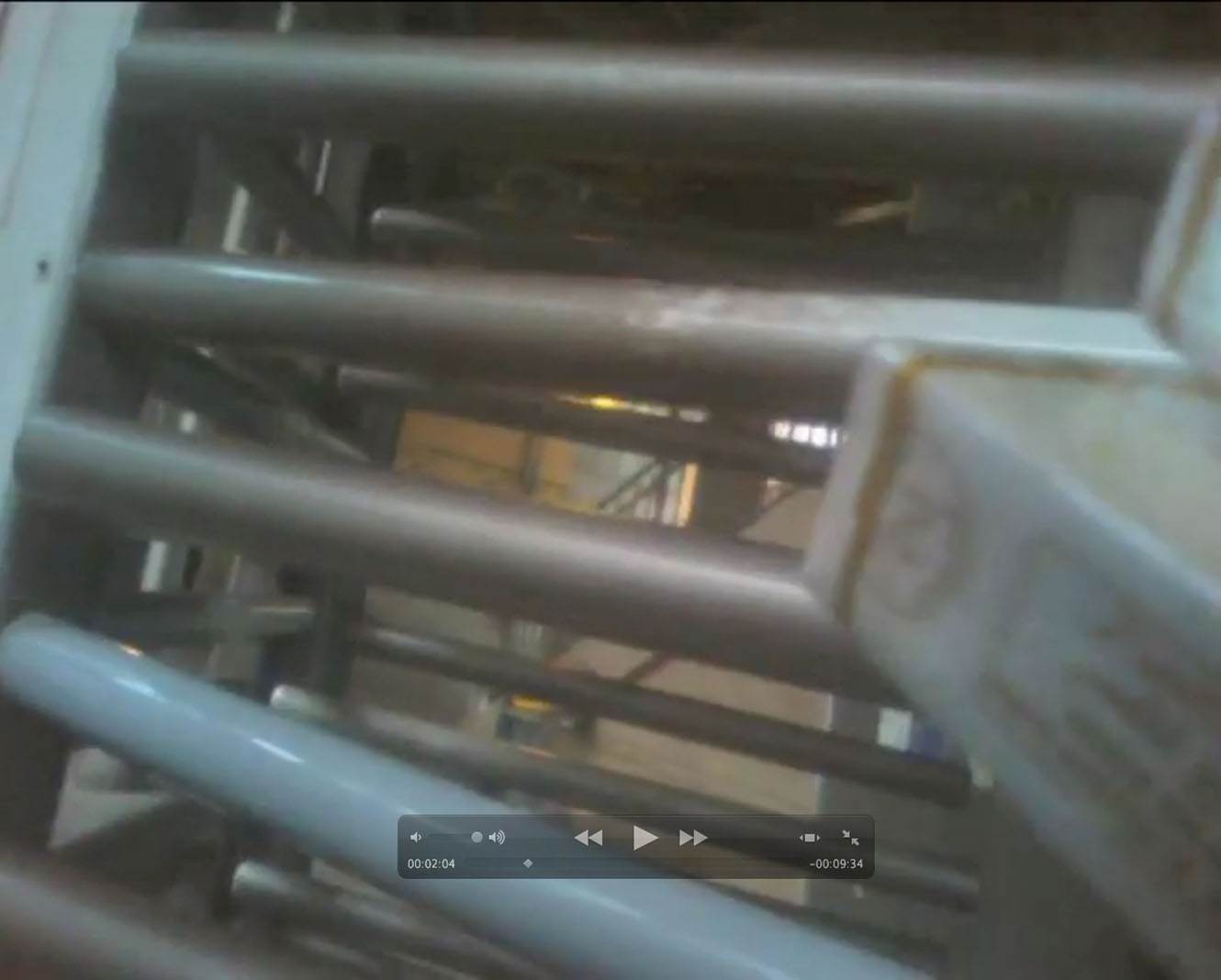
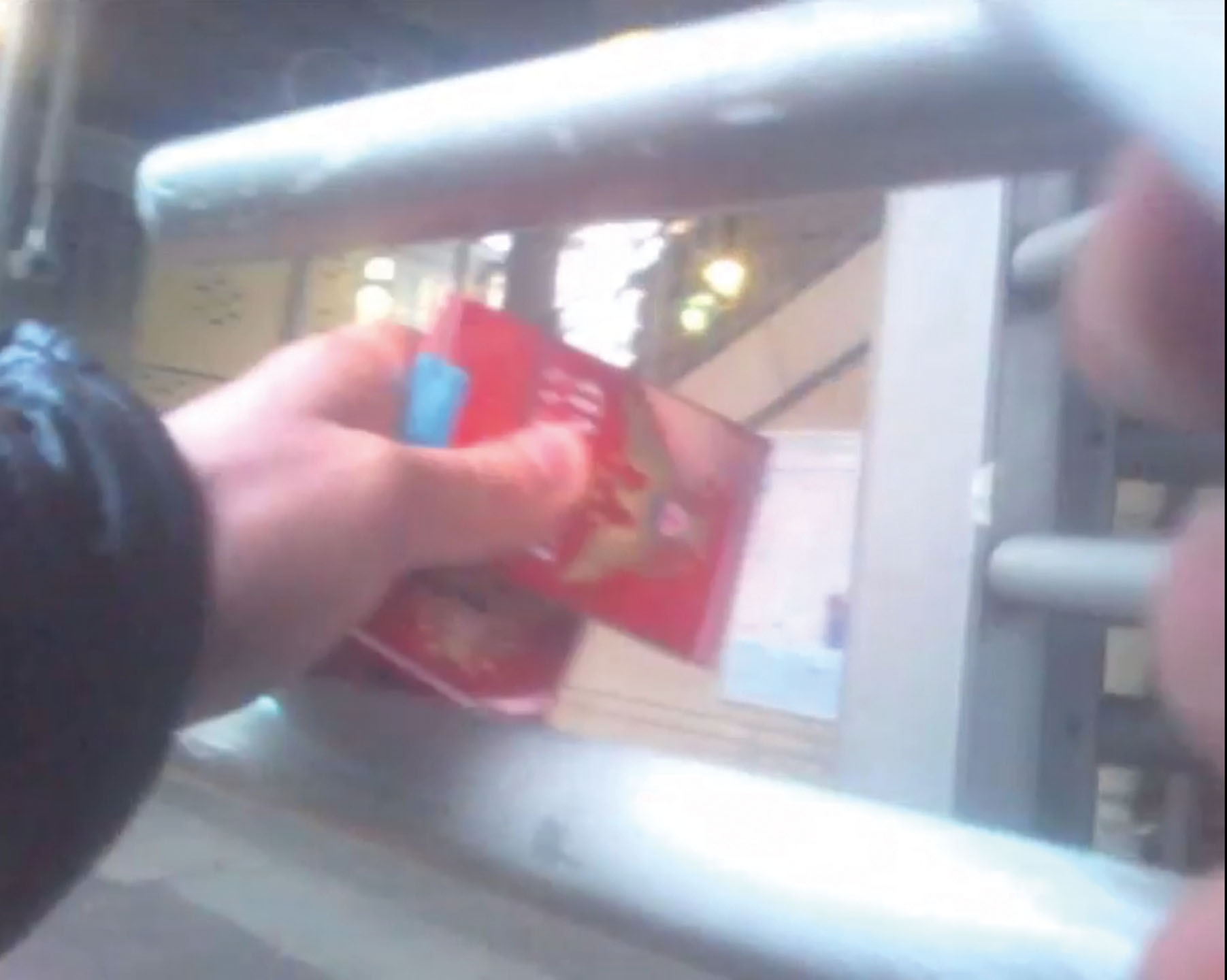
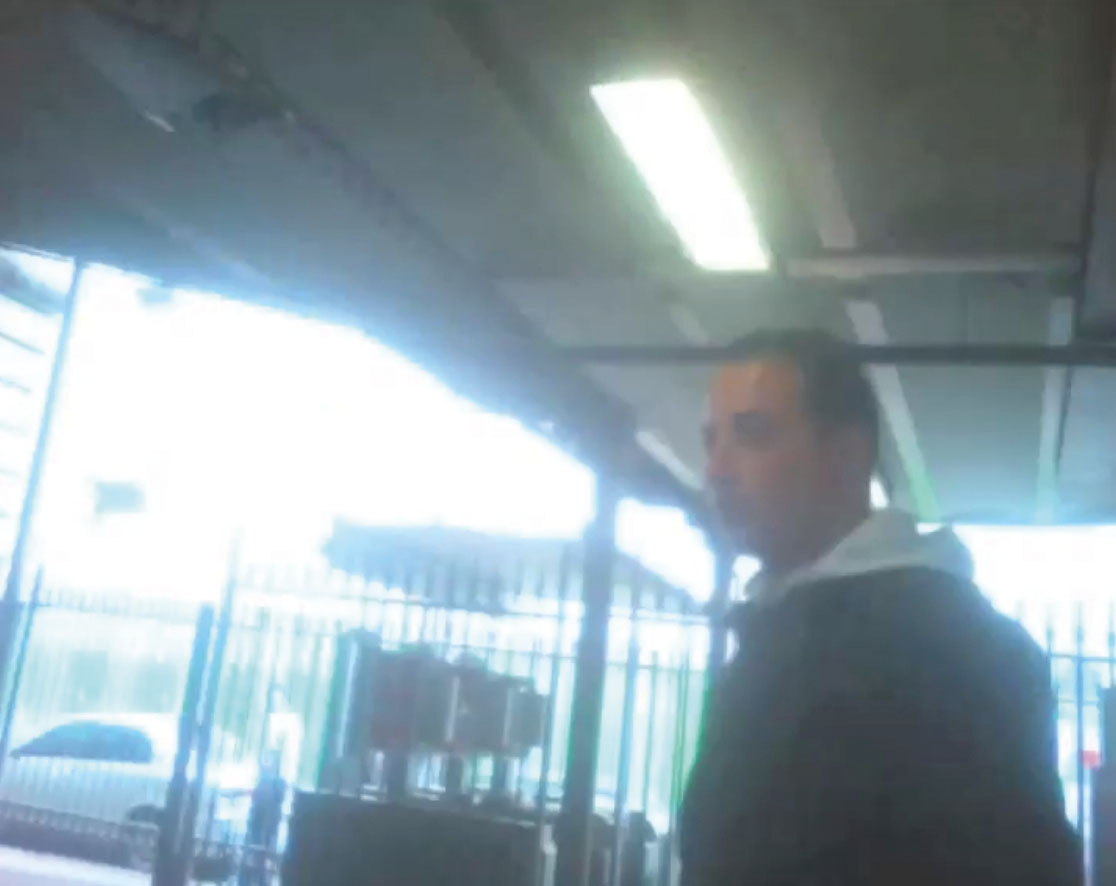
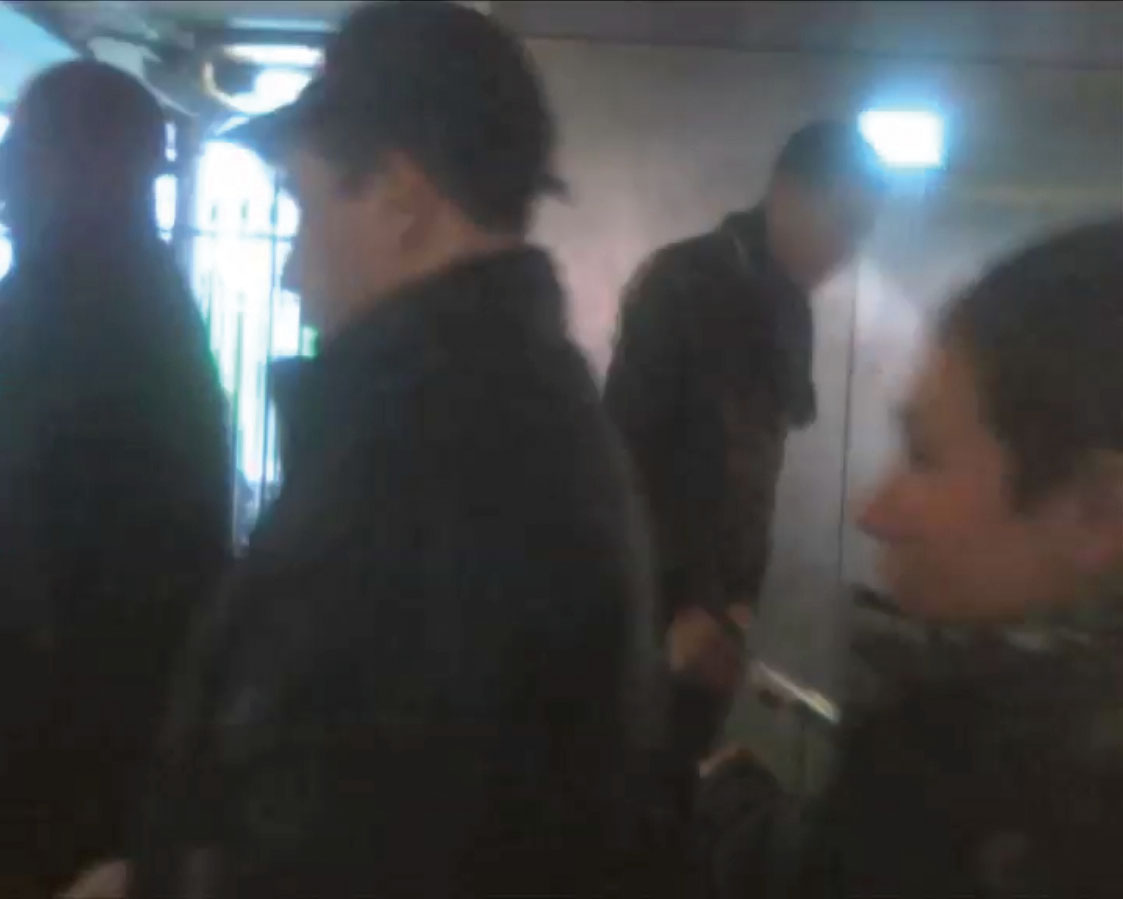
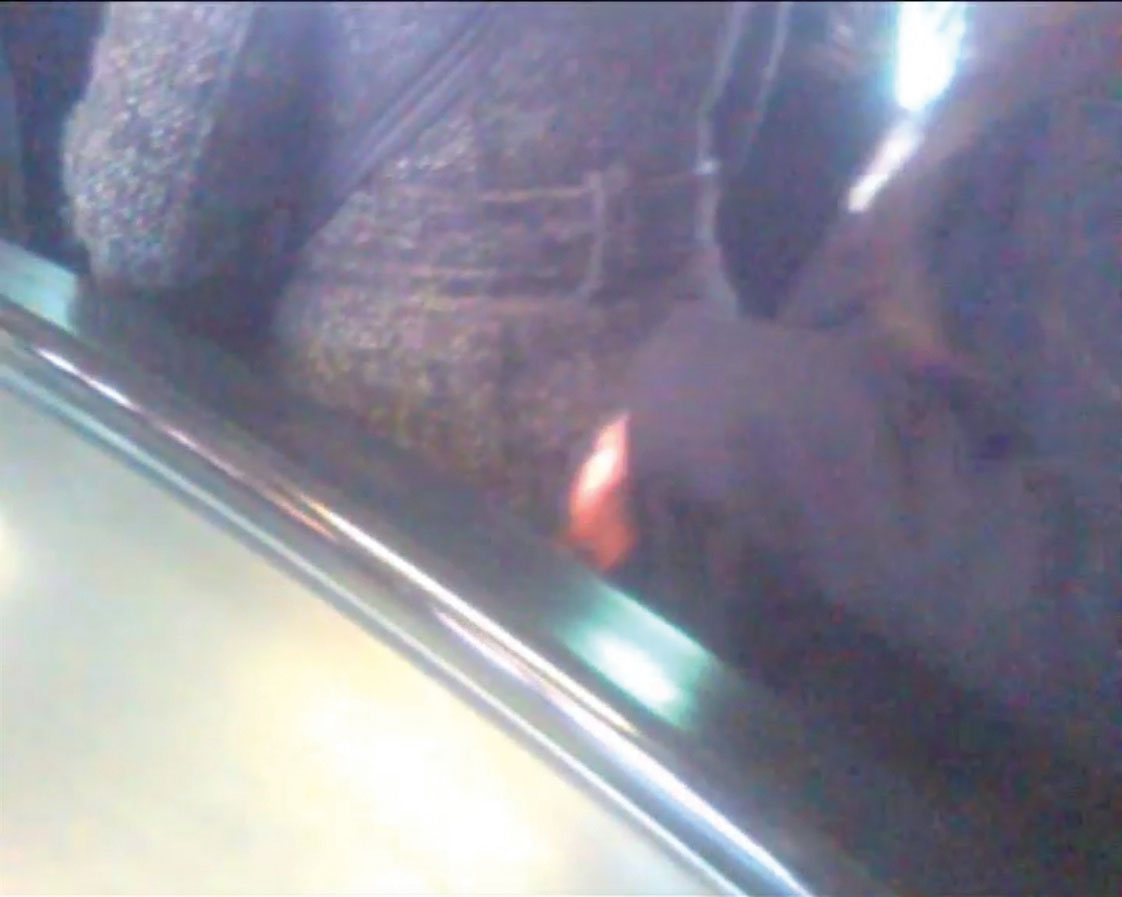
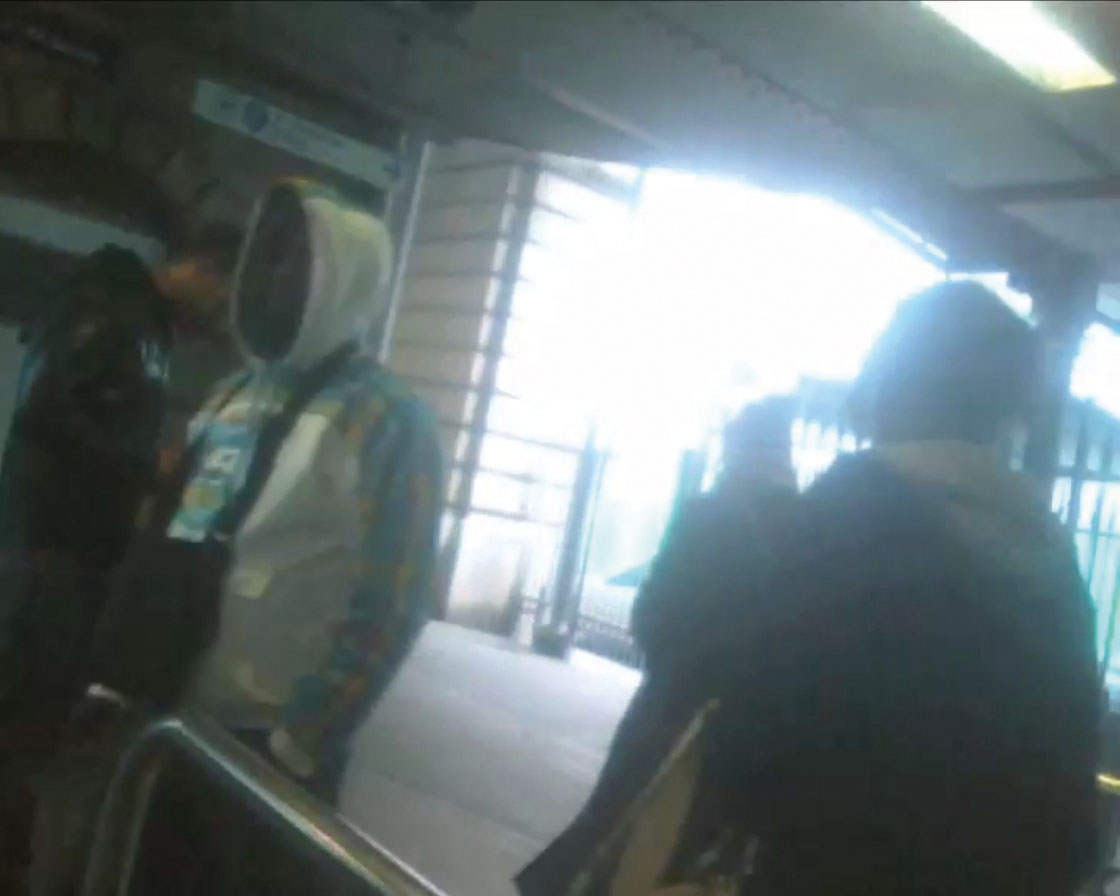
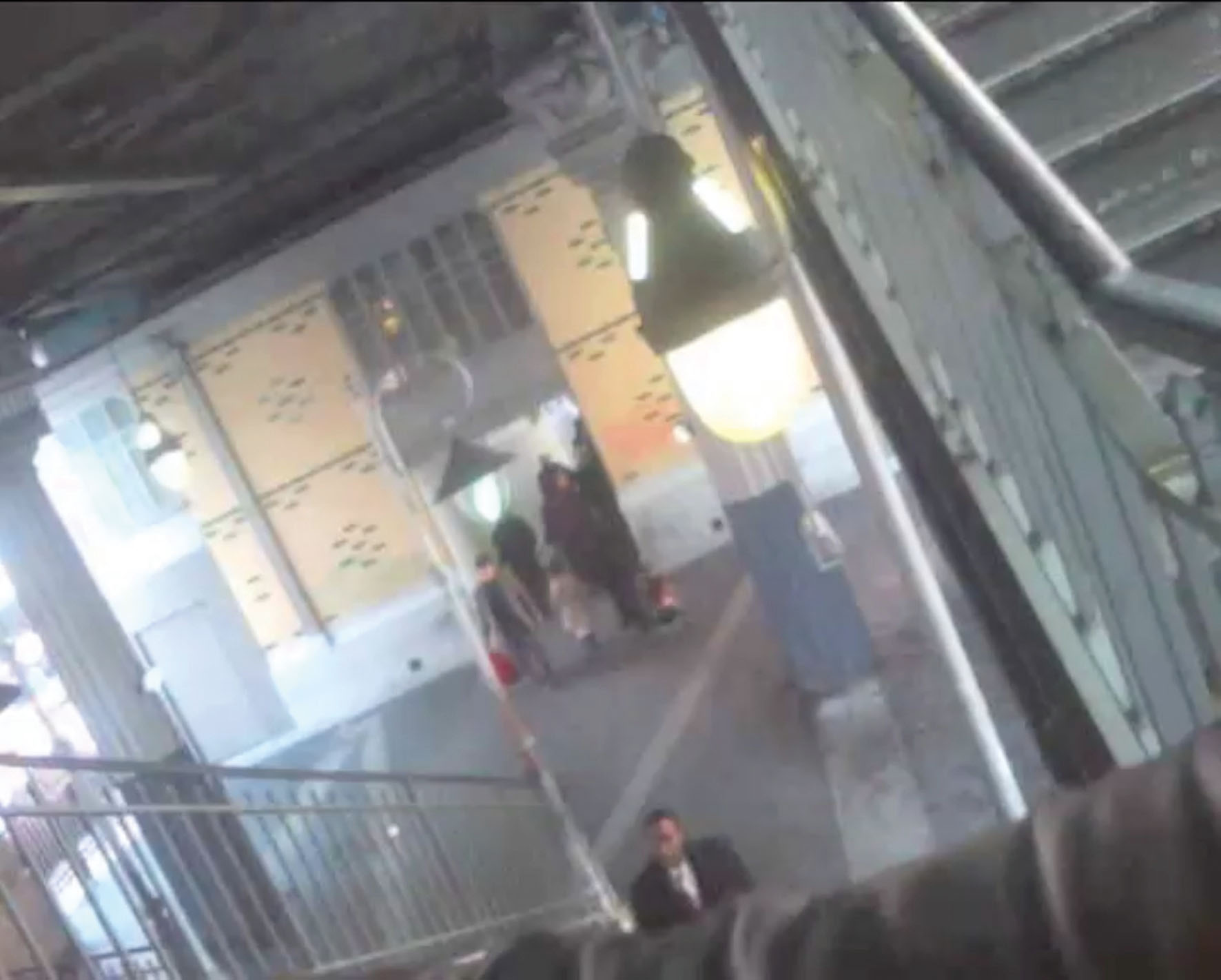
Légende, captures vidéo | video stills, 2010.
photos : © Mohamed Bourouissa, permission de l’artiste |
courtesy of the artist & kamel mennour, Paris
Inventing Types of Exchange, Inventing Filmic Devices
The crux of Bourouissa’s work revolves around inventing new types of relationships with the Other, or with the group, relationships that will determine the form of the work. The artist composes his images according to the space he is working in, the connections he has forged with the Other, and the often low-tech tools he has made available to them (cell phones, mini-cameras). Shot by novices, the resulting images have a rough-hewn aesthetic, their framing being unstable and the picture, pixelated (Temps mort) or overexposed (Légende).
In this way, in Temps mort, the artist established a friendly and artistic, almost epistolary relationship with a prisoner, based on the exchange of SMS messages and point-of-view shots of their respective everyday lives. The film, structured by these exchanges, is a testimonial to a developing relationship. A provisional understanding resting on mutual trust (and the provision of recharged phones) unites these two individuals and sustains the connection. And since it is a dual relationship, the exchange of images presented in the film becomes truly binocular. With indications as to placement, gesture, and motif, Bourouissa suggested what he wanted the man to film. The latter implemented his instructions rather stiffly at first, but followed through spontaneously thereafter. For his part, the artist shared images of his own daily life: the streets of Paris or the snowy landscapes of Helsinki. The project only takes on meaning through this reciprocity and the intimacy shared between the two men. Bourouissa plays on this flux of exchange, creating a spatiotemporal continuity in the montage: vistas of Parisian rooftops or seascapes filmed by the artist are immediately answered with views of the inmate’s cell; subjective camera shots of his feet as he paces in his cell are spliced with those of the artist in the snow, and so on.
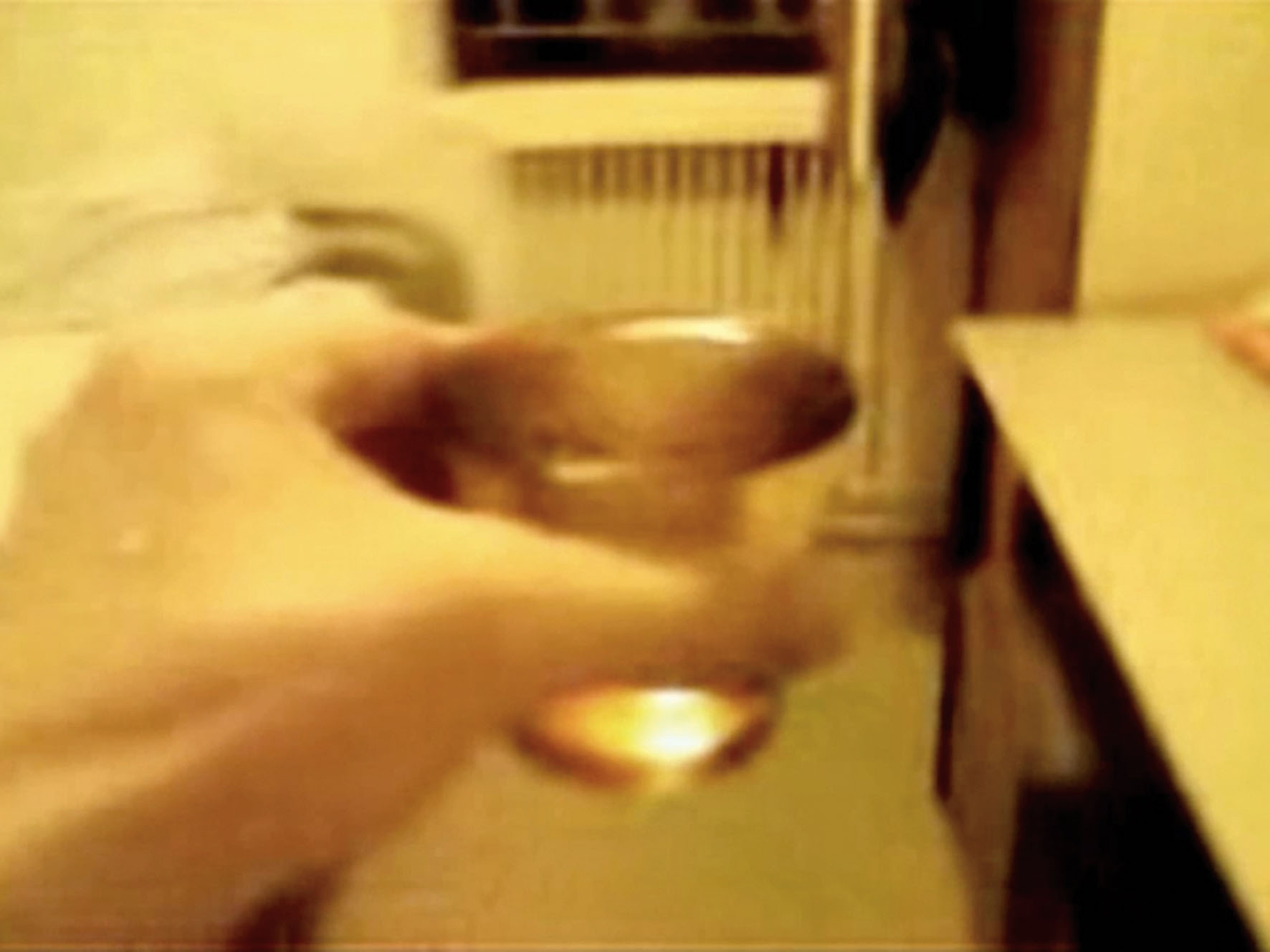
Temps mort, captures vidéo | video stills, 2009.
photos : © Mohamed Bourouissa, permission de l’artiste |
courtesy of the artist & kamel mennour, Paris
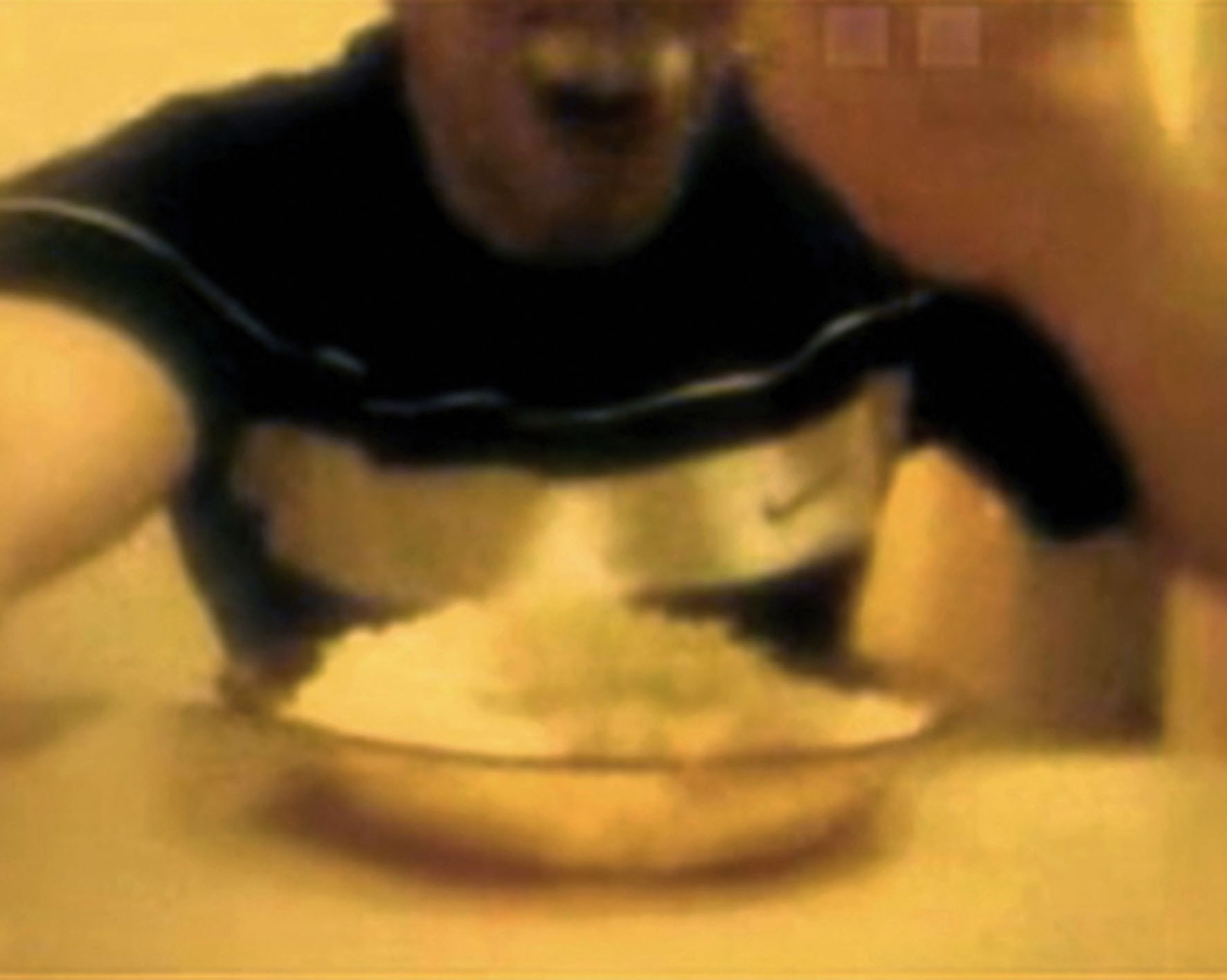
For Légende, Bourouissa went from the alternating shot/countershot in Temps mort to a protean multiplicity of points of view and the coexistence of subjectivities in the same space and time. In line with this multiplicity, the montage is more elliptical, less narrative, and offers a quasi-cubist vision of space, certainly more disorienting for the spectator. This video is the outcome of an assemblage, in the Deleuzian sense: “a multiplicity which is made up of heterogeneous terms and which establishes liaisons, relations between them […] the assemblage’s only unity is that of a co-functioning: it is a symbiosis, a ‘sympathy.’”1 1 - Gilles Deleuze and Claire Parnet, Dialogues II, trans. Hugh Tomlinson (New York: Columbia University Press, 2002), 69. Creating it required constructing the creative conditions for this “sympathy.” To successfully complete his project and create his filmic assemblage, Bourouissa had to make himself accepted by a community — that of the peddlers — and slip into pre-existing relationships. This required months of work. The artist had at first proposed to pay the street peddlers for their participation,2 2 - All information on the making of Légende is based on an interview with the artist prior to the writing of this article. but his offer was immediately greeted with suspicion. The sudden authority — the power — that the codified monetary relationship introduced between him and the peddlers suddenly made their relationship questionable and distant, and was largely responsible for the project being delayed. Bourouissa then changed tack. Rather that paying for the relationship with the other, he and his entourage met more frequently at Barbès station. Friendly exchanges around meals he had made sure to bring, the purchase of cartons of cigarettes (a kind of underhand remuneration), and especially gatherings between the sellers, his family, and friends in charge of negotiations — were all crucial to their participation in the artistic project.
Bourouissa is in constant need of “intercessors”3 3 - The notion of “intercessor” here derives from thoughts Gilles Deleuze developed in Pourparlers: “What is crucial is the intercessors. Creation comes by way of the intercessors. Without them there is no artwork. […] Whether real or imaginary, animate or inanimate, you have to form your intercessors. It’s a series. If you’re not in some series, even a wholly imaginary one, you’re lost. I need my intercessors to express myself, and they would never express themselves without me: we are always working together, even when we seem to be on our own.” Gilles Deleuze, “Les Intercesseurs” in Pourparlers (Paris: Éditions de Minuit, 1990), 171. [my translation.] to construct a work, to assemble his filmic devices. For both Légende and Temps mort, he films indirectly through the other, by means of others. “What one needs to do is seize someone else ‘trying to Legendize,’ catch them ‘in the act of Legendizing.’”4 4 - Ibid. Mohamed Bourouissa adopts a similar attitude: stopping others in their tracks, in their lives, and transforming them into bearers of images and legends. The many image-bearers — the cigarette sellers — in his film convey fiction in the very movement of their reality, to the point that the real object of transaction — the packet of Legend cigarettes — is assimilated into the title of the work in which they are participating.
[Translated from the French by Ron Ross]


