photo : permission de | courtesy of Friedrich Petzel Gallery, New York
During the 1960s and 1970s an entire section of conceptual art turned to laying bare the economic, political and ideological biases of arts institutions. However, this critique was quickly reclaimed by the institutions, too happy to show works that tended to highlight the very places the works attempted to critique.1 1 - Daniel Buren’s work is exemplary in this regard. Conceived in situ, his work lent visibility to the establishments in which they were installed, while attempting to examine them critically. In the 1980s a second generation of emerging artists re-launched the debate, this time focusing on the many processes in the institutionalization of art — processes in which the artist is always necessarily involved. Andrea Fraser writes: “Every time we speak of the ‘institution’ as other than ‘us,’ we disavow our role in the creation and perpetuation of its condition. We avoid responsibility for, or action against, the everyday complicities, compromises, and censorship — above all, self-censorship — which are driven by our own interests in the field and the benefits we derive from it. It’s not a question of inside or outside, or the number and scale of various organized sites for the production, presentation, and distribution of art. It’s not a question of being against the institution: We are the institution.”2 2 - Andrea Fraser, “From the Critique of Institutions to an Institution of Critique,” Artforum 44, no. 1 (September 2005): 283.
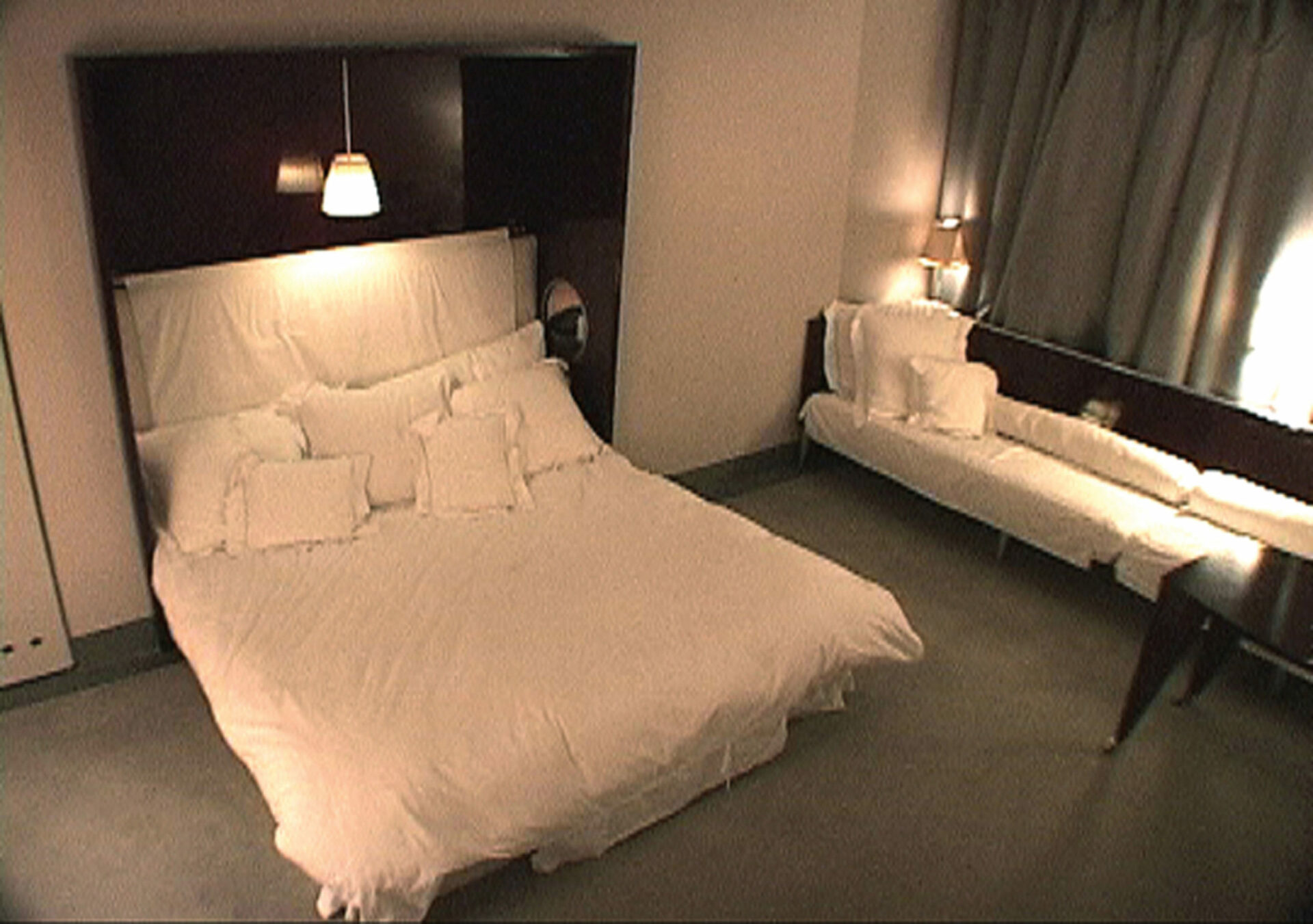
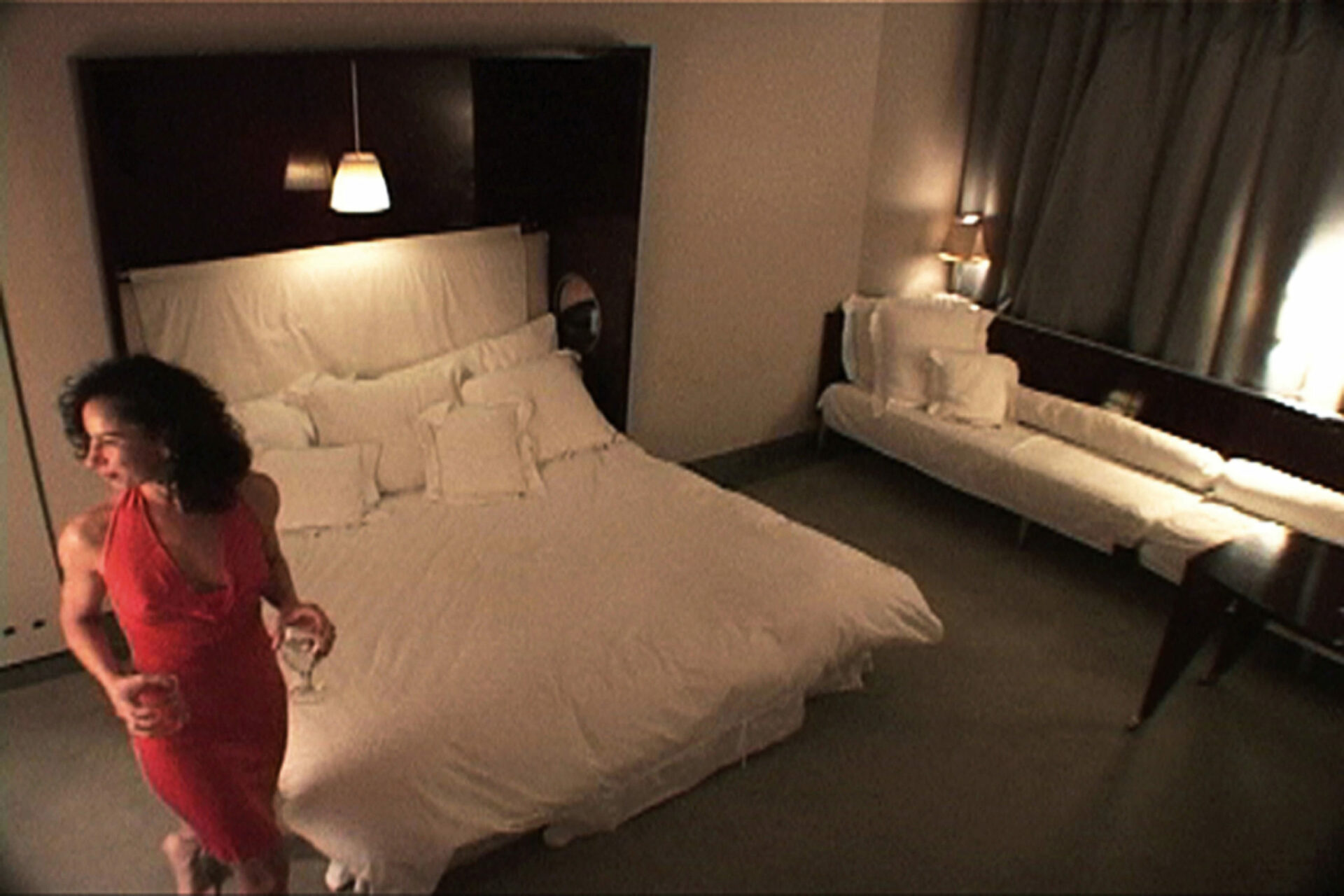
Fraser is an artist who first became well-known for Museum Highlights (1989), an unusual guided visit of Philadelphia’s Museum of Art in which she diverted attention away from the exhibited works, directing it instead towards the museum’s auxiliary spaces (ticket counter, cafeteria, washrooms, etc.) The artist first conceived of her artistic practice as a service — educational, or even contemplative — for which she could be remunerated, yet without creating any object with a market value that could subsequently be produced and resold.3 3 - In this regard, see Andrea Fraser “What’s Intangible, Transitory, Mediating, Participatory, and Rendered in the Public Sphere?” October 80 (Spring 1997): 111-116. Fraser revised her position around 2000, having realized that museum establishments were henceforth looking for major, ambitious shows likely to generate revenue. With invitations from museums becoming increasingly rare, Fraser faced the fact that she had to sell work and become part of the art market in order to survive: “The first impulse was probably, well, if I’m gonnahaveta [sic] sell it, I might as well sell it. The first impulse was to perform an extreme literalization of the old metaphor of selling art as prostitution, of the artist as prostitute, and it was rooted in what felt to me like a very painful choice between continuing to be an artist and betraying what I believe in as an artist.”4 4 - Andrea Fraser interviewed by Yilmaz Dziewior, “Interview with Andrea Fraser” in Andrea Fraser. Works: 1984 to 2003, ed. Yilmaz Dziewior (Cologne: Dumont, 2003), 99. Fraser explains how she got the idea for her Untitled (2003) project as follows. The artist asked the Friedrich Petzel Gallery in New York to find a collector willing to be part of the project but whose identity would remain hidden. For the sum of $20,000 US, half of which would be paid to the gallery in commission, the collector purchased the opportunity to have sexual relations with the artist, an act which would be filmed and transformed into a 60-minute unedited video work in an edition of five numbered copies, the first of which would belong to the collector.
Seen in this way, Untitled reveals the most basic mechanisms of the way the art market works — a way of working in which artists depend on galleries and collectors, who are the real holders of power. In any case, this was how the work was understood by many who saw it as a rather simplistic and superficial attempt at gaining attention. Among them, Elizabeth Kley wrote: “Artists perennially complain about having to prostitute themselves for their work, but Andrea Fraser has turned that clichéd lament into humdrum blue-chip art, sadly and somewhat sordidly taking so-called institutional critique to a possible terminus of institutional self-congratulation.”5 5 - Elizabeth Kley, “The Elephant in the Room: Andrea Fraser,” Art News 103, no. 8 (September 2004): 146. This acerbic criticism squarely rejects Fraser’s assertion while going as far as to question her motives. It reduces the work to a show-stopping gesture and refuses to contextualize it. Others were more nuanced and felt that by attacking art and its treatment as a commodity, Fraser was making an ironic — if not naïve6 6 - “There may be some […] naïvete operating in Fraser’s work, peering from behind the verbiage of a brand of thinking known as ‘institutional critique’.” Guy Trebay, “Sex, Art and Videotape,” The New York Times, June 13, 2004, A20. — gesture7 7 - “Andrea Fraser combined […] the artist as the material of service with an ironic critique of the market when she slept with an unnamed collector […].” Steven Henry Madoff, “Service Aesthetics,” in Artforum 47, no. 1 (September 2008): 169..
Moreover, as soon as the artist began work on the project, the statements she made dealt largely with the affection she had developed for the collector, and this to the point of overshadowing the critique of the art market: “While I suppose many people will still see it in terms of prostitution, I think prostitution remains much more a metaphor in Untitled. If prostitution can be evoked as a metaphor for the reduction of all human relationships to economic exchange, I think Untitled works even more powerfully in the opposite direction. That is, it transforms the economic exchange of buying and selling art in a very human relationship.”8 8 - Dziewior, “Interview with Andrea Fraser,” 100.
This is to say that despite the critique Fraser has aimed at institutions since the 1980s, her own perception of art and artists remains bound to a Romantic concept in which art holds a particular status that cannot really be tainted by its need to enter the institution or the market. In this way, Untitled is less an attempt to coldly expose the market mechanisms of art in order to point out their artificiality than a demonstration of what the general public, and more particularly the group consisting of collectors, look for in consuming art.

photos : permission de | courtesy of Friedrich Petzel Gallery, New York

According to Fraser, one should rather consider Untitled as a personal quest to discover just how far the bond between artist and collector can go, or indeed how far a collector might implicate himself in his desire to possess a work — to understand in every sense of the word. Strangely, in speaking of the collector, Fraser minimized the importance of his financial involvement in the project in favour of speaking of his personal, or even bodily investment in the art: “What the collector paid for Untitled was much more than money. He ‘paid’ with his body and his presence and by taking a huge and very personal risk — a risk much greater than mine in every way. It’s something I find very moving and really quite courageous.”9 9 - Ibid. Fraser takes up this point again in an interview with Guy Trebay, worrying that if the collector were discovered, his reputation would be at risk. Trebay remarks that Fraser’s affectionate connection to the collector compromises the critical force of the work and marks her as a hooker with a heart of gold.10 10 - Trebay, “Sex, Art and Videotape,” A20
Following the artist’s lead, some critics attempted an affective analysis of Untitled, yet they seemed ill at ease, sketching out a few lines of excuses to justify their interest in the work.11 11 - See, among others, George Baker, “Fraser’s From” in Andrea Fraser. Works: 1984 to 2003,ed. Yilmaz Dziewior (Cologne: Dumont, 2003), 73. Isabelle Graw wrote in Artforum: “Did you like it?” I was repeatedly asked, and I found, even to my own surprise, that I had to answer yes, I liked it very much.”12 12 - Isabelle Graw, “Andrea Fraser. Hamburger Kunstverein,” Artforum 42, no. 4 (December 2003): 140. Such statements give the impression that, in Graw’s view, it might have been more pertinent, or at least more favourably perceived, not to have liked Fraser’s work quite so much.
The disparity between affective interpretations and those interested solely in market mechanisms revealed by the work can be explained by the marked difference between its conception and its realization. Fraser explains: “The ‘idea’ may evoke specters of exploitation, sensationalism and coldly critical or cynical artistic calculation. But the video is just two people having sex — an everyday occurrence that is quite simple and also much more complicated.”13 13 - Dziewior, “Interview with Andrea Fraser,” 100. In the video, there is nothing to suggest a commercial transaction: the human relationship between the artist and her collector is the focus of the work, while the very opposite dominates the formulation of the idea. If we understand the work as an act of prostitution in the traditional sense, the collector and the gallery play the role of exploiter. And yet, Fraser too could be accused of using the collector by making him pay to appear in a work of art. One could say that the collector, by participating in the project, saw himself as enjoying far more than the chance to acquire a work of art. By becoming intimate with the artist in this way, he experienced the act of creation exactly as the artist herself did. The opportunity to be part of this particular elite that artists represent must certainly have been worth the risk for the collector, who ultimately took on the role of the unclothed emperor.
In this manner, depending on how much the viewer knows,14 14 - One should note that the work has still not been presented in an exhibition as a video, which has certainly affected its reception and the discourse surrounding it. For example, in the exhibition Pop Life: Art in a Material World, organized by the Tate Modern in London in collaboration with the National Gallery of Canada in Ottawa and presented from June 11 to September 19, 2010 in Ottawa, the work was displayed as a selection of photos taken from the video, accompanied by an explanatory text. the work oscillates between instrumentalization and collaboration. Untitled, like its catch-all title, seems to hinge on all of this. It is possible to see the work as a simple joke, yet it also seems to be an invitation to contemplate the sentimental value we lend to art. By taking an emotional position within a project that does not seem to lend itself to such, Fraser, voluntarily or not, highlights an attachment to the symbolic value of art, a value that goes beyond the mere economic dimension of works. One can imagine that the collector’s motivations are similar, but given his anonymous silence, we are reduced to supposition in this regard. In other respects, some critics, by unfairly attributing venal goals to the artist, display an equally emotive posture by refusing to grant that an act of prostitution can be considered as a legitimate work of art. It seems that, in this case, denying the artist’s emotional attachment highlights one’s own, real, attachment to Art.
[Translated from the French by Peter Dubé]