photo : Michel Dubreuil
The idea of keeping a share of the world for oneself, the idea of drawing up an inventory of a fragment of the universe so as to appropriate it, is inherent in the act of collecting. One chooses to accumulate the signs of a reality that escapes us and which one wants to possess. It is through the accumulation of the same that one can account for variations inside a single corpus of objects. This is more often about objects than ideas. In fact, even if it remains theoretically possible to collect ideas, to compile them in some kind of an inventory or archive them, the collection refers mainly to a displaying of objects, the setting up of separate units that move within the same referent. The act of archiving follows that of collecting. In archiving one puts the collection in order. Here, it is less a question of the primary notion of the collection as a display than of maintaining objective elements of a bygone period in the present to ensure their conservation in the future. One is archiving without choosing; at least, the issue of choice that presides over the collector’s world is not central here. As for the inventory, it appears as the sum of the parts of a corpus. “To keep an inventory” allows one to know, to be aware of what is and what remains—to add up. Keeping an inventory also reveals what has disappeared.
Galerie Joyce Yahouda, Montréal, 2006.
photos : Sylvie Cotton
Revealing
In Québec, one cannot refer to this world of collecting without evoking Sylvie Cotton’s work. Both in her works on paper, books and performances, Cotton formulates her global project in terms of collecting and archiving. Several of the artist’s most significant works are generated by her interest for collecting signs, marks; the holding of a vast register of behaviours, attitudes, both of natural or instigated acts. She is the arranger who compiles in her vast notebook everything that is ALREADY THERE and that is waiting to be revealed to our eyes or our heart.
When the artist Sylvie Cotton telephoned Sylvies of all ages to invite them to share their personal experience of being named Sylvie in Québec in 2001, (Le théorème des Sylvie),1 1 - Le Théorème des Sylvie, Skol, Montréal (Québec), from March 31 to April 28, 2001. she gathered all these disparate elements of which only the surface (the first name) is homogenous. But further still, what is truly resembling in this grouping outside of life itself: the singular experiences of these women from different cultures and social circles? What the artist has chosen to present here is the encounter as an artefact whose meaning is revealed by the first name Sylvie.
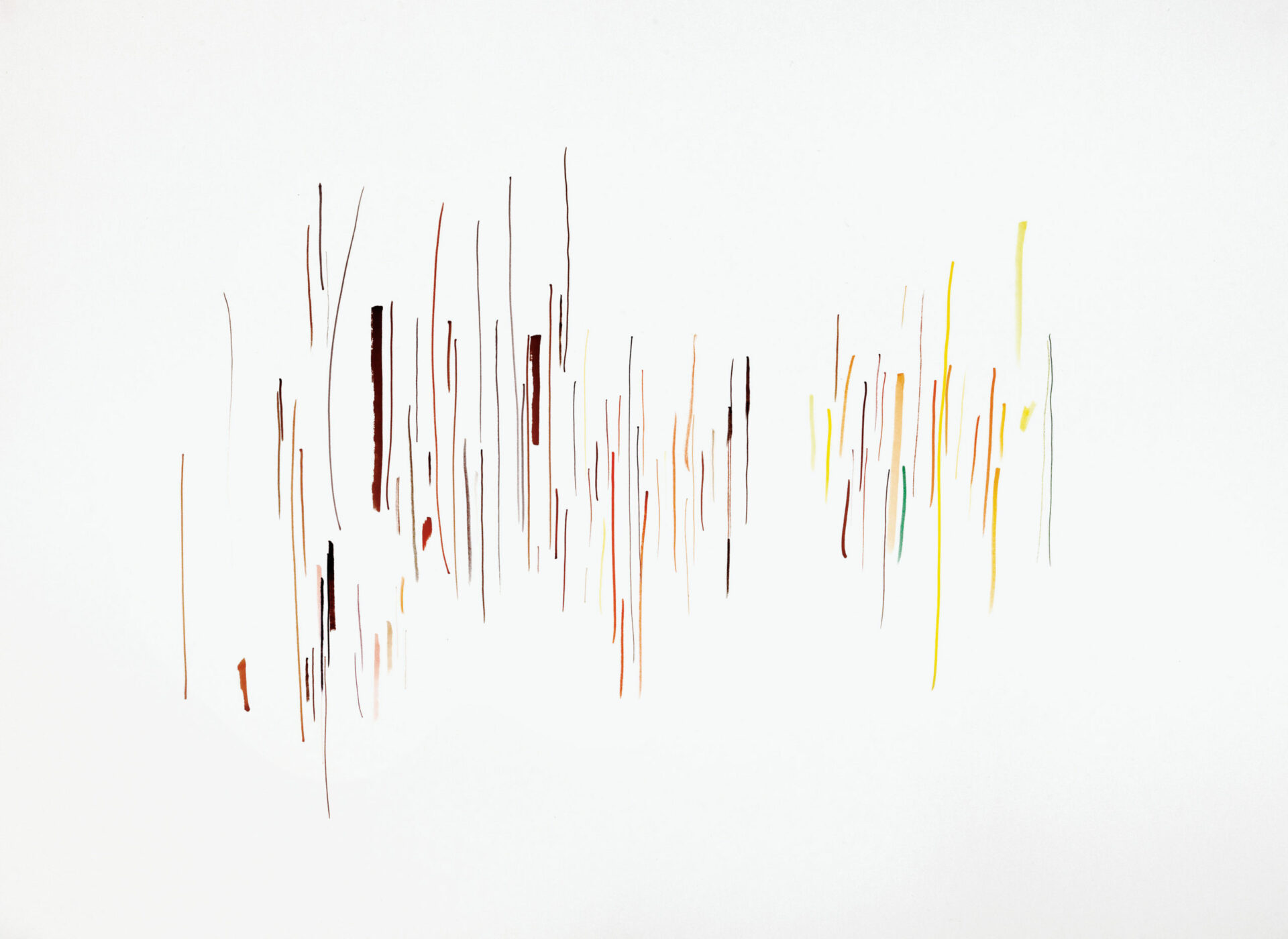
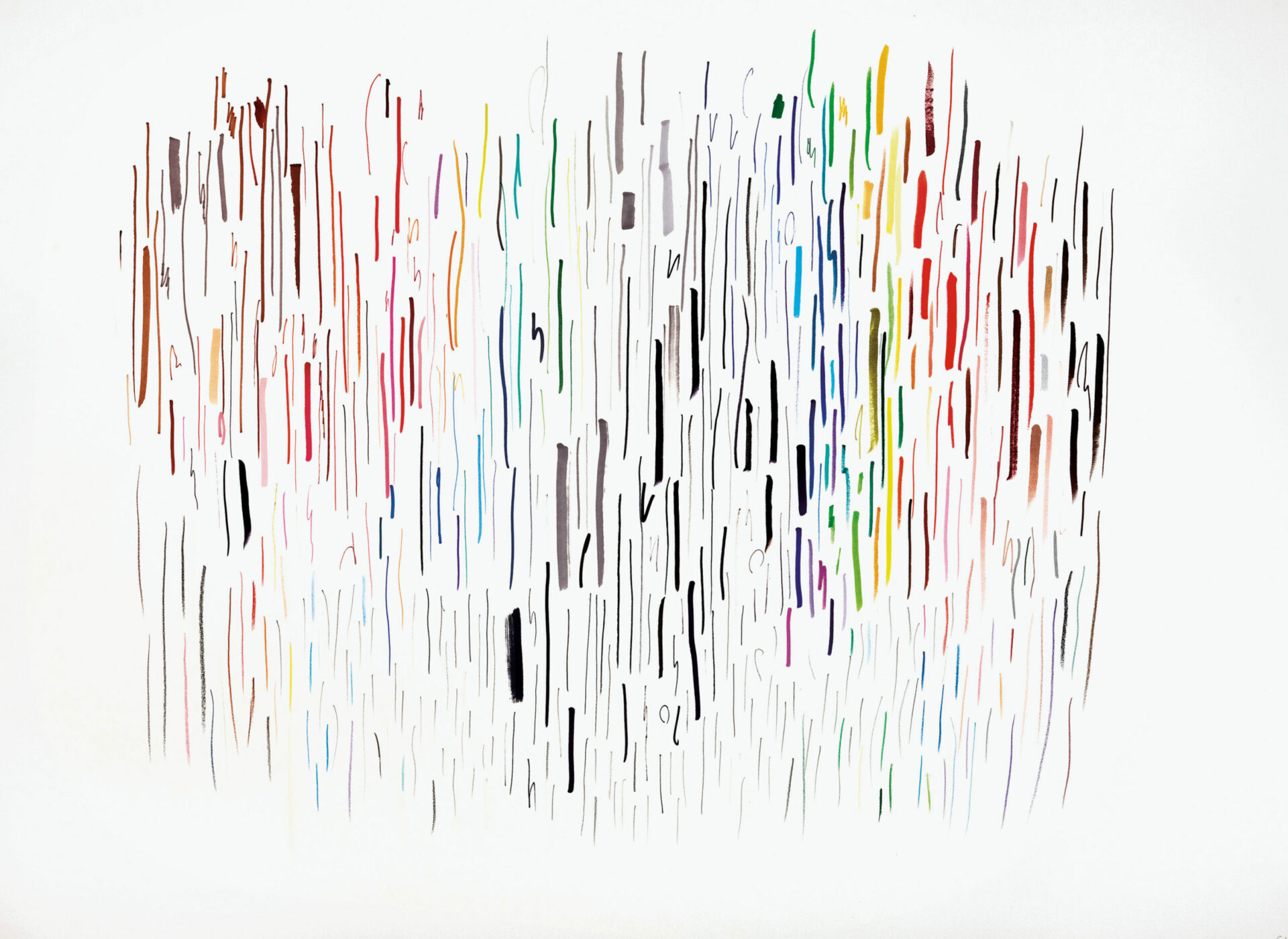
photo : Michel Dubreuil
05.4 Sylvie Cotton, Tous les crayons de l’atelier, 2008.
photo : Michel Dubreuil
In another three-part work Ton corps mon atelier : grains de beauté (2004),2 2 - Galerie Sztuki, Katowice, Poland, April, 2004. Cotton traced a cartography of the other’s body by following various beauty marks spread all over the body, then the face and finally the arms; the result is a variation of subjective traces on paper, based on a surveying of the human body that was as objective as possible. What appeared shows the fragility of such an undertaking. Actually, these more or less accomplished drawings—for the artist remained true to the plan—expose the full distance between the creative gesture and reality. The artist thus painted from life like a realist painter, but the result reveals a succession of traces with no links between each other and which thus evoke the body of the other in his/her vanishing. In a gesture that is closer to performance art, the artist reproduced the beauty marks on her own body, thus wearing the other on herself. Interestingly, a beauty mark has a contour and a colour. The stress is therefore put on what is most evidently shown, though the reference body is absent. Here again, one collects what is there, but indirectly by showing the transposition and links between elements, through the drawing and the constellation of the connected beauty marks whether on paper or on the artist’s body.
Another one of Cotton’s projects, tous les crayons de l’atelier (2008),3 3 - Déshabiller les guirlandes, Action Art Actuel, Saint-Jean-sur-Richelieu (Québec), from February 26 to April 3, 2010. occupies the same domain. It is a series of works on paper showing the traces left by crayons and felt-tip pens. The traces are more or less even in colour intensity and are vertically laid out on the paper. This is a sampling created using all the crayons and felt-tip pens in the studio. The result is astonishing. One wonders how the artist—equipped with such a simple framework—succeeded in creating a work so rich in meaning and in which colour fully plays its signifying role without succumbing to an emotional or even expressive overload. In this array of colours, represented without any particular order, Cotton brings the viewer’s choices into play (“this red is magnificent,” “this green is sublime”). The viewer witnesses a past experience and appreciates the result on paper. Sapience (2010),4 4 - Ibid. a recent work by Cotton, plays out on another level. The artist used course notes and photocopied texts accumulated during her university studies and transformed them into confetti. The inventory of academic and theoretical knowledge becomes the raw material of a multi-coloured and highly fragmented work into which one must plunge one’s hands in order to feel the full weight of this finally “accomplished” learning process. What is the purpose of all these notes? And was this knowledge acquired over the years an end in and of itself? These are questions which our archivist takes on with a touch of anarchist defiance. Complementing this work, the names of the authors whose texts were transformed into confetti are listed on a sheet of paper.
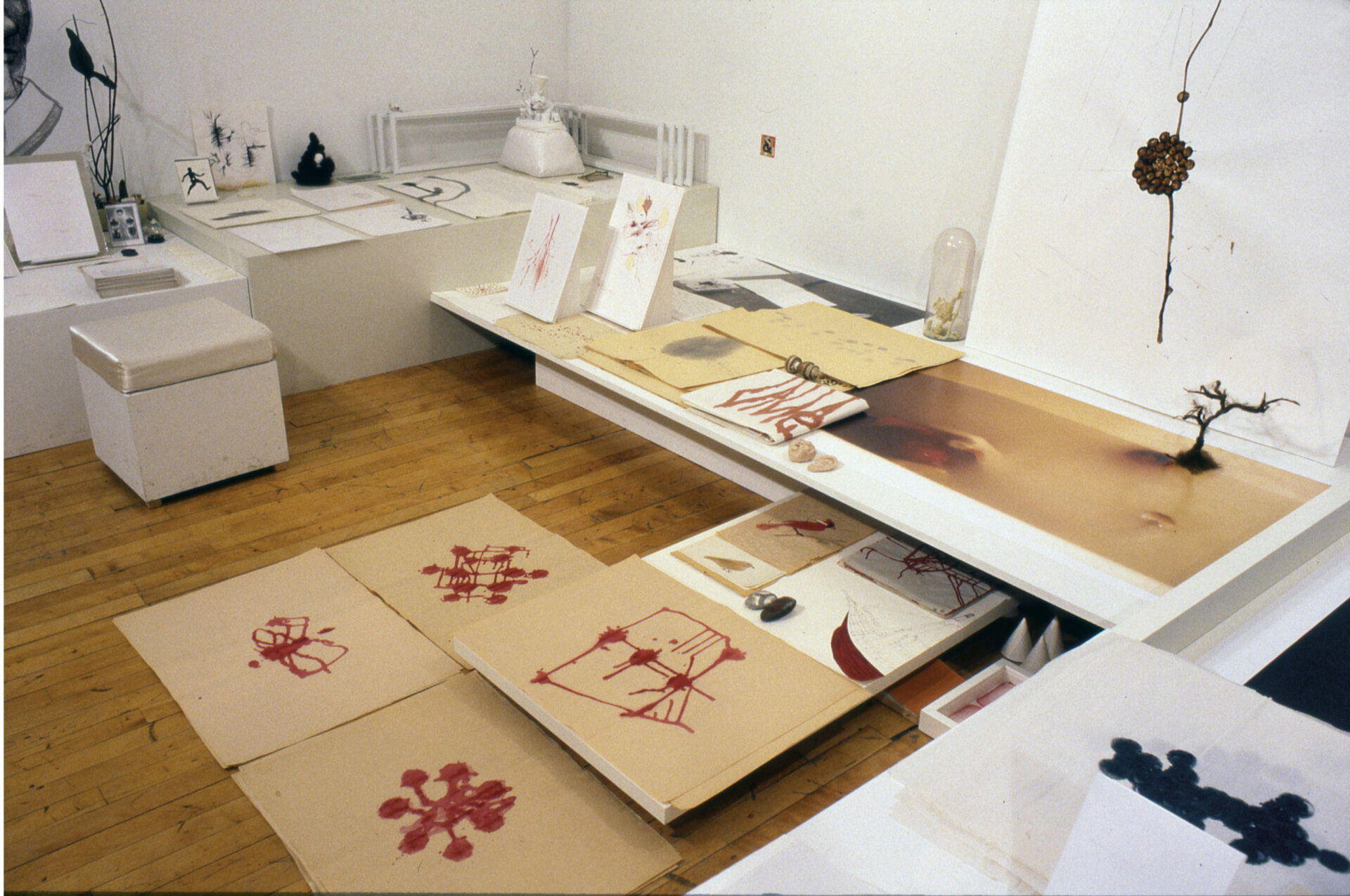
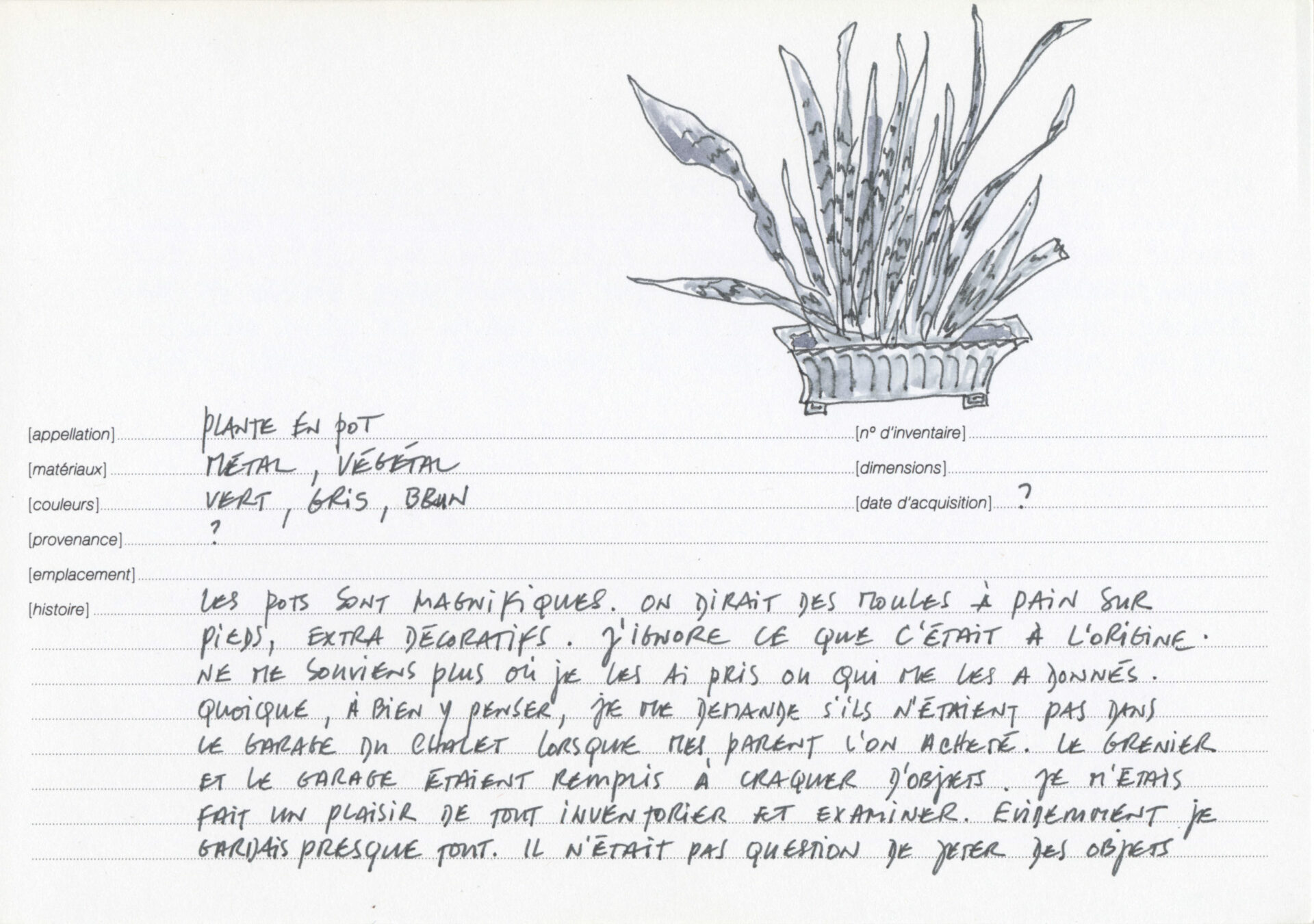
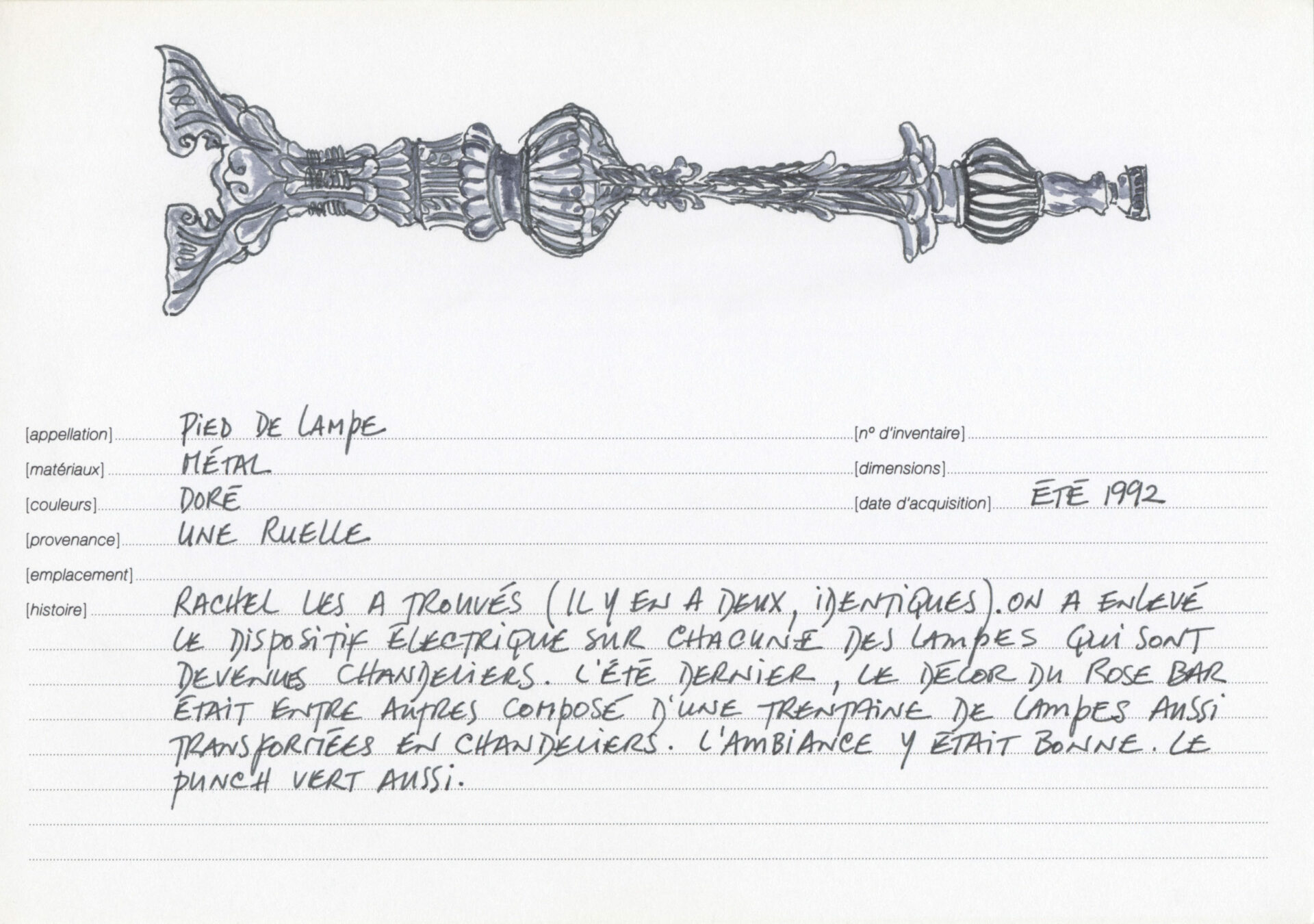
While we are at it, it seems appropriate to take a look back at Le consoloir (1992-93),5 5 - Dare-Dare, Montréal (Québec), 1995. in which Cotton inventoried the objects of her house by drawing and describing them on 250 note cards. These rather realistic drawings and descriptions simulated a common museological archival practice in a sort of quirky parody.
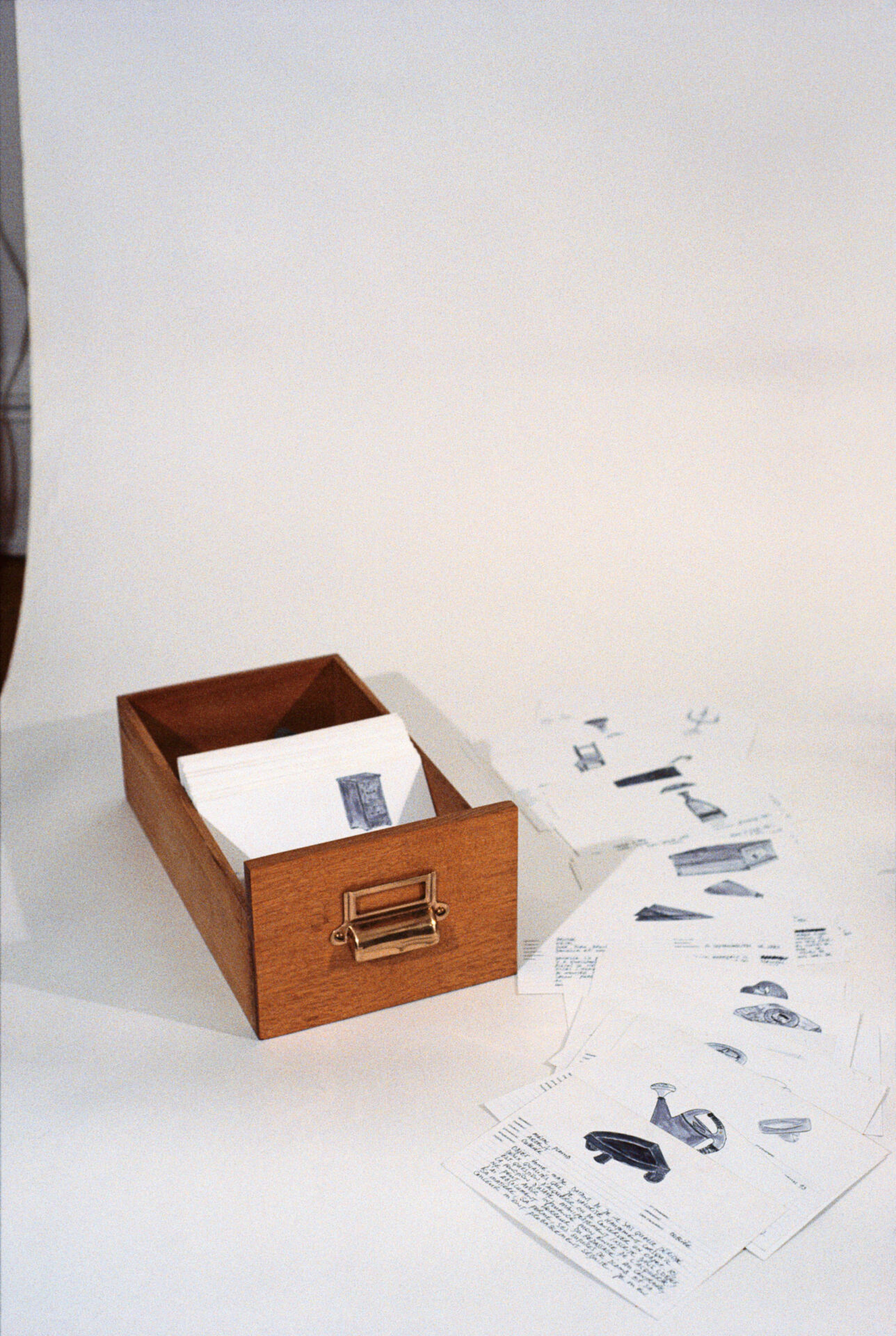
photo : Guy L’Heureux
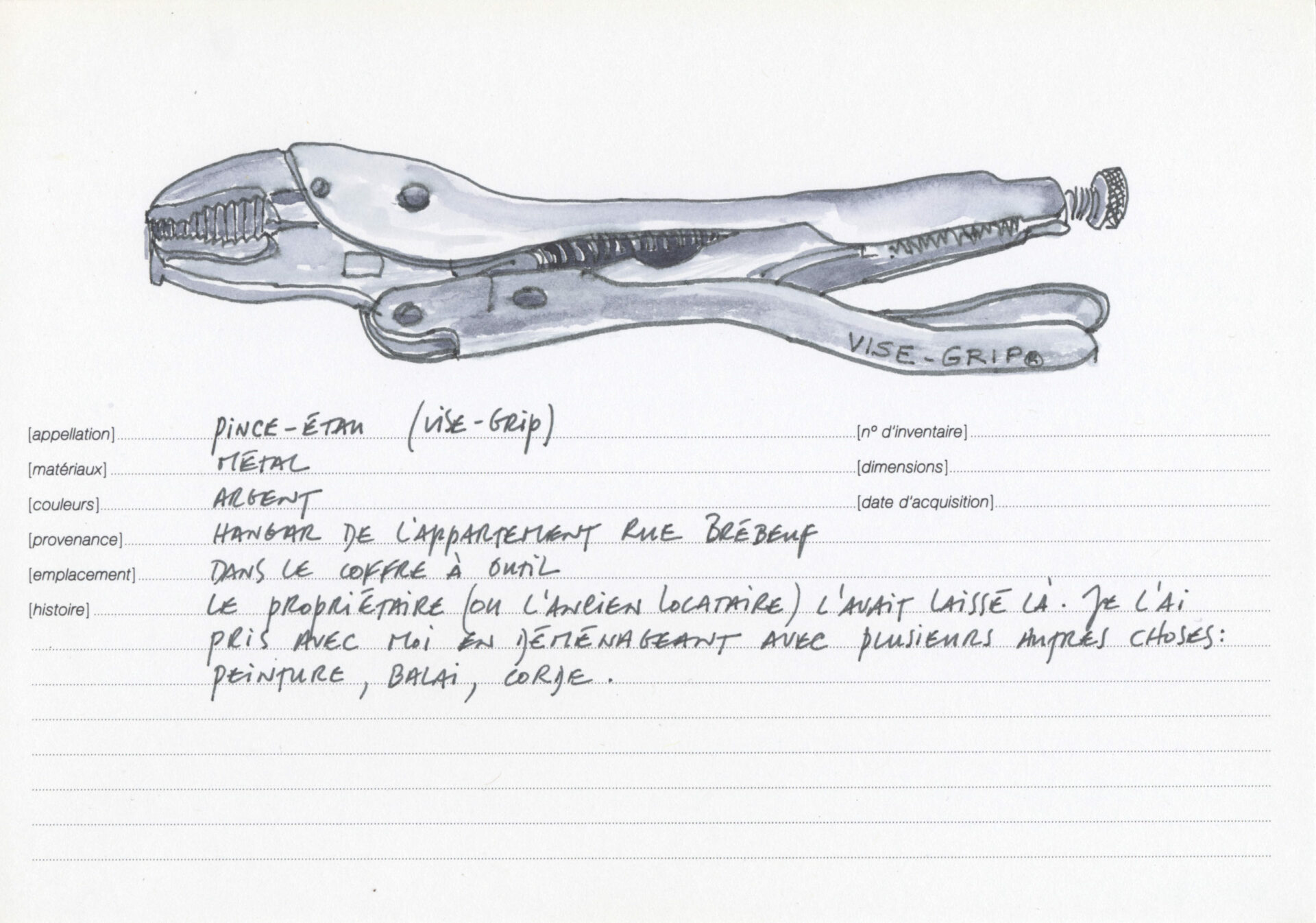
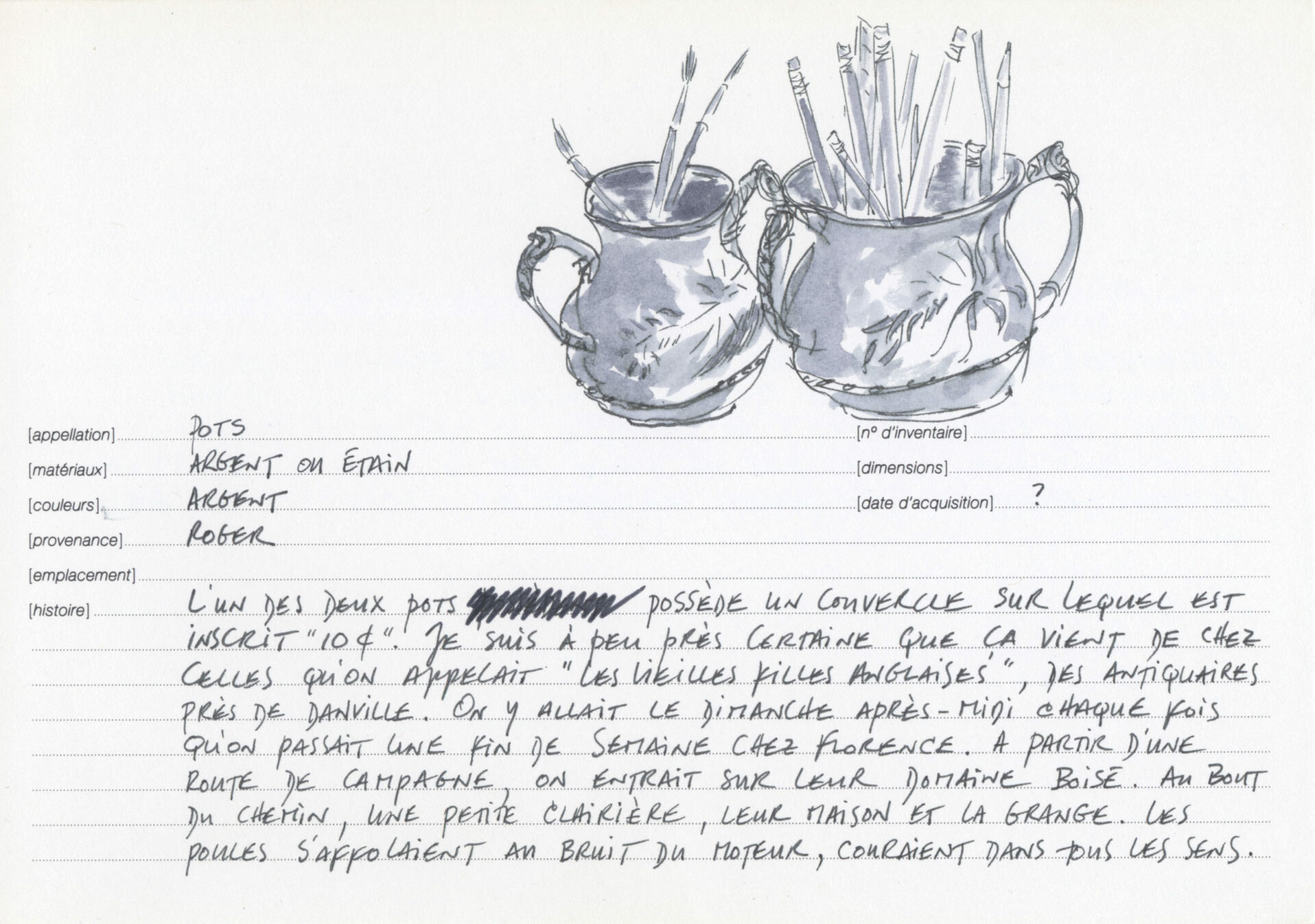
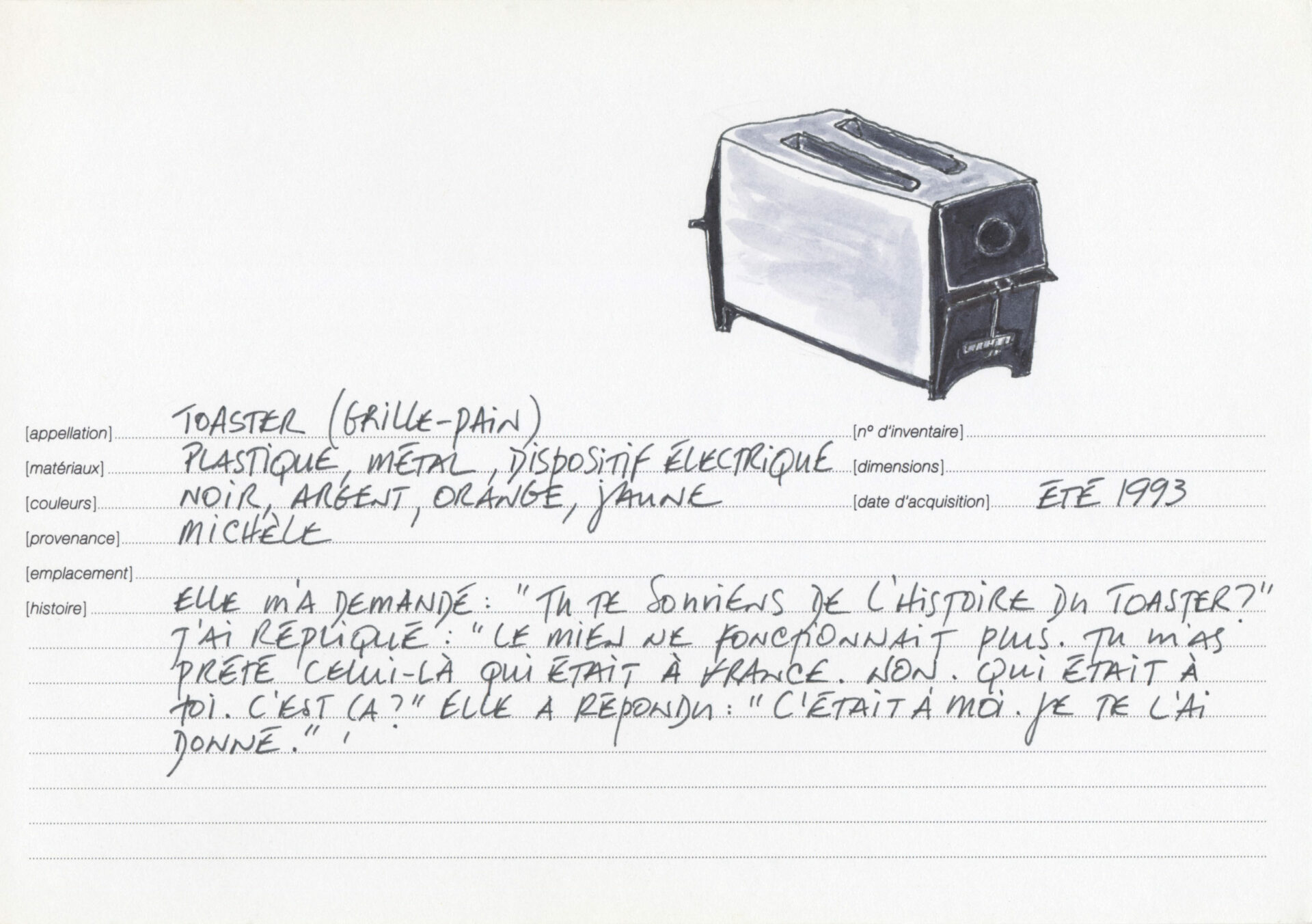
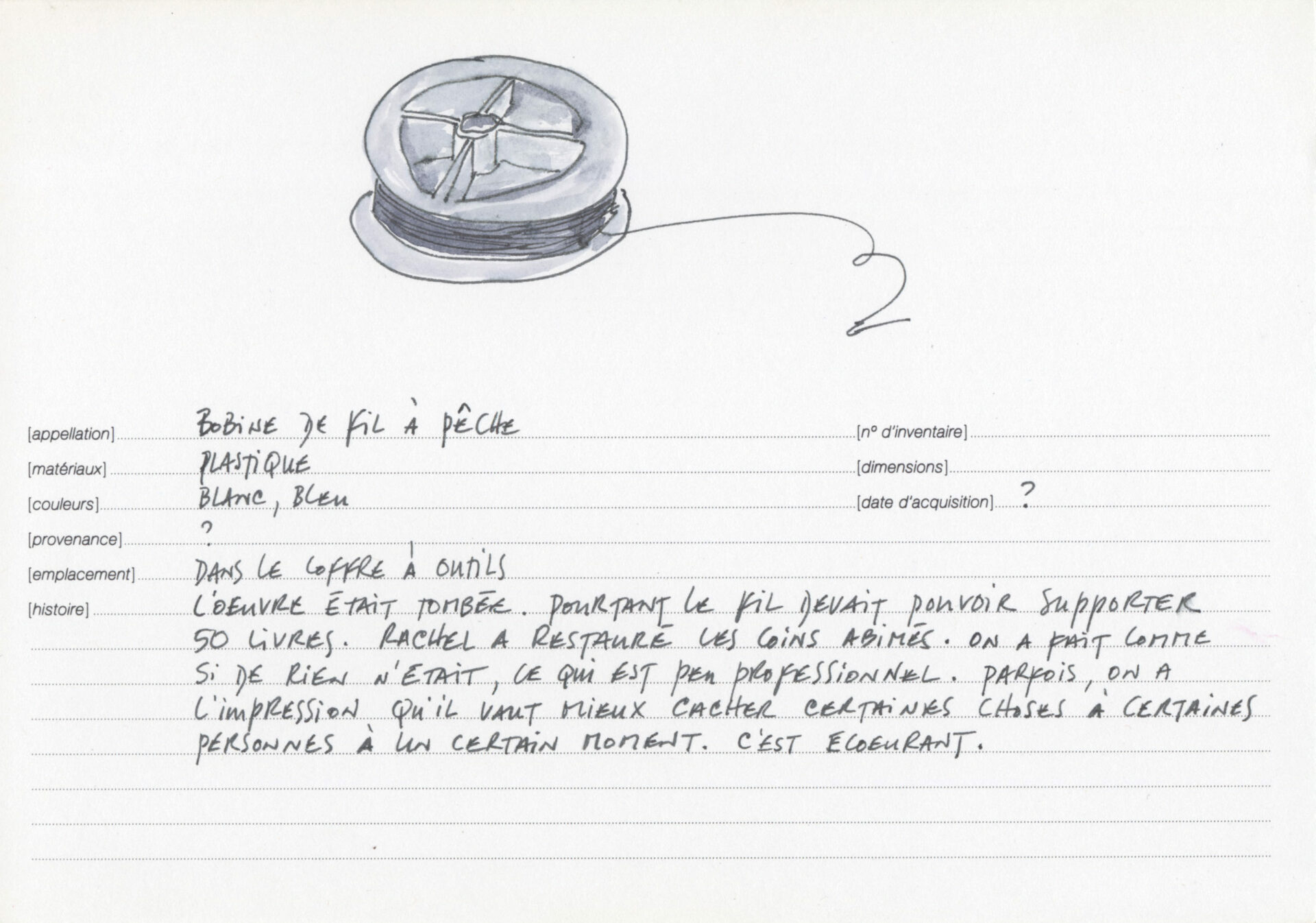
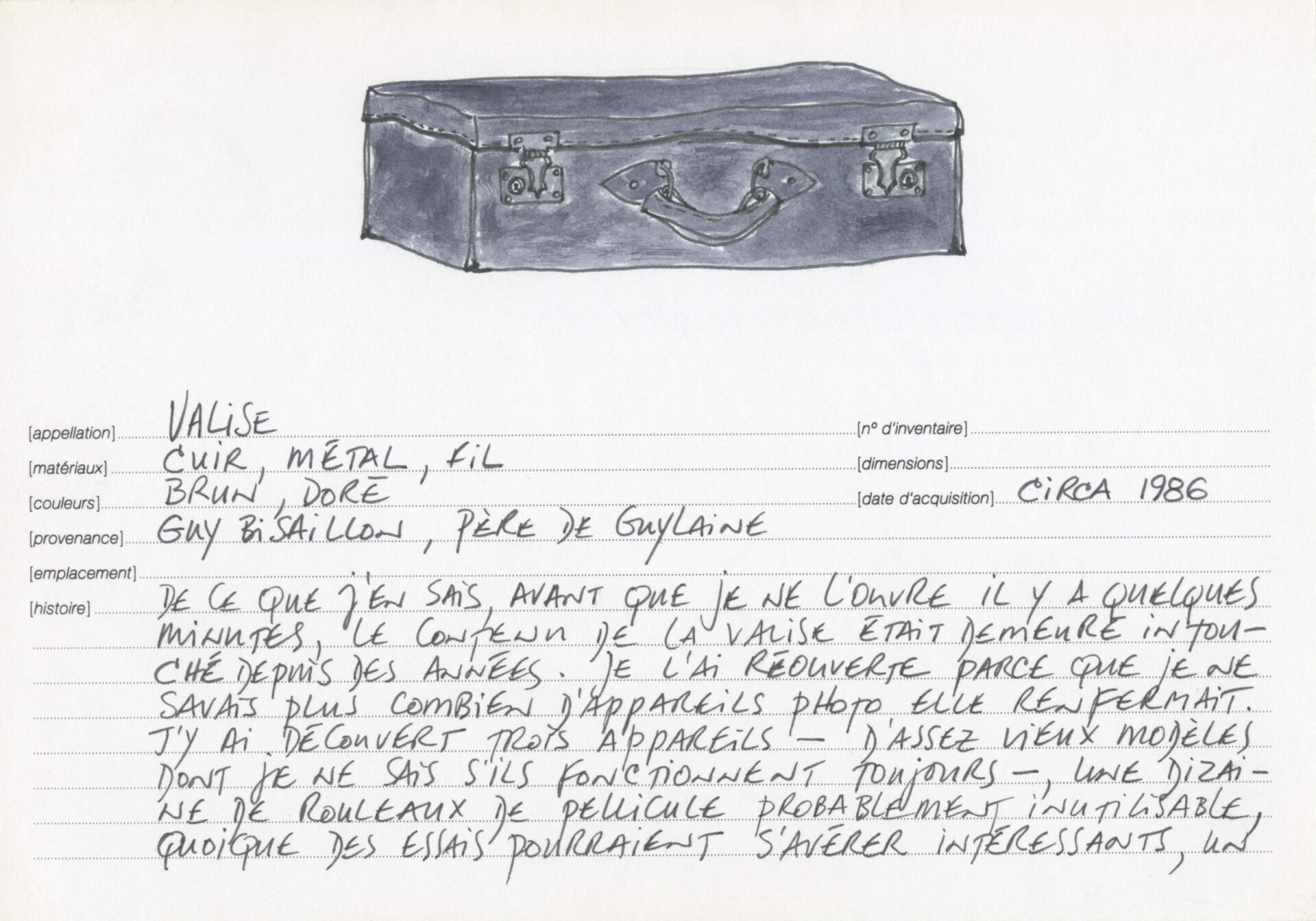
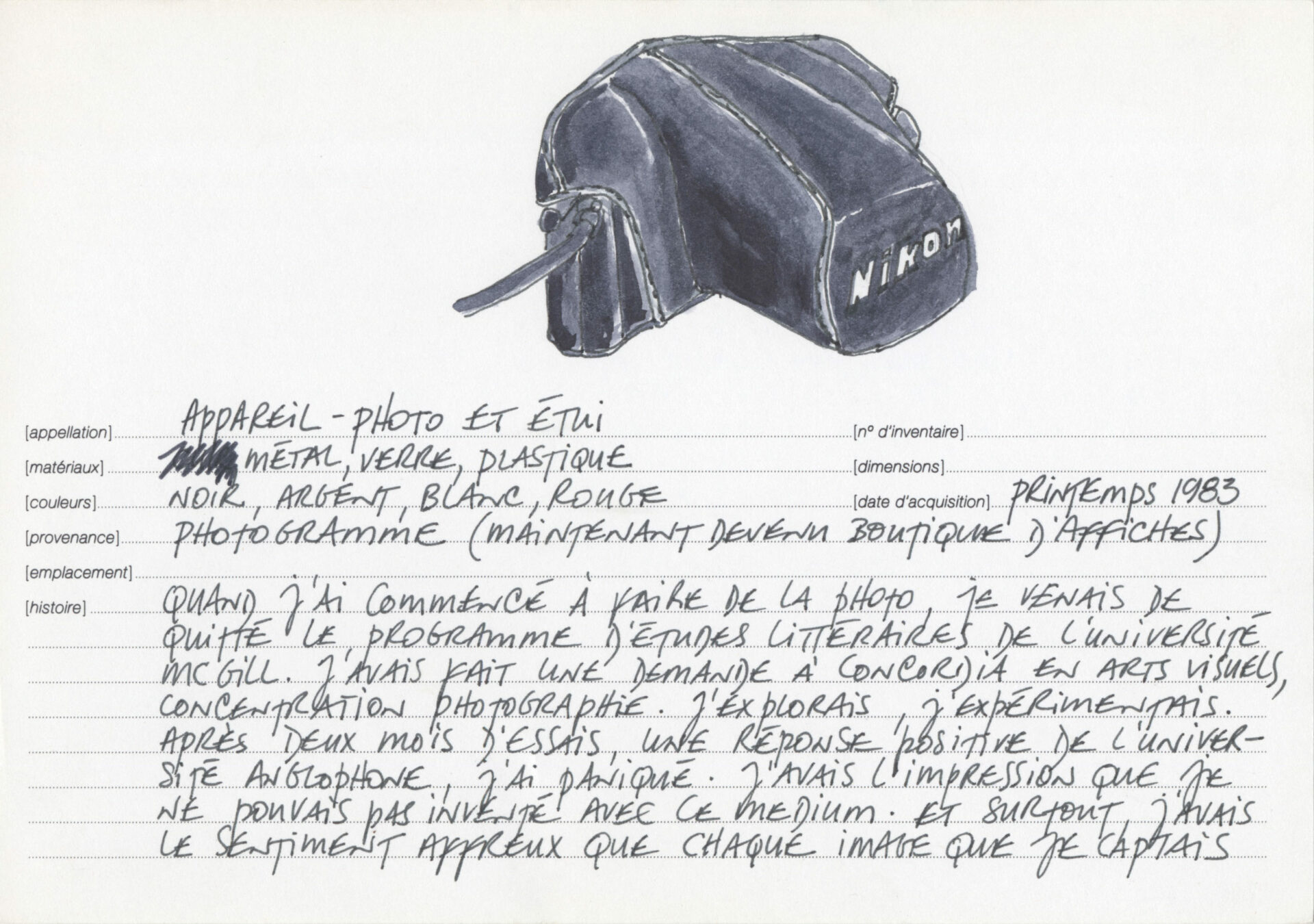
05.12 – 05.13 – 05.14 – 05.15 – 05.16 – 05.17
Sylvie Cotton, Le consoloir, 1992-1993.
photos : permission de l’artiste | courtesy of the artist
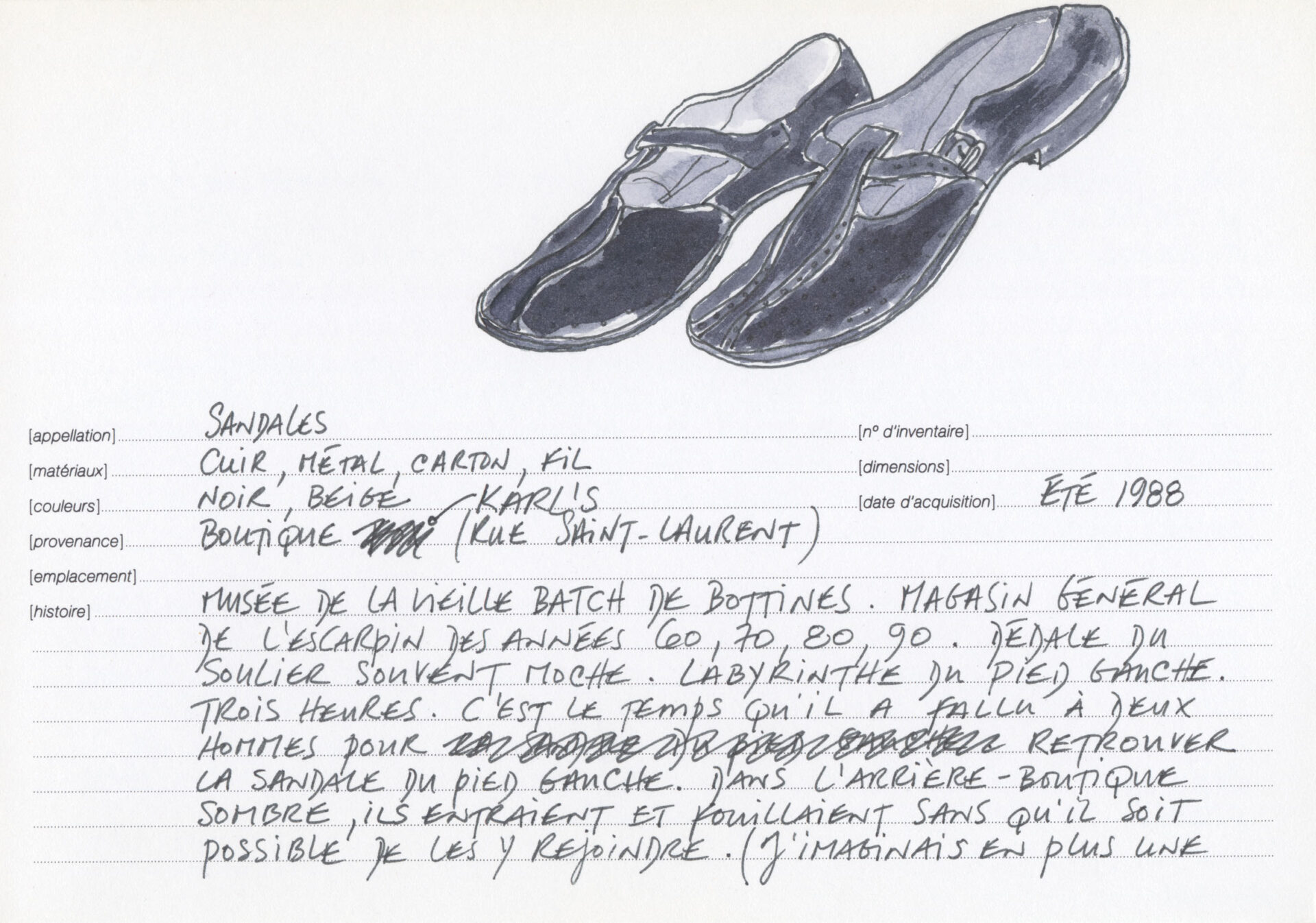
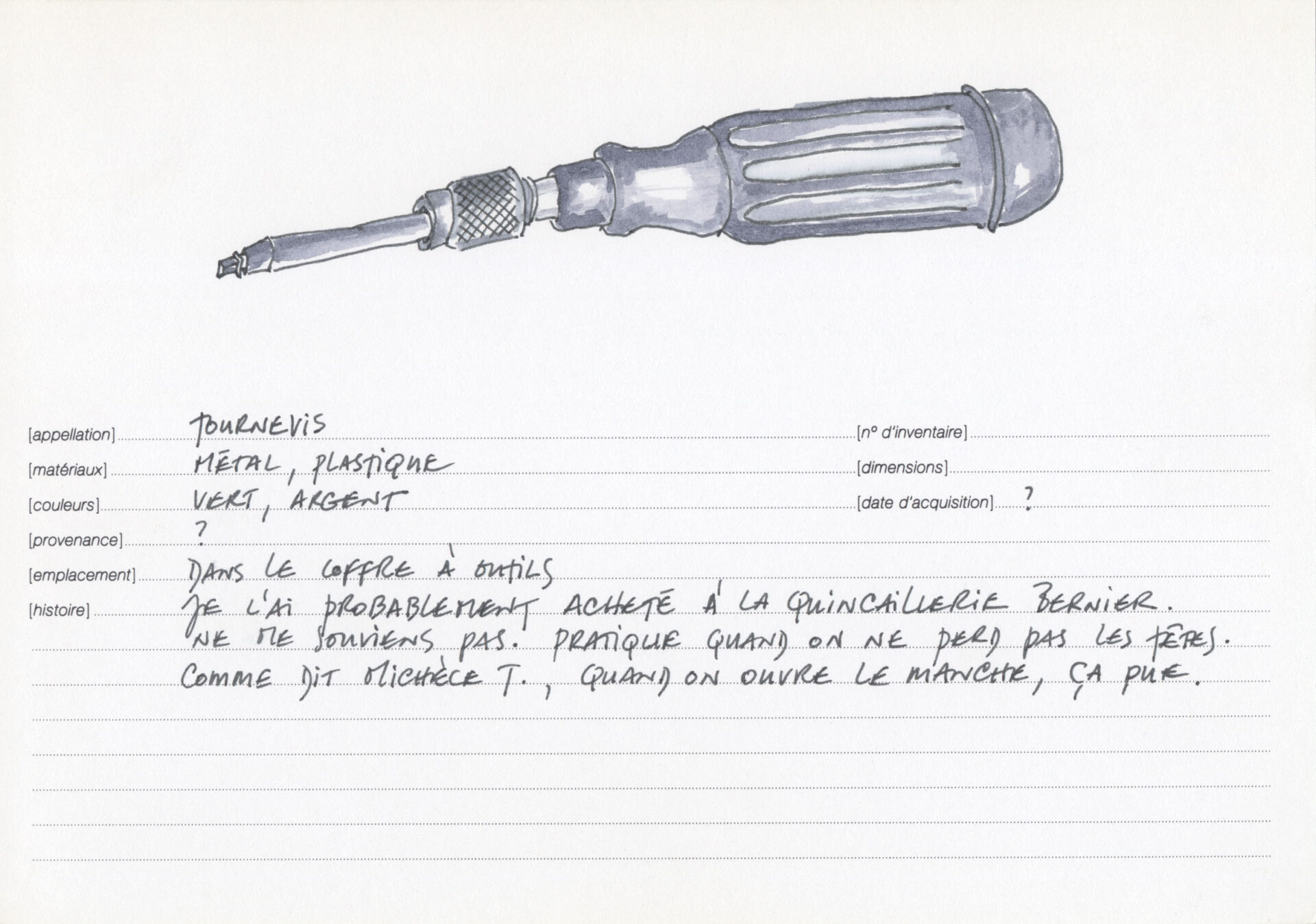
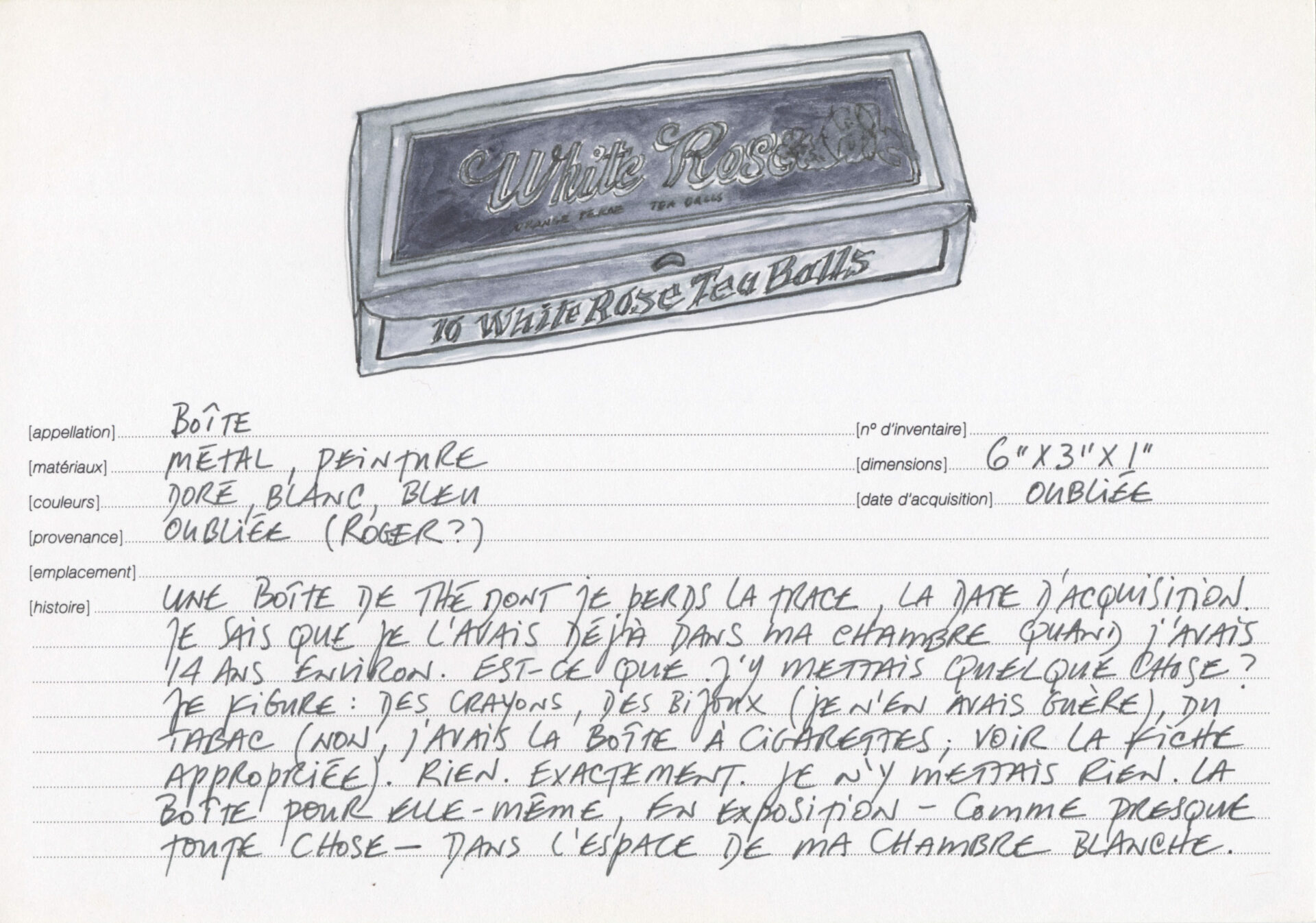
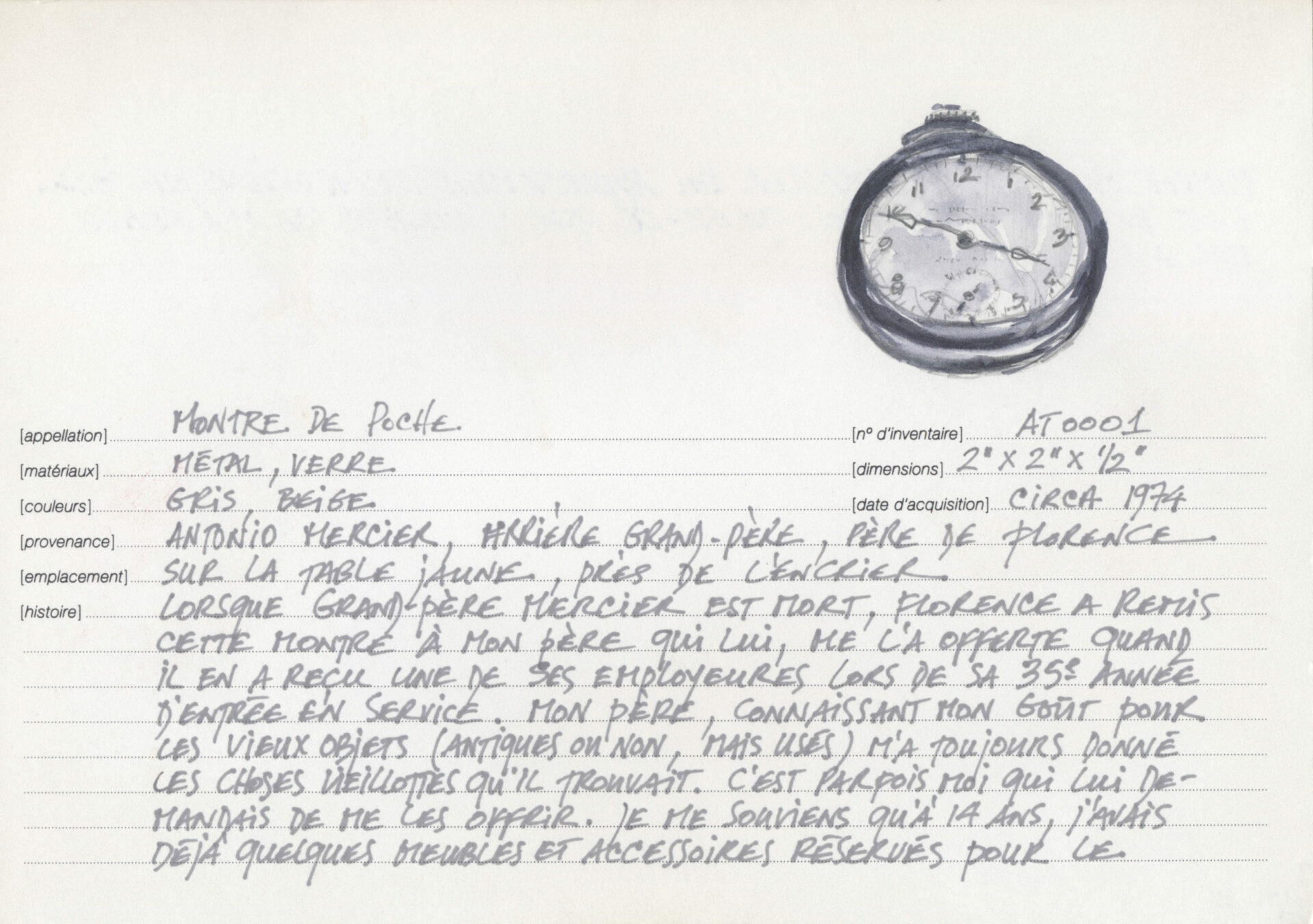
One should visit Cotton’s website6 6 - www.sylviecotton.com to understand her approach and see how she herself grasps her artistic experience. The visitor who enters the site is invited to choose between two navigation modes. The first is called “poetic search” and the second “logical search.” Because for the artist, one goes without the other. The same works can thus be consulted according to two modes, and two worlds. The logical search is facilitated by the following subcategories: Title/Date/City/Medium/Place/Collection. The poetic search, for its part, proceeds according to subcategories which can be seen as particular collections: All/Other/Being/Path/Incorporation/Reason/Was/Breath/Thousand/Time. Through this approach one clearly understands the project undertaken by Cotton, who seeks to embrace all that derives from the grandiose necessity of which she is possessed. The words that follow one after another without prioritization, in an almost platonic manner, show a constellation of elements which, when viewed as an ensemble, propose an acute and responsible taking care of the world.
Mediator
The familiarity of the I, the identitarian image, is tolerable only if it is distanced, and then brought back in the guise of an “other” I, an I who wears the proof of having dwelled in otherness.7 7 - Bernard Chouvier, Pouvoirs du négatif dans la psychanalyse et la culture, Seyssel, Éditions Champ Vallon, p.178.
With Cotton, the work is supported by an external object that has gone through the filter of intimate experience. The artist is a mediator who makes use of complex networks so that IT can finally be revealed. To make connections visible by creating inventories from the body, identity, gestures, this is the project that drives this practice. The objects born of it are so many testimonies to an identitarian engagement deeply rooted in the self, but directed towards the other. The body of work the artist has developed directly from her fantasies clearly reveals the contours of a moving world that never rests. One could view her works like so many snapshots taken in the universal register; images that come to life in order to inventory the figures of oneself in autofictional form.
[Translated from the French by Bernard Schütze]