
SODRAC (2007).
Photo: courtesy of the artist & VG Bild-Kunst, Bonn.
According to the sociologist Frank Furedi, “the growing use of the term ‘at risk’ expresses cultural attitudes towards everyday life. It is symptomatic of a tendency to regard a growing range of phenomena as threatening and dangerous.”1 1 - Frank Furedi, Culture of Fear: Risk Taking and the Morality of Low Expectations (London, UK: Continuum, 2002), 9. Increasingly, fear is theorised as a technology and symptom of contemporary western societies. Though an emotion that is recognisable as predominant in other historical periods, the cultural recognition conferred to fear today is betrayed by definitions such as “risk society,” “age of anxiety” and “culture of fear.”2 2 - See Sarah Dunant and Roy Porter eds., Age of Anxiety (London,UK: Virago Press, 1996); Ulrich Beck, Risk Society: Towards a New Modernity (London,UK: Sage Publications, 1992); Furedi, Culture of Fear. The arts’ response to this climate concerns both the private and social spheres. It voices the experience of political threat and violence, and the sense of individual and collective anxieties. Paradigmatic are artworks that comment directly on the current political situation, engaging with issues such as terrorism. Yet, also significant are those works that explore the impinging anxieties that reverberates in everyday life, turning the domestic into menacing landscapes. My endeavour is to consider the fear of the ordinary, the menace that inhabits the quotidian, as contemporary figurations of the uncanny by artists as diverse as Gregor Schneider, Mona Hatoum, Marko Mäetamm and Shona Illingworth. The aim is to investigate the pervasiveness of fear and locate the visual arts engagement with this emotion to unravel the broader socio-cultural implications of the unheimlich as the currency of contemporary experience.
At the beginning of his seminal essay, Freud refers to the uncanny as an aesthetic category, as “the theory of the qualities of feeling.”3 3 - Sigmund Freud, “The Uncanny,” (1919) in Collected Works, vol. 14 (London, UK: Penguin, 1990), 339. Freud draws attention to the etymological ambiguity of the term unheimlich. Heimlich, which refers to what is familiar and well known, also means what is secret and mysterious thus ambiguously hinting at its opposite, unheimlich—what is occult, eerie, and unknown. Related to “what is frightening – to what arouses dread and horror” and to “what excites fear in general,” Freud suggests that “The uncanny is that class of the frightening which leads back to what is known of old and long familiar.”4 4 - Ibid., 339 and 340. This inherent tension between known and unknown is played out as a disturbing experience of repressed material of the mind that represents itself in an alien and frightening form. Freud describes the uncanny effect “as when the distinction between imagination and reality is effaced, as when something that we have hitherto regarded as imaginary appears before us in reality, or when a symbol takes over the full functions of the thing it symbolizes.”5 5 - Ibid., 367. The uncanny happens as a blurring of reality at the erosion of the boundaries between the real and imagination. Examples in Freud include tales by the German romantic writer E.T.A. Hoffman, and artefacts, such as wax models, suggesting a convergence between the psychoanalytical dimension of the uncanny and the imaginary, whether fictional or visual. Hence, Jean-Luc Nancy recognises the uncanny as a trait of landscape painting, as the representation of space that “opens to the unknown,” as a depiction of “dislocation,” of strangeness and estrangement.6 6 - Jean-Luc Nancy, “Uncanny Landscape,” in The Ground of the Image, trans. Jeff Fort (New York: Fordham University Press, 2005), 51-62, 59-60.
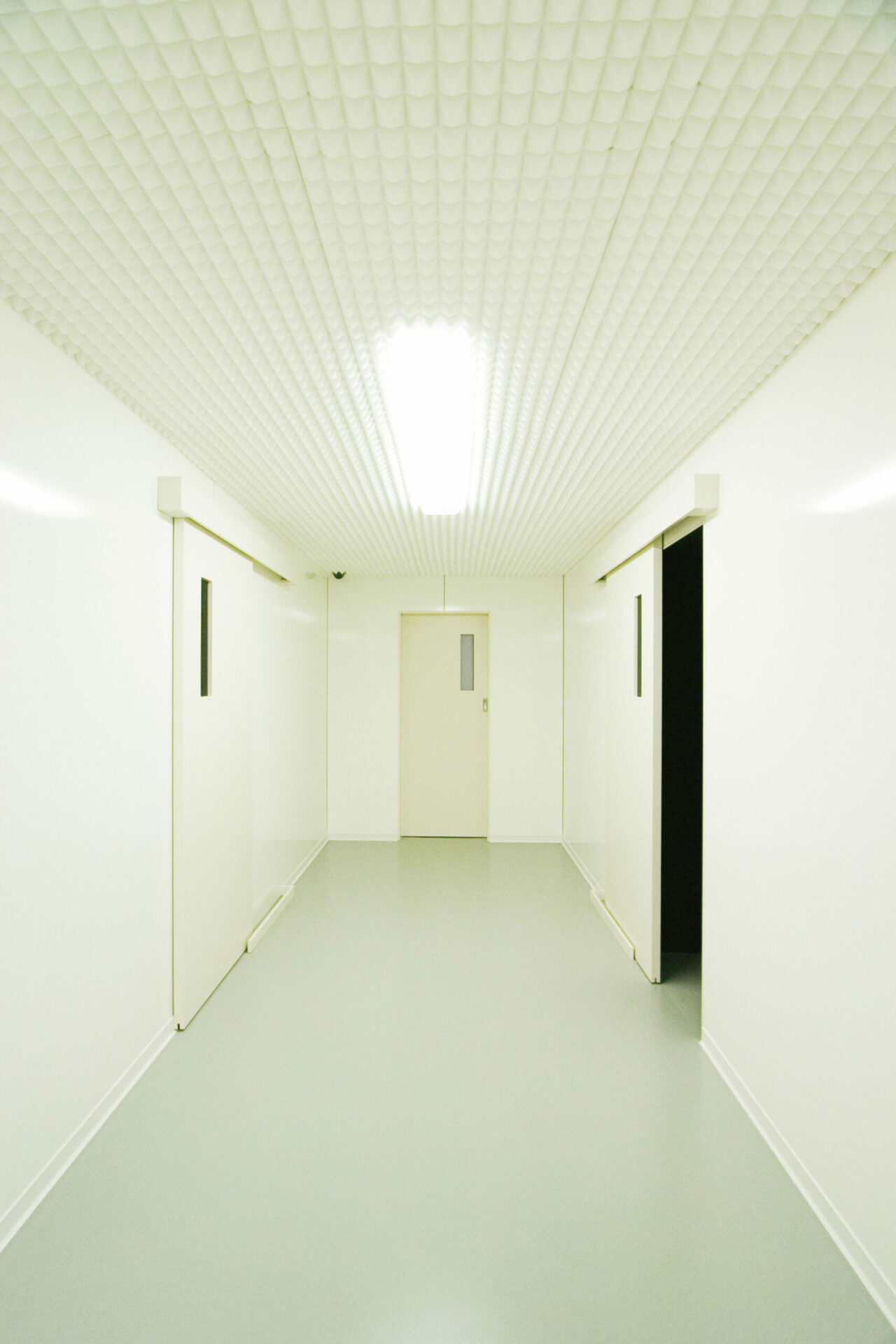
Weisse Folter, K20K21 Kunstsammlung Nordrhein-Westfalen, Düsseldorf, 2007.
Photo: courtesy of the artist & VG Bild-Kunst, Bonn
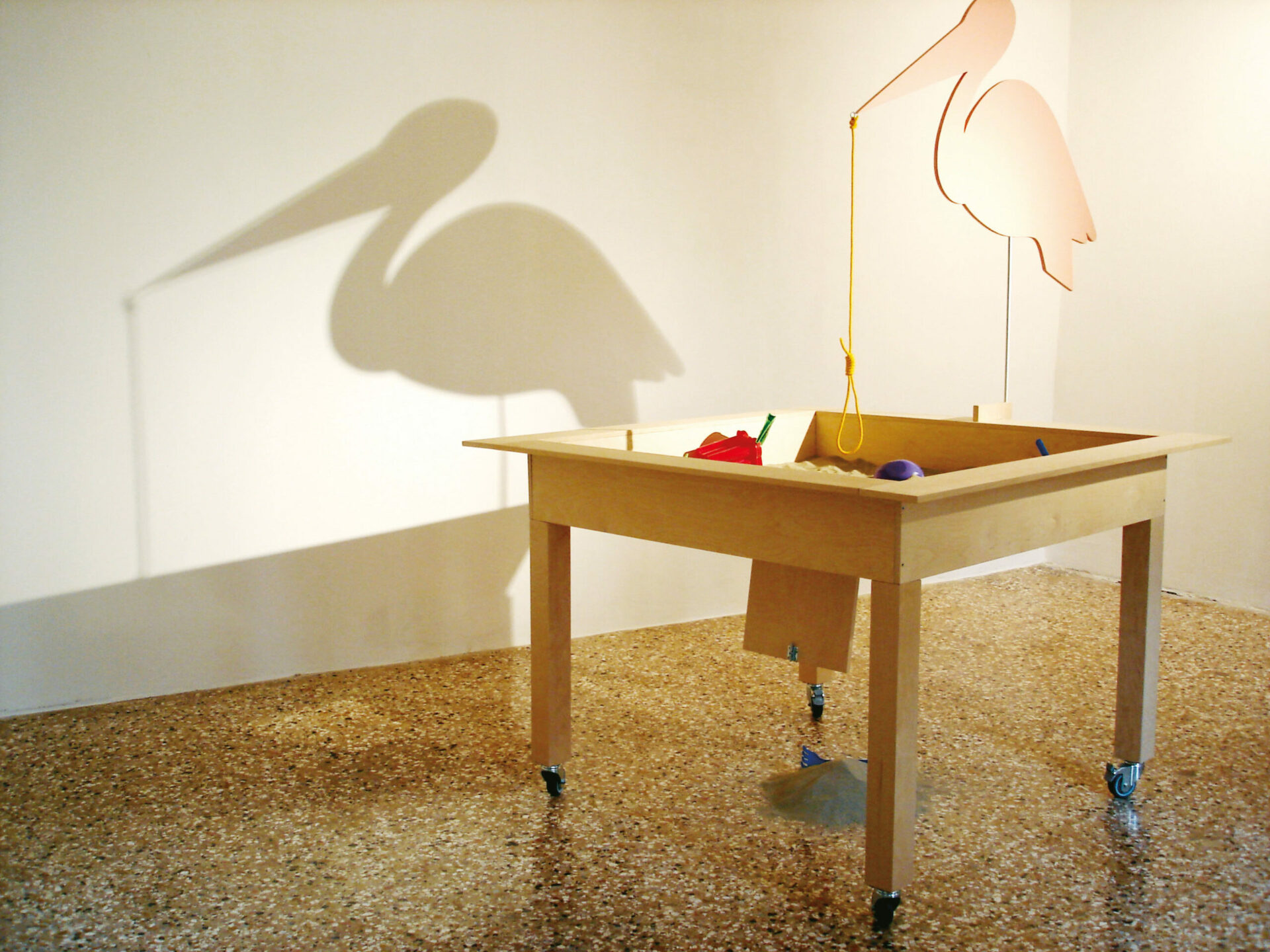
Sandbox, 2006.
Photo: courtesy of the artist
Historically recognised as ingrained in late eighteenth and early nineteenth century sensibility, the uncanny is a cipher of the Gothic whose expressions betrayed hidden anxieties.7 7 - See Terry Castle, The Female Thermometer: Eighteenth-century Culture and the Invention of the Uncanny (Oxford: Oxford University Press, 1995). “The internalisations of Gothic forms reflected wider anxieties which, centring on the individual, concerned the nature of reality and society and its relation to individual freedom and imagination.”8 8 - Fred Botting, Gothic (London, UK and New York: Routledge, 1996), 10. Though the encounter with otherness characteristic of colonialism encompassed the uncanny as a socio-cultural as well as psychological trait, it is however with modernity and post-modernity that the uncanny becomes central to the critical analyses and experience of everyday life.
“Modernity and post-modernity share similar, yet different anxieties—the uncanny gives us ways of thinking about the interrelationship of both; the dopplergänger and automaton haunted modernity, for example, while clones and techno-human cyborgs haunt us.”9 9 - Michael Arnzen quoted in Nicholas Royle, The Uncanny (London,UK and New York: Manchester University Press, 2003), 37. Explored in cinema, literature, architecture and the visual arts, the uncanny surfaces as a recurrent theme in artworks by artists from different background and working in various media, as a quality of the contemporary and a critical tool to reflect upon it, especially in relation to issues concerning notions of space, subjectivity, and reality.10 10 - See Anthony Vidler, The Architectural Uncanny: Essays in the Modern Unhomely (Cambridge Mass.: MIT Press, 1996); Slavoj Zizek, Enjoy Your Symptom! Lacan in Hollywood and out (New York: Routledge, 2001).
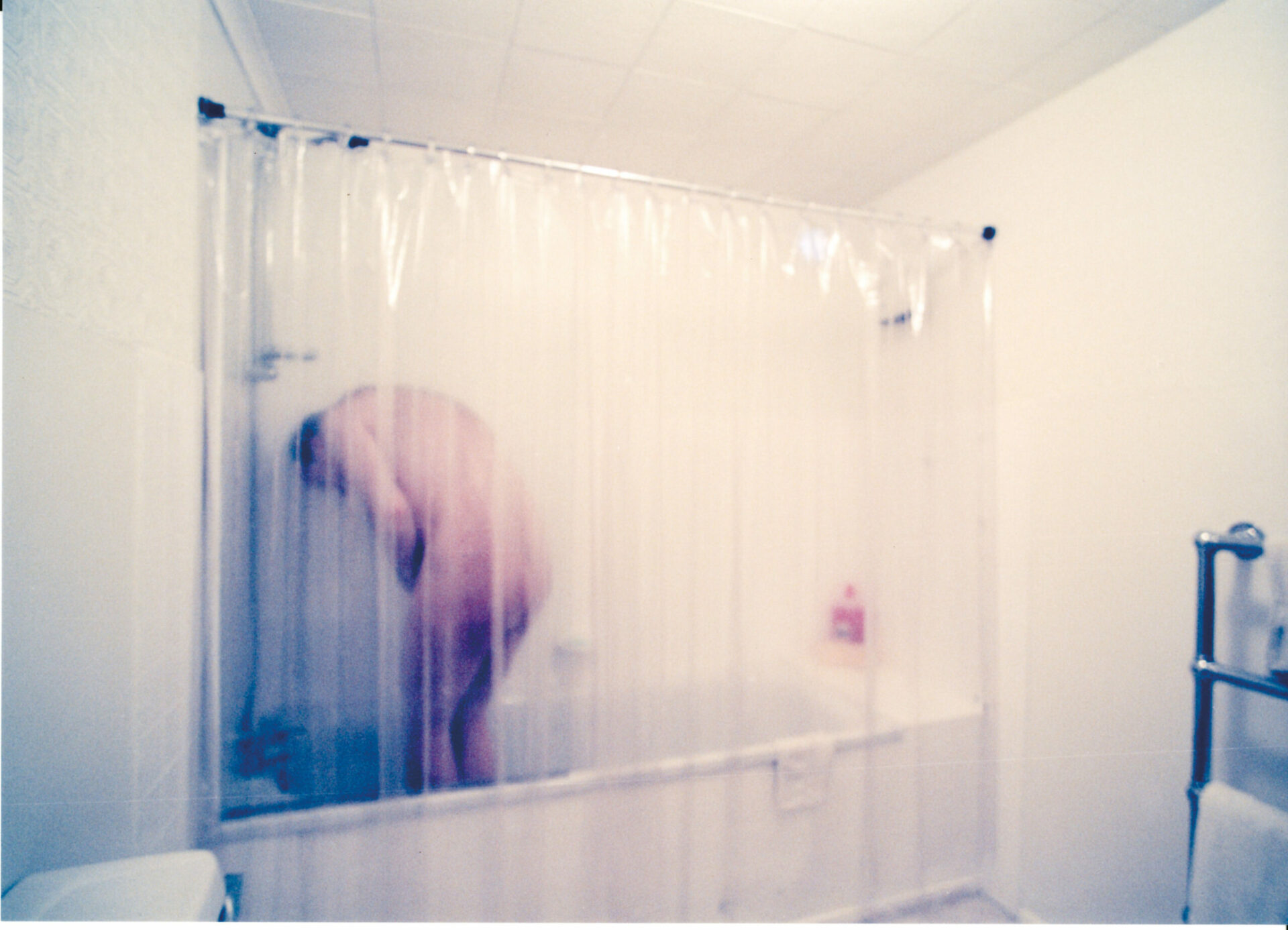
Two neighbouring houses in East London show the same ordinary façade. Inside they look alike. The decoration is the same; similar objects are scattered around, some may belong or have belonged to a child. The apparent ordinariness of the exterior disguises a sinister atmosphere. The “familiarity” of the interiors, so perfectly duplicated, conveys a sense of displacement and of claustrophobic apprehension. The likeness of the inhabitants is also remarkable, as is their behaviour, even in the most mundane acts. Who are the people who live in these houses? What is the secret that they hide? We, the visitors who have let ourselves in (literally by being given the key), are the intruders. We are the strangers in the scene. This is not the description taken from a textbook on the uncanny, but rather that of an art project by the artist Gregor Schneider, Die Familie Schneider (2004).11 11 - The project was commissioned by Artangel (October 2004), www.artangel.org.uk. The work is indicative of the artist’s practice that focuses on space as what may be defined as a dimension of the contemporary sensibility of the uncanny, explored through the duplication and replica of existing places. In a more recent work, Weisse Folter (2007), the artist built a series of corridors and small rooms, clinically pristine yet chillingly disturbing. The reference to secure wards is evident in the title that hints to the methods of “clean torture.” Schneider’s works can be read as powerful and disturbing simulacra (in Jean Baudrillard’s definition as the convergence of reality and fiction) that, by challenging the neutrality of surfaces, the ordinariness of appearances, render palpable the psychological, social and political dimension of space as a place of fear.12 12 - Jean Baudrillard, Simulacra and Simulation, trans. Sheila Faria Fraser (Ann Arbor: University of Michigan Press, 1994), 1-7. Real and imaginary at the same time, actual places and artefacts, Schneider’s artworks pose the unknown as a dimension of today’s experience and in so doing map the uncertain territory of the contemporary condition of fear.
Both psychoanalytically and culturally, the notion of the uncanny is increasingly inscribed within a discourse that invests estrangement, alienation and the other. Julia Kristeva poignantly underlines the experience of strangeness and depersonalisation as integral to the construction of contemporary subjectivity. Kristeva focuses on the immanence of the uncanny as the individual experience of otherness, and analyses the fragility of the boundaries that construct the self as constant confrontation with the other in the tension between identification and rejection. “The uncanny experience of strangeness allows for many variations: they all repeat the difficulty I have in situating myself with respect to the other and keep going over the course of identification-projection that lies at the foundation of my reaching autonomy.”13 13 - Julia Kristeva, Strangers to Ourselves, trans. Leon S. Roudiez (New York: Columbia University Press, 1991), 187. This manifests itself in terms of both individual subjectivity and of cultural and political identities, as a condition of social, racial and intellectual displacement. For artists, such as Mona Hatoum, whose experience of exile is central to their artistic practice, this often translates in subverting domesticity and domestic security by turning homely objects into dangerous and haunting artefacts: soaps or carpets with pins (Nablus Soap, 1996; Door Mat, 1996), oversize kitchen tools (La Grande Broyeuse—Mouli-Julienne, 2000; Grater Divide, 2002), or dysfunctional beds (Webbed, 2002). Hatoum’s work expresses the disorientation of exile and dislocation of homelessness through unsettling metaphors of entrapment, disempowerment and displacement that resonate with the experience of many minorities.14 14 - See Gannit Ankori, Palestinian Art (London,UK: Reaktion Books, 2006), 121-54. Her work merges gender and socio-political concerns, evoking an experience of alienation that is both highly individual and collectively recognisable.
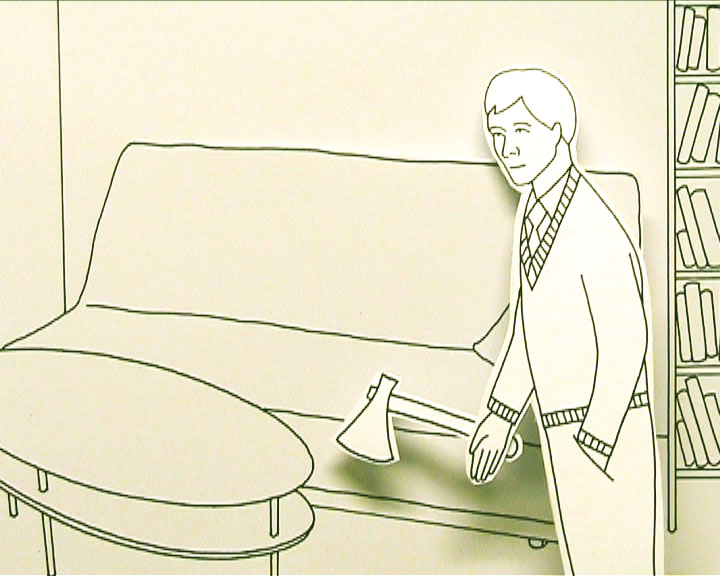
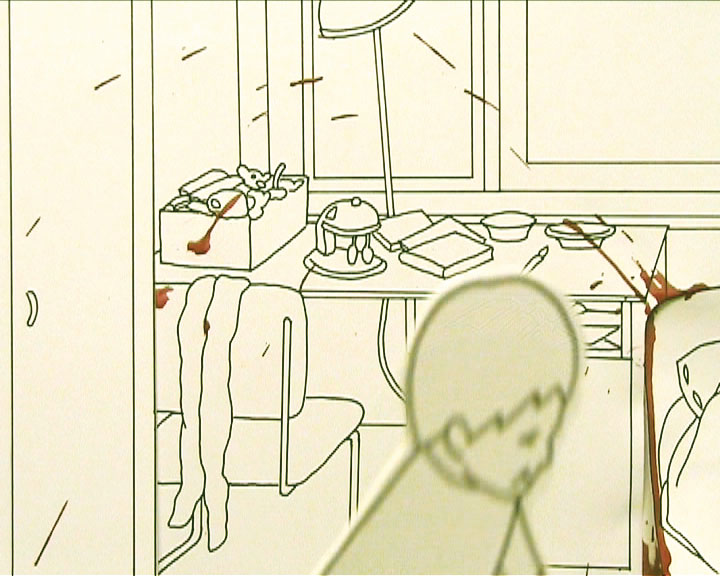
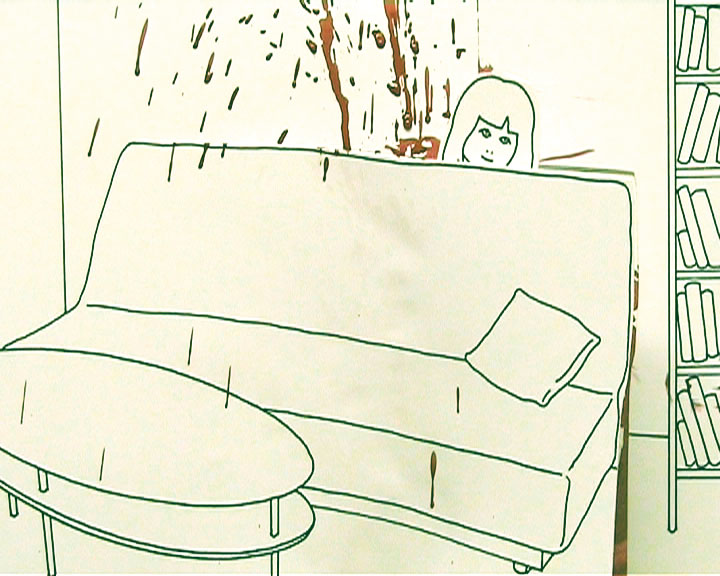
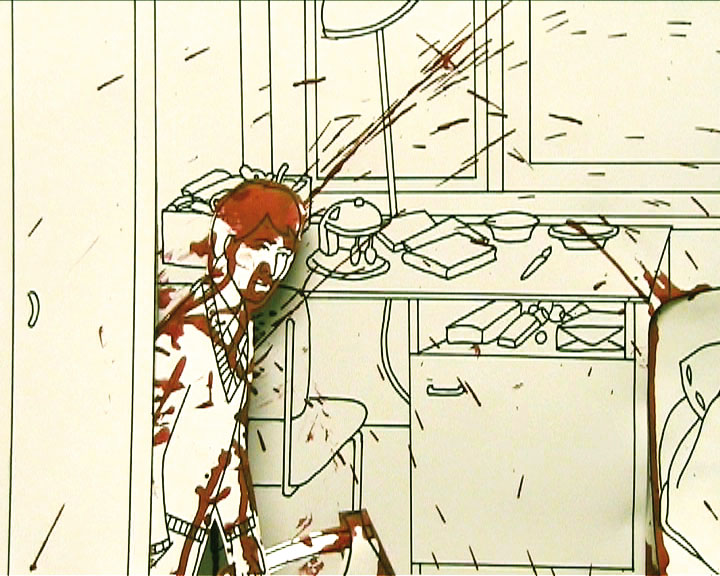
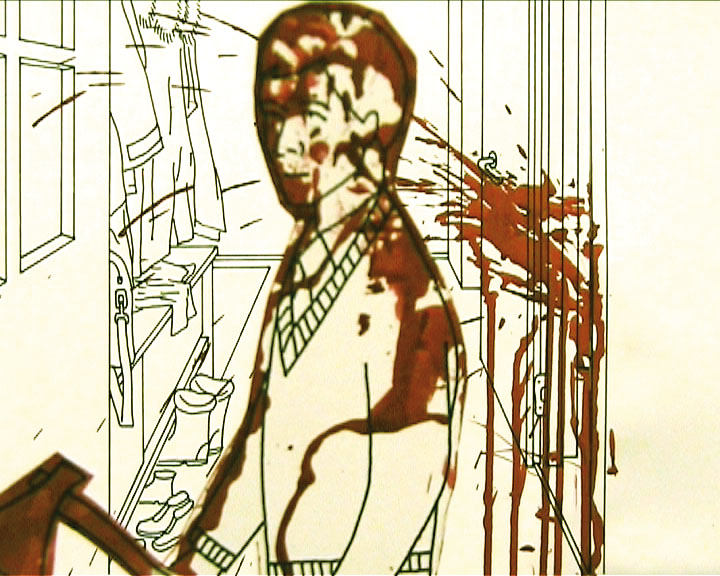
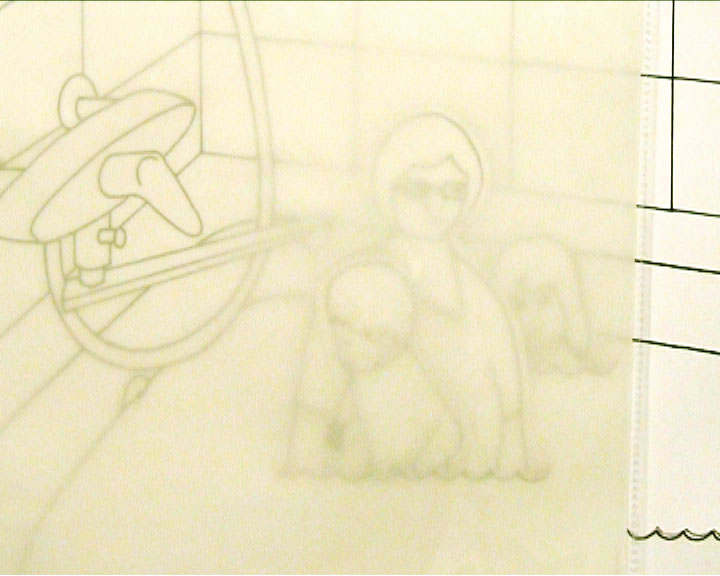
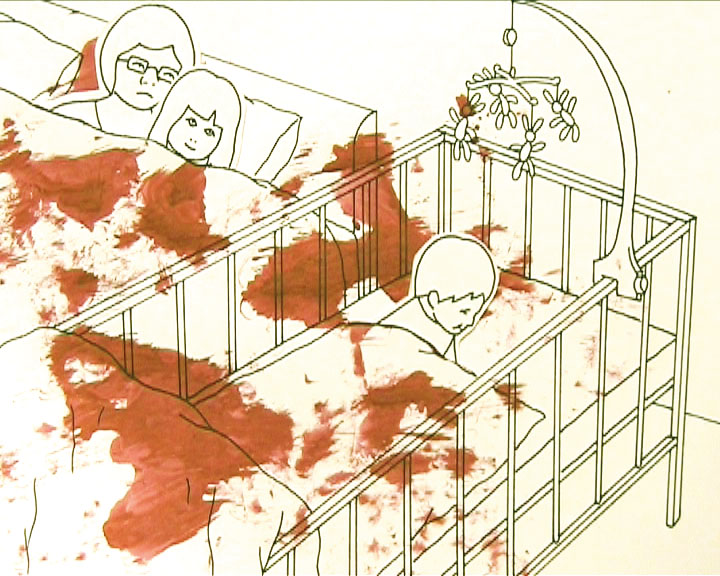
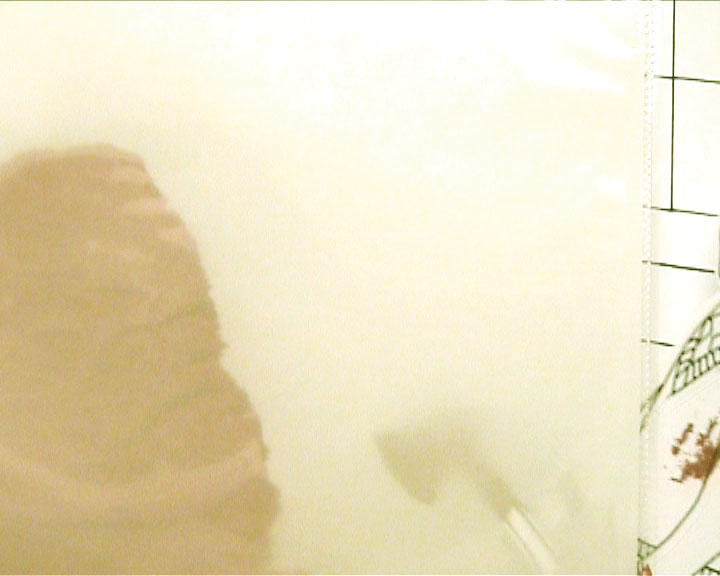
Family, Animation, 2007.
Photos: courtesy of the artist
The role and position of the subject in relation to the experience of fear, as one of estrangement and alienation, also regards the role and the position of the artist in society and in the increasingly global art market, as a critique of the predominant political, social and cultural forces that dominate much of contemporary experience. Kendall Geers’s installation, The Terrorist’s Apprentice (2002), consisting of a single match on a pedestal defeats through its disruptive allusions and ambiguous presence any rhetoric of power.15 15 - Kendall Geers, “I, TerrorRealist,” in G. Coulter-Smith, and M. Owen, eds., Art in the Age of Terrorism (London,UK : Paul Holberton Publishing and the Centre for Advanced Scholarship in Art and Design, Southampton Solent University, 2005), 125-7. Arguably, the work makes tangible the “unheimlich,” as a “quality of feeling” of contemporary, and possibly aesthetic, sensibility. The work partakes of a discourse that questions assumed notions of identity and belonging, positioning the subject—though displaced and haunted—at the centre of the discourse of power, and suggesting the revolutionary possibilities of making the familiar alien. This alludes to the subversion of power-relations and the disavowal that threaten the institutional fabric of society.
Similar concerns also resonate in the work of the Estonian artist Marko Mäetamm who creates haunting narratives and visions that interrogate the inadequacy and impotence of the artist vis-à-vis the current political situation in regions such as Chechnya, and the demands of mainstream art market. Mäetamm merges the ordinary and the macabre. Children toys show unsettling remainders of death and torture, nursery rhymes evoke nightmarish visions of violence and fear (Song Spooky Wooky Wood).16 16 - www.maetamm.net The story of an Estonian artist who is torn between art and the demands of survival for himself and his family gradually unfolds in dark imagery of death. The work exploits the circularity of a narrative that hauntingly iterates itself.17 17 - The work was part of the project Artists’ Studio (November-December 2006), www.artistsstudio.org. Mäetman represented Estonia at the 52nd Venice Biennale with the artwork Loser’s Paradise. This produces alienation and disturbance, questioning assumed relations between centre and periphery, and the effect of action. As Nicholas Royle remarks, the uncanny can be read as a crisis of the defining categories of reality (of what is natural and proper), and as an experience of liminality that exposes the crisis of borders and frames.18 18 - Royle, The Uncanny, 1. The artist’s feeling of inadequacy thus translates into a critique exposing implicit power relations, the isolation of the subject in contemporary societies and the erosion of stable notions of the self, both in the private and public spheres.
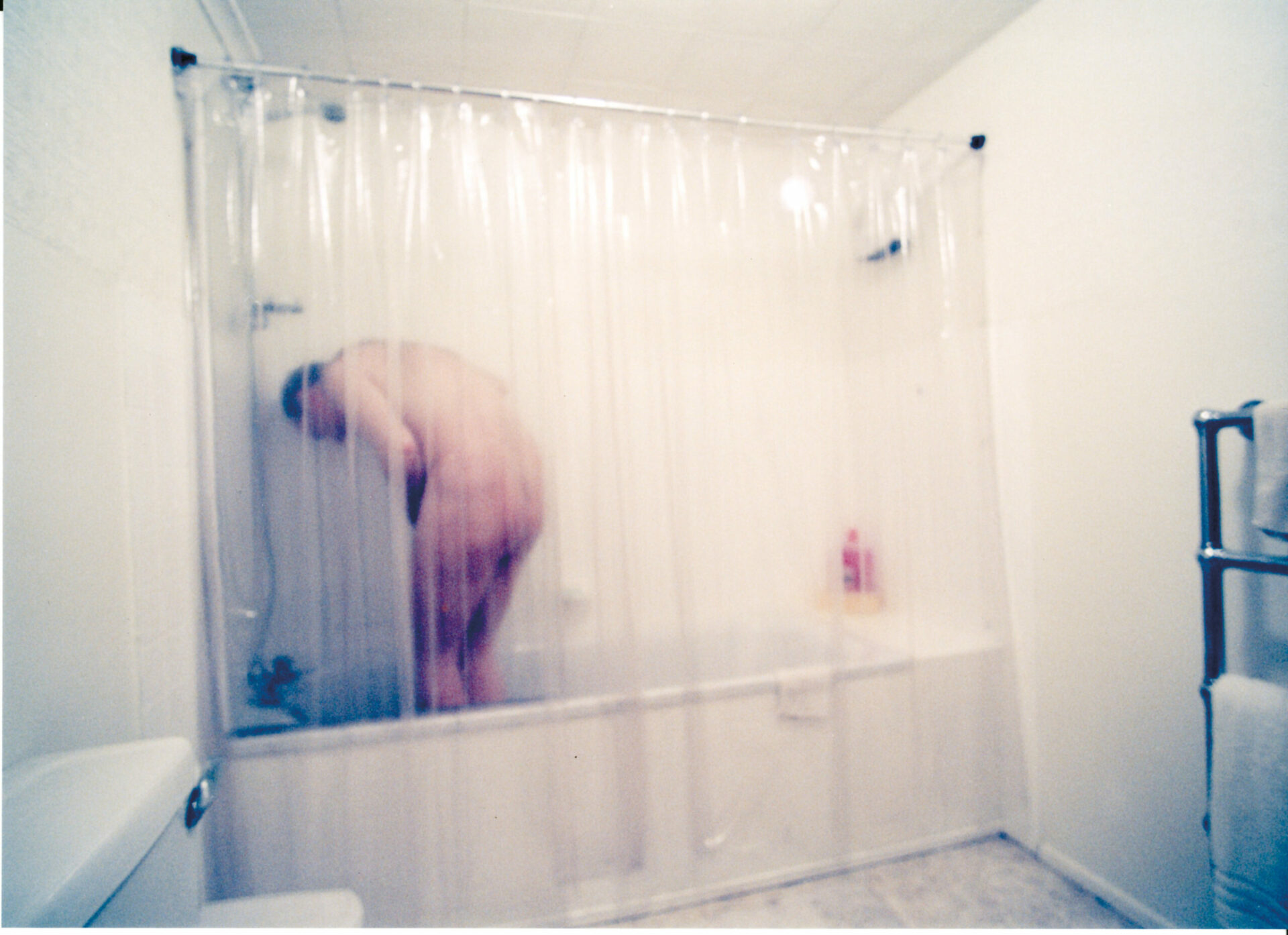
Die Familie Shneider, Artangel London, 2004.
Photos : courtesy of the artist & Artangel London
The uncanny frightening experience calls into question subjectivity as the relation of the self with the external world. However it also threatens the individual internal balance. This acquires special significance when considered in relation to experiences of trauma both individually and collectively. “Massive trauma applies to any society, ethnic group, social category or class which has been exposed to extreme circumstances of traumatization, such as natural disasters, technological catastrophes, and social, political, cultural, gender, ethnic or religious persecution, that leave them with life-long problems.”19 19 - Marcelo M. Suárez-Orozco and Antonius C.G.M. Robben, “Interdisciplinary Perspectives on Violence and Trauma,” in Antonius C.G.M. Robben and Marcelo M. Suárez-Orozco eds., Cultures under Siege: Collective Violence and Trauma (Cambridge: Cambridge University Press, 2000), 1-41, 24. Trauma memories mar the subject’s experience with their latent presence threatening to erupt unexpectedly with their harrowing content. In the video and sound installation, The Watch Man (2007) the artist Shona Illingworth explores the traumatic memories of an elderly man who witnessed the horror of a concentration camp when it was liberated at the end of the Second World War. Shown on a circular screen reminiscent of the lens through which the man looks into the mechanisms of watches and clocks, the video focuses on the prosaic rituals of daily routine through intimate close-ups. The extended black and white shots linger on surfaces and details, as if following the man’s gaze. The narrative is however interrupted by colour images of a forest, dark leaves, a pale silhouette, flocks of crows and the sky.
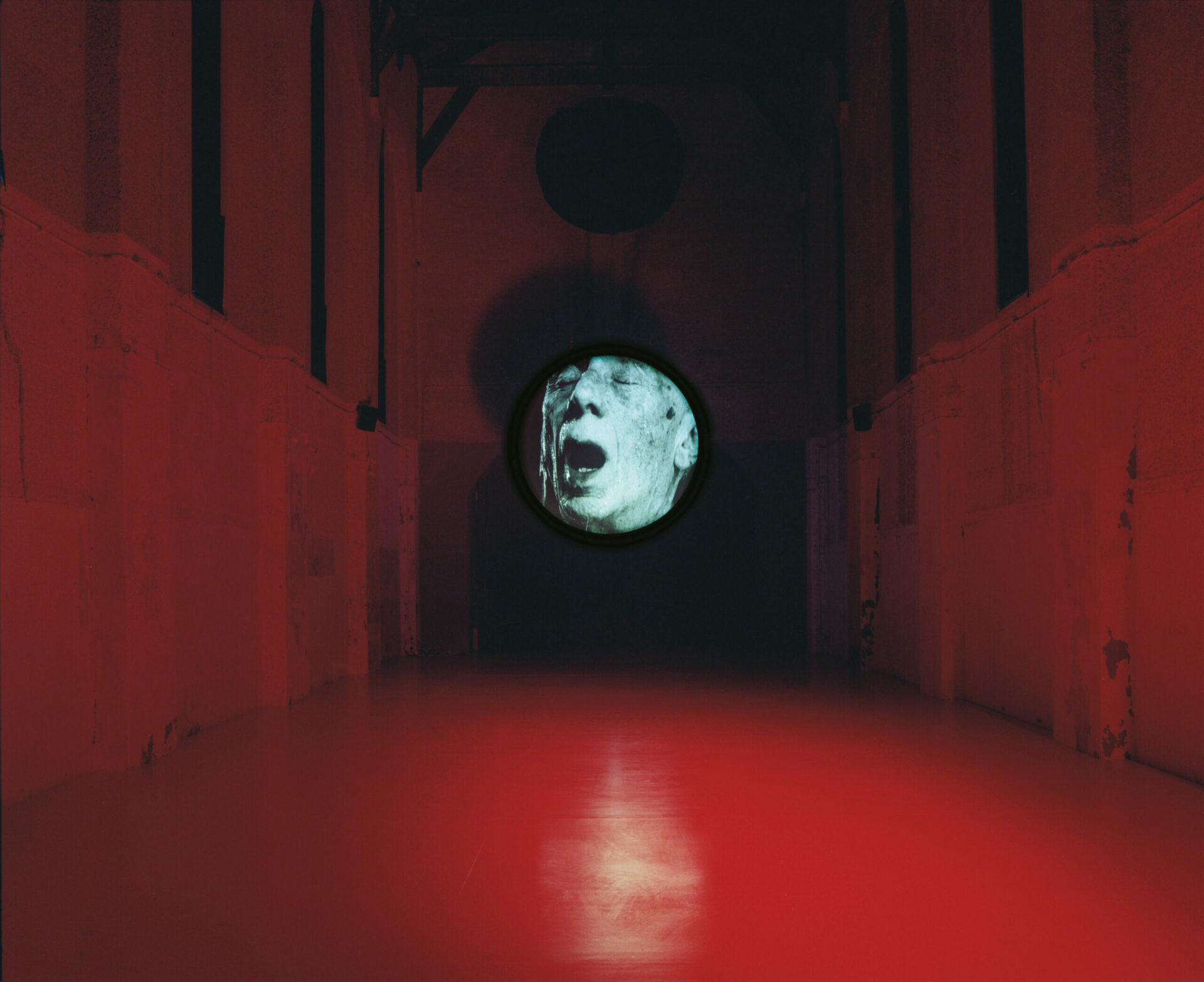
The Watch Man, 2007.
Photo : Simon Phipps, courtesy of the artist
The perspective changes and under the surface of daily gestures we look inside another time. The voice of the man, deliberately interrupted, recounts fragments of his recollection and acts as a counterpoint to the sounds that resonate through and across the floor pulsating in the gallery space. The man’s story and history ambiguously and implicitly condense.20 20 - As the artist comments, the man in the video “was a 19 year old British soldier who was sent to the camp to assist where possible, without any preparation for the scenes he would witness there and the effect was devastating. When he returned from the war nobody wanted to hear about his experience so he like many others was left to cope alone and internalised his trauma. . .”, email conversation with the artist, March 23, 2007. The artwork captures the uncertainties of what is reality, the disturbance of narrative as a coherent and orderly construct, the latent enveloping presence of haunting memories and their impact on the ongoing experience of life. The intimate gestures of the Watch Man, who pierces through his lens in the mechanisms of time trying to keep the past at bay, becomes a metaphor for the frailty of existence and for the defining quality of the past. Trauma memories disrupt the narrative flow of actions and words through which the self constructs itself. The story reveals the ghost of history that bears on trauma memories, conveying the isolation and loneliness of a private experience that relives itself, removed and in contrast to the public spectacle of the actual event, often long past, sometimes forgotten.21 21 - For a discussion of the uncanny in traumatic memories for the individual and society at large, see Yolanda Gampel, “Reflections on the Prevalence of the Uncanny in Social Violence,” in Robben and Suárez-Orozco eds., Cultures under Siege, 48-69.
The precariousness of boundaries evinced by the uncanny is indicative of its being “a quality of the frightening.” According to the sociologist Sara Ahmed, “[Fear] does not involve the defence of borders that already exist; rather fear makes those borders by establishing objects from which the subject in fearing can flee. Through fear not only is the very border between the self and other affected, but the relation between the objects that are feared… is shaped by histories that “stick”, making some objects more than others seem fearsome.”22 22 - Sara Ahmed, The Cultural Politics of Emotions (London,UK : Routledge, 2004), 67.
Hence, fear affects the subject’s relation to the world, exposing its vulnerability to possible danger, constantly present, constantly undermining security, assertion, and certainty, constantly reminding one of the possibility of loss and death. In engaging with fear and the experience of the uncanny the arts also reflect on the relationships that can be established with the audience, unsettling our experience as viewers. As visitors, we are “affected” by artworks that subtly subvert the familiar, and confronted with their alienating otherness. This implies entering the fright of the experience. Fear, as Joanne Burke observes, is fundamentally an emotion “about the body—its fleshiness and precariousness.”23 23 - Joanna Burke, Fear: A Cultural History (London, UK: Virago, 2005), 7. Through artworks that subtly evoke and represent the menacing feeling of reality, the visual arts also question our position as audience. Paraphrasing Ahmed, these artworks “stick” through their disturbing presence and their critical insight, offering perspectives on the relationship between the individual and current social and political experience, raising questions about the interpretation of reality and about the role of the arts as a means of interpretation of the content and forms of contemporary fear. They offer us insight in the precariousness of boundaries, the histories and rhetoric that shape contemporary anxieties.
To conclude, Zygmunt Bauman constructs present fears according to a pervading metaphor of liquidity that defines contemporary life as free-floating and unanchored.24 24 - Zigmunt Bauman, Liquid Fear (Cambridge: Polity Press, 2006), 133. This is reflected in the complex, idiosyncratic images that explore the uncanny as the underpinning character of contemporary experience. Moving beyond the contemporary malaise of panic, the artists considered variously engage and challenge the audience to confront the meanings and values ascribed to security, and the social and political relevance of order as regulator of normality. “The other of order is a miasma of the indeterminate and unpredictable. The other is the uncertainty, that source and archetype of all fear”.25 25 - Id., Modernity and Ambivalence (Cambridge: Polity Press, 1991), 7. In exploring “the other” of what seems ordinary and familiar, artists engage with the uncanny that pervades contemporary cultures, unravelling its symptomatic presence charged with social, political and cultural as well as psychological connotations. As a meta-discourse that moves across other discourses, the uncanny is both means and form for questioning reality and exploring displacement. From different perspectives and through different media, the artworks examined expose the fissures of contemporary life and elaborate on the displacement inherent to the experience of the uncanny.

