Autofiction, a Poetics of Intimacy

As part of this digital residency carried out in partnership with Érudit, feminist philosopher Cécile Gagnon explored female artists' exploration of intimacy through autofiction, a powerful tool for recounting their unique experiences and constituting a powerful form of resistance, collective memory, and transformation.
Since the 1990s, many women1 1 - I use the term “women” to refer to both cis and trans women. artists have been revisiting themes traditionally associated with the private sphere—motherhood, filiation, sexuality, violence, troubled identity—inviting us to pay attention to fragmented and embodied existences, often by means of autofiction. While female narratives using “we” affirmed a collective and overtly political voice in the 1960s, today, first-person narratives using “I” to explore everyday, even mundane experiences, proliferate.
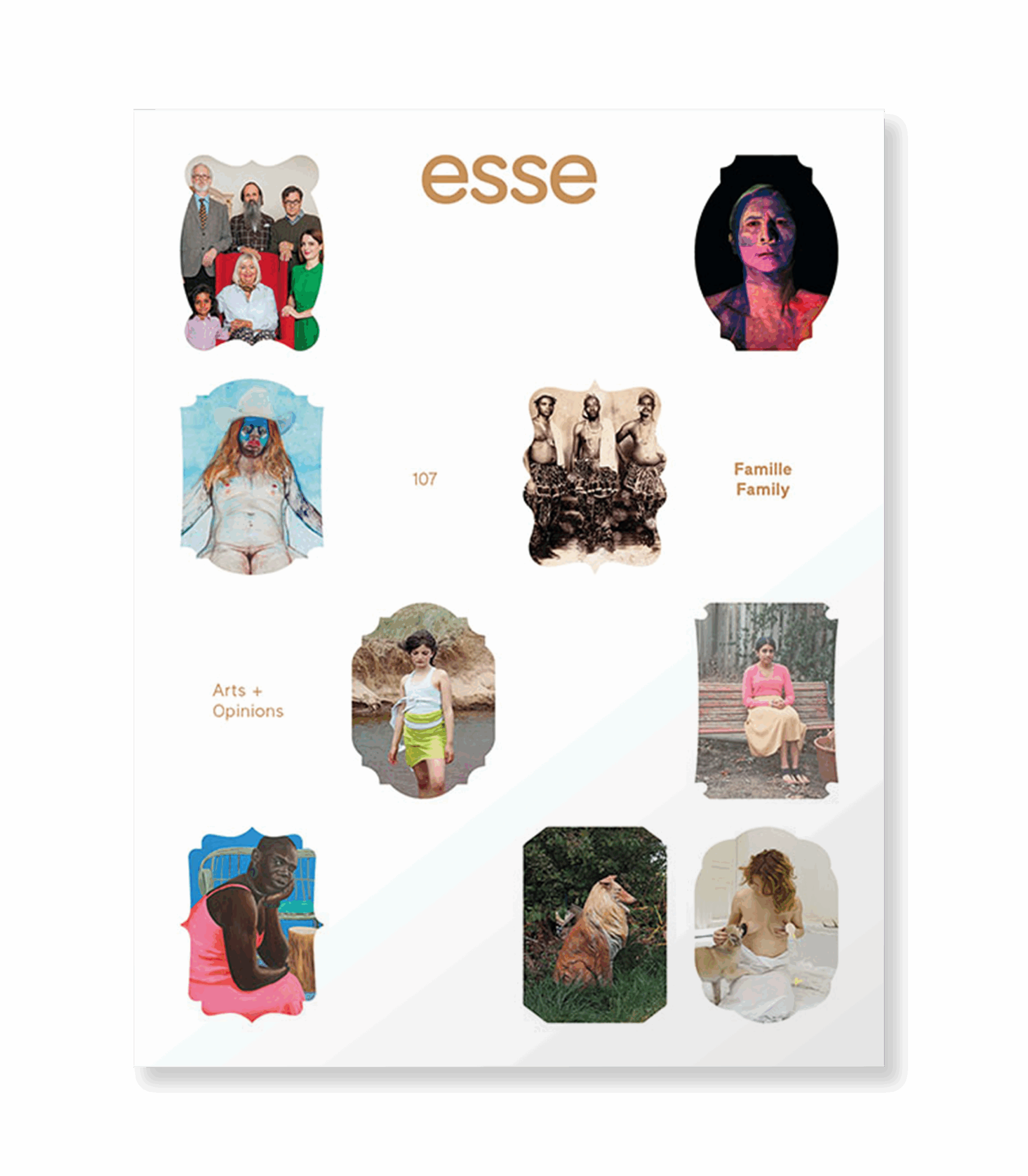
From a feminist perspective, this trend might at first seem unsettling. Have artists abandoned the feminist and political ambitions of their predecessors? Anthropologist Julie Gauthier expresses this kind of concern in her 2004 text “Women’s art: Feminine, feminist? What position has the younger generation of French artists taken?,” affirming that “the singularity of the so-called feminine may today seem glorified because it’s something of a fashion phenomenon, but tomorrow this particularity may become nothing more than a constraint.”2 2 - Julie Gauthier, “Women’s art: Feminine, feminist? What position has the younger generation of French artists taken?,” Esse 51 (Spring/Summer 2004), accessible online, (our translation). Renewed focus on the body and motherhood may thus be interpreted as a return to precisely the “female identity” that feminists in the 1960s wanted to escape. Yet, at what point does the singular cease to be a critical force and become a trap? In her text, Gauthier takes a clearly constructivist-feminist stance toward this question, positioning herself as a feminist that considers social, economic, and cultural differences between men and women as cultural constructs rather than a reflection of some supposed biological trait. Here, maternal instincts and motherly love are characteristics acquired through gendered socialization. This constructivist concept of gender—one to which I personally subscribe—still dominates in Western feminist circles.
However, revisiting domains traditionally associated with femininity—motherhood or domestic life, for example—can also mean restoring their legitimacy and political value. After all, wasn’t it the feminists of the 60s who themselves proclaimed that the private is political? Exploring the intimate does not necessarily imply reifying women’s confinement to the private sphere, yet it does highlight the traces that power relations leave on bodies and identities. In addressing these themes, long devalued by the patriarchy, autofiction brings their paradoxes to light. The personal sphere, far from being a closed or “natural” space, is always shaped by broader social, economic, and cultural dynamics. Recounting these experiences from the perspective of intimacy, using fragmented, discontinuous, or fluid temporalities, allows the storyteller to highlight the ambivalences typical of an existence highly mediatized by the power relations that transcend it.
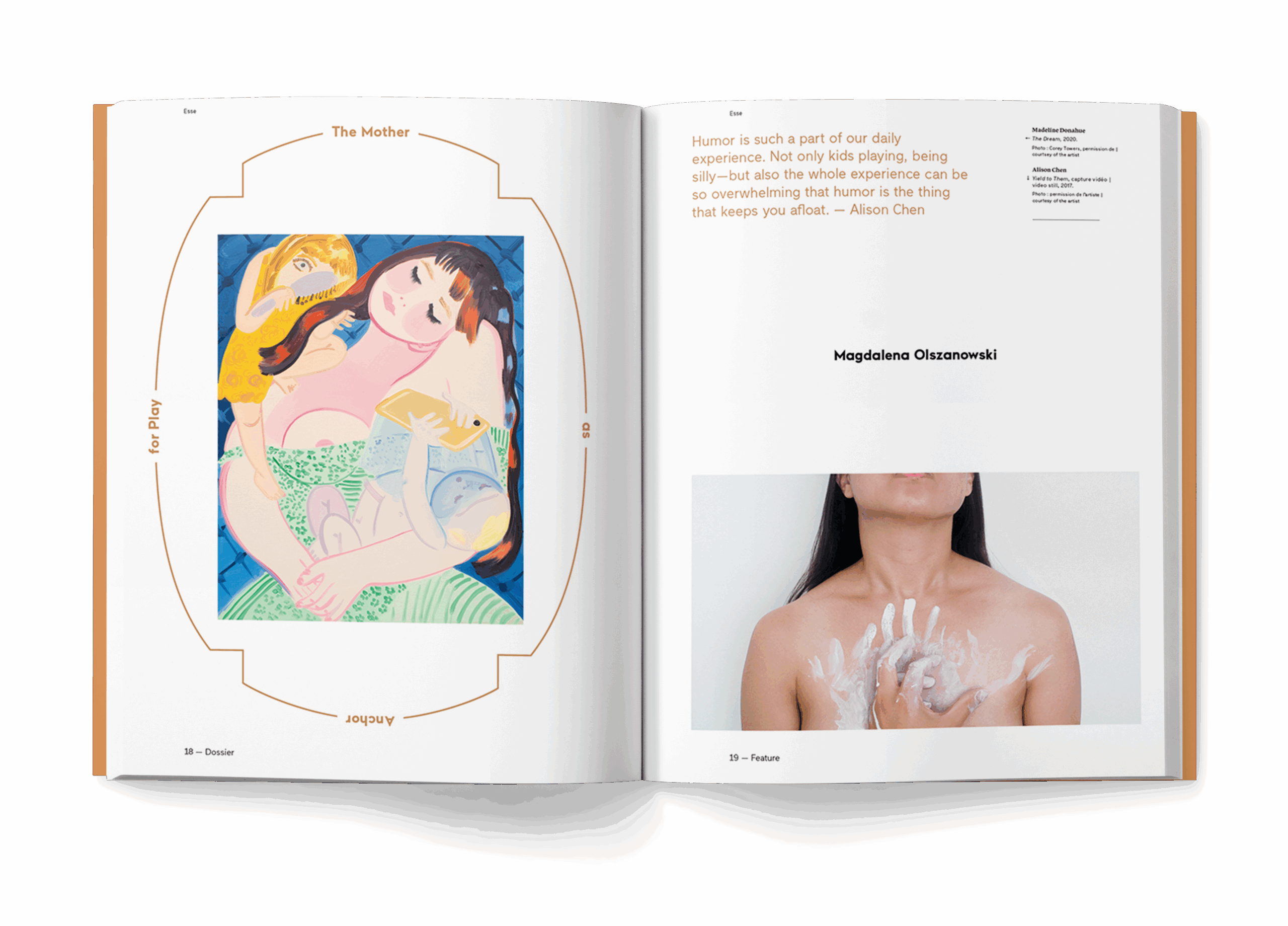
In “The Mother as Anchor for Play,” for example, art historian Magdalena Olszanowski notes how artists Madeline Donahue and Alison Chen document motherhood through “leaky, absurd, and sleep-deprived situations between children and mothers that comprise early family life,” with no intention of glorifying it.3 3 - Magdalena Olszanowski, “The Mother as Anchor for Play,” Esse 107 (Winter 2023): 18–21, accessible online. Rooted in unique and embodied experiences, their approach, in my view, clearly suggests that it is illusory to completely dismiss stories of motherhood if we wish to understand its complexity and effects on women’s lives. Reducing the roles assigned to women, such as motherhood, to mere alienation is too simplistic. Caring for others changes our relationship with time, space, and our own bodies, revealing irreducible forms of temporal, spatial, and bodily experience.
In other words, exploring what is considered intimate does not necessarily need to reify notions of women’s domesticity, for it can shine a light on the visible and invisible traces that oppressive relationships have left on our bodies, as well as on the bodies that came before us. In this way, autofiction seems to possess an inherently feminist quality because it highlights the connection between the personal and political. That does not mean to say that all women’s autofiction has political implications, but everyday stories can become significant vehicles for highlighting structural violence and the forms of resistance that it provokes.
Blurring the Boundaries of the Narrative
Speaking up implies being able to express ourselves in our own words. Yet dictating what a “feminist” narrative should be can itself be oppressive, both in terms of content and form. Yet autofiction opens up a space where the ambiguities and paradoxes of female experience can emerge without the constraints of a normative framework. This idea echoes the concept of narrative identity as explored by philosopher Paul Ricœur. We get to know each other and build relationships by sharing our stories. It allows us to link the past and the present and to project ourselves into the future.
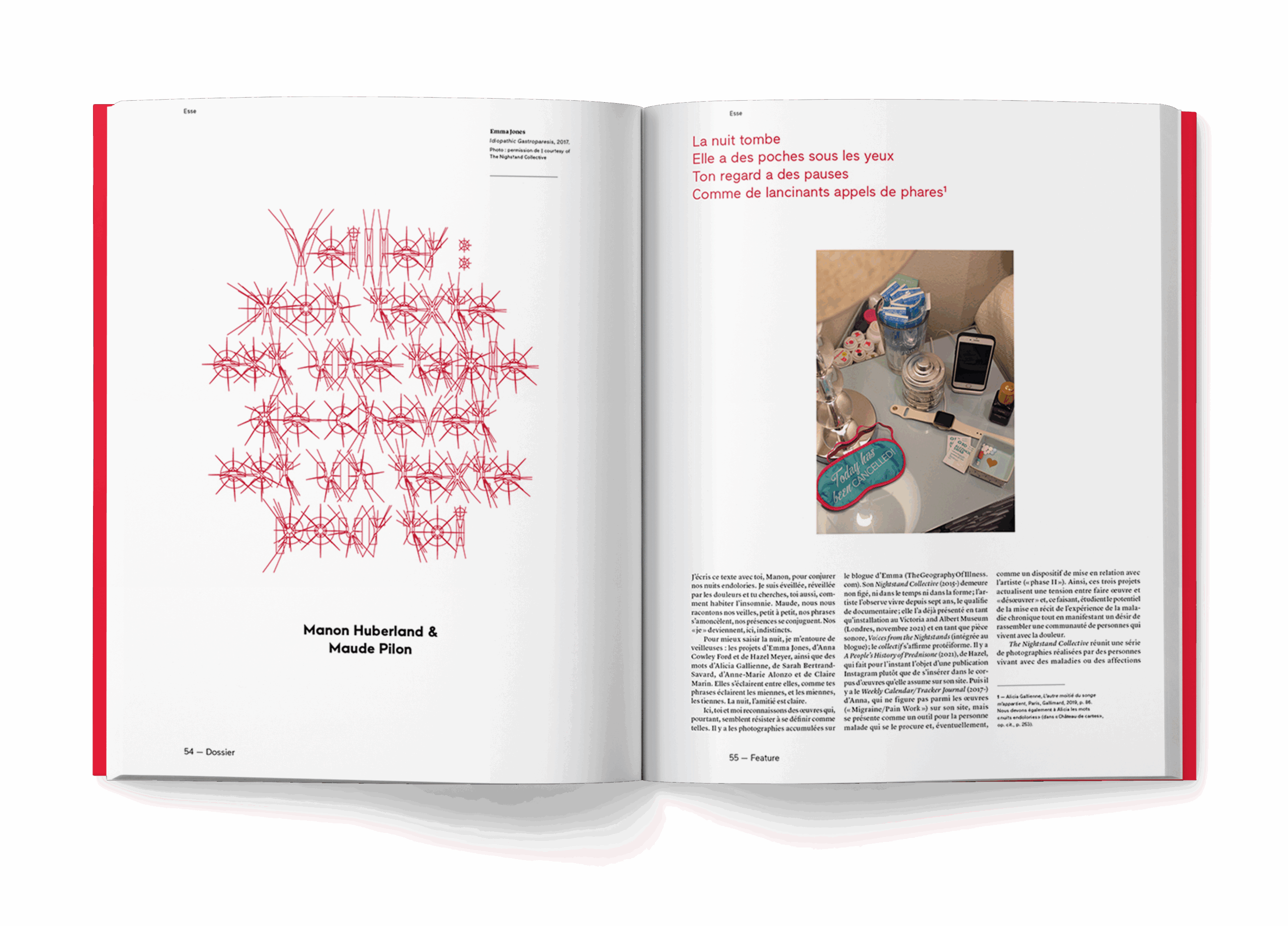
From this perspective, listening to intimate stories is about more than just acknowledging them; it’s about giving them political power. In “Kept Awake: My Text is a Nightstand Is a Text for You,” feminist writers Manon Huberland and Maude Pilon illustrate this idea well: “Living with pain is an experience of coming loose, of coming apart, of a fragmented body struggling to archive and share its story, limited as it is to private language and private vocabulary. Given this limitation, could handwriting possibly be a means by which the body leaves its mark, so that each hand’s singular trembling might find a way to translate itself onto the page.”4 4 - Manon Huberland and Maude Pilon, “Kept Awake: My Text is a Nightstand Is a Text for You,” Esse 106 (Fall 2022): 58–61, accessible online.
The intimate narrative thus becomes a tool of healing and transmission. It allows us to question the singular ways that tired, injured, or oppressed bodies manage to speak up, take a stand, and resist. And it does not ignore paradoxical, ambiguous, and potentially alienating experiences as they constitute prime instances where the tensions inherent in an existence marked by power relations manifest themselves most acutely. This is precisely what a hybrid form of autofiction allows: it does not seek to faithfully reconstruct a true story, but rather to multiply the possibilities of the self. By blurring the boundaries between reality and fiction, hybrid autofiction gives rise to narratives that complement and illuminate each other. The codes of fiction help make reality intelligible, even if this involves inventing universes or discontinuous temporalities.
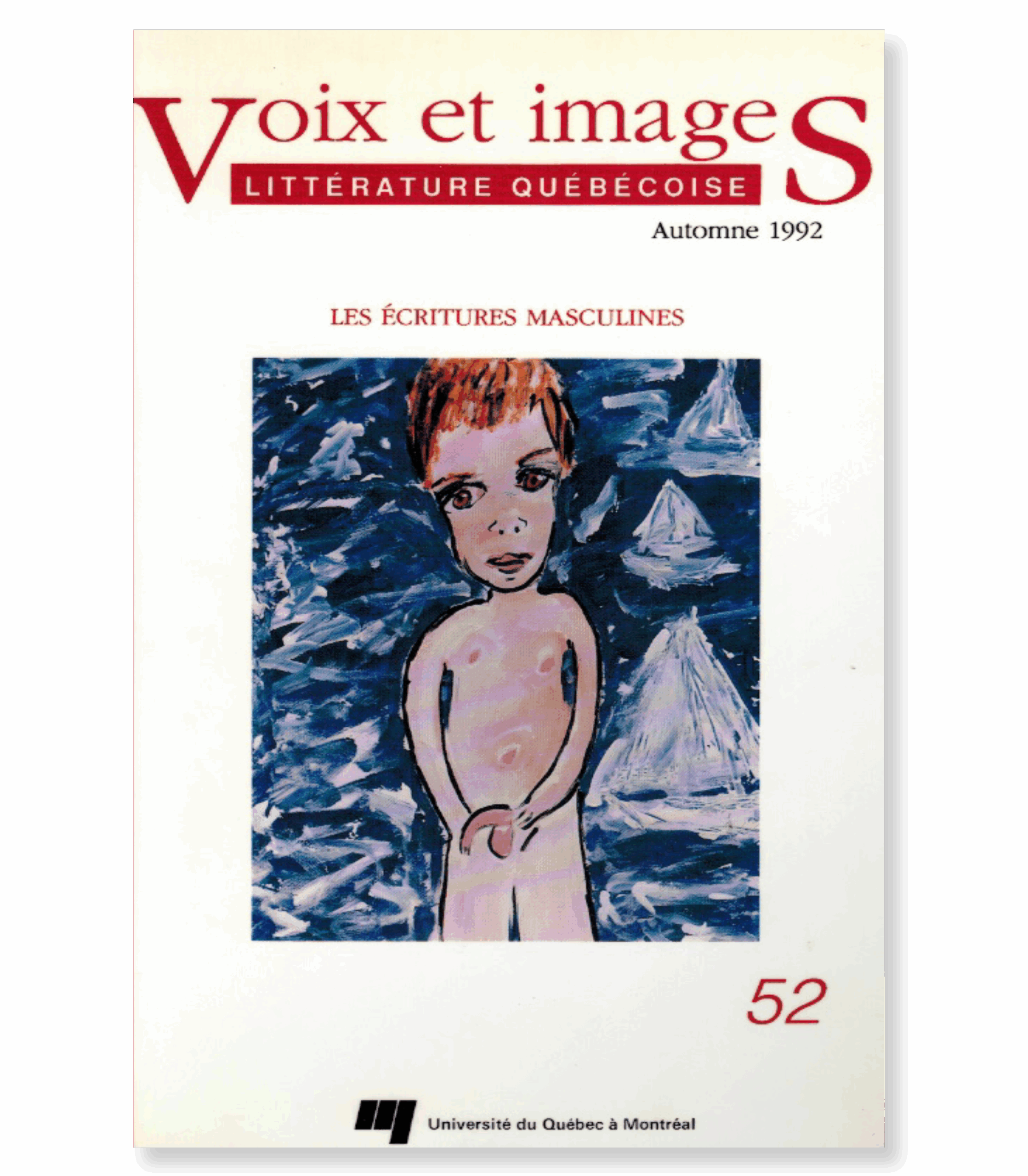
For feminist professor, author, and literary translator Lori Saint-Martin, this type of narrative possesses singular critical power. What may seem purely personal actually reveals the very reality of social structures. Saint-Martin speaks of “metafeminism,”5 5 - Lori Saint-Martin, “Le métaféminisme et la nouvelle prose féminine au Québec,” Voix et images 18, no. 1 (Fall 1992): 78–88, accessible online. where the personal absorbs the political in order to re-examine it. This narrative form, although different than stories that engage directly with “we,” nevertheless possesses a certain critical force that can be read between the lines of such autofictional narratives. Far from diluting engagement, autofiction offers another avenue for expressing feminism.
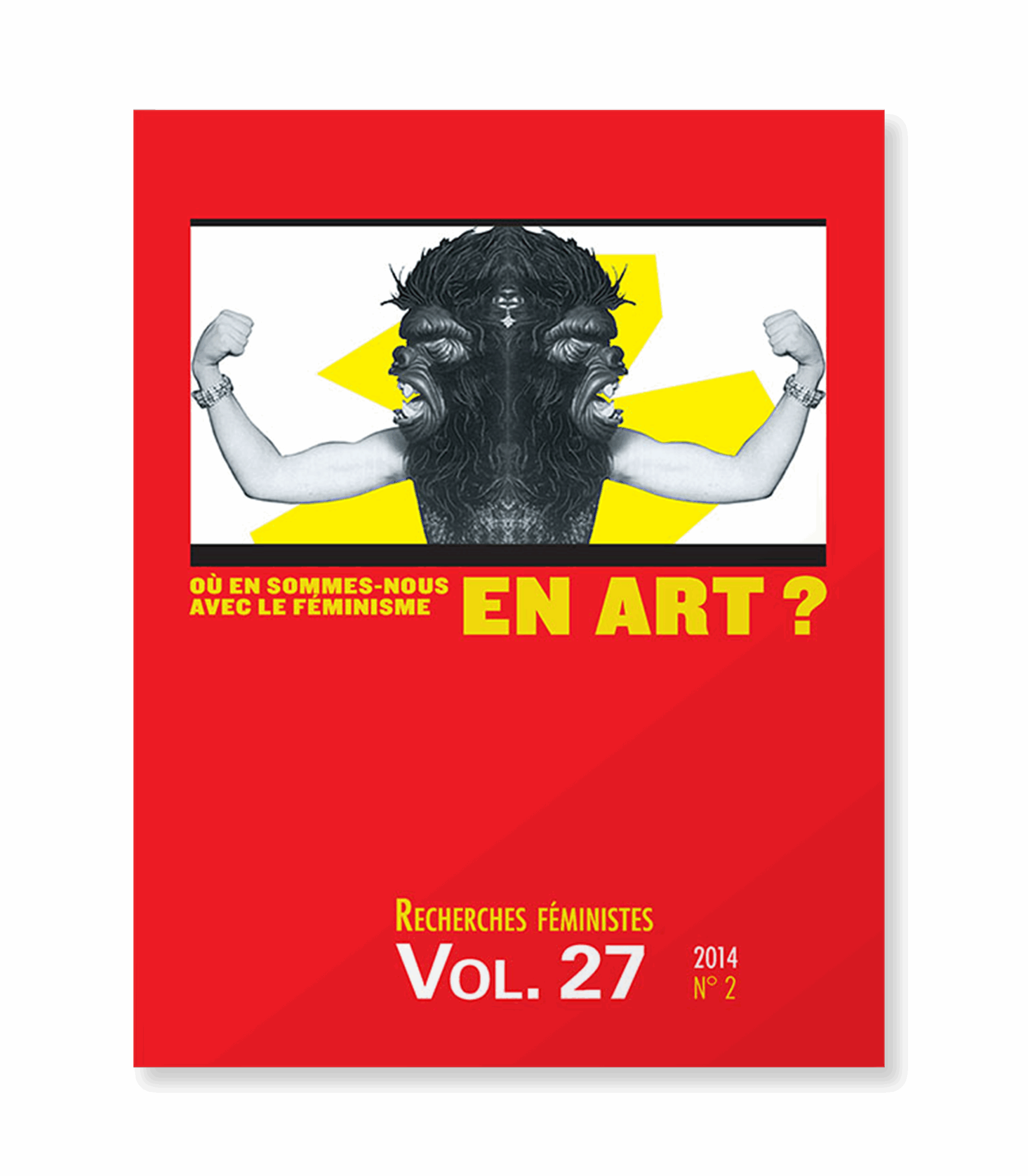
It is in this vein that researchers Isabelle Boisclair and Catherine Dussault Frenette describe autofiction as a “poetics of intimacy” in their text “Mosaic: Women’s Writing in Quebec (1980–2010).”6 6 - Isabelle Boisclair and Catherine Dussault Frenette, “Mosaic: Women’s Writing in Quebec (1980–2010)” Recherches feminists 27, no. 2 (2014): 39–61, accessible online. Here, “poetics” represents a means of conceiving art and writing. It is an aesthetic and political endeavour in which oneself, one’s body, and one’s experiences are a means of understanding the world. Intimacy is not limited to the private sphere: it is a critical prism for the structures that organize our lives. Thus, although stories may be inspired by personal experiences (related to the body, memory, sexuality, or domestic life, for example), those who tell them do not simply expose their private lives in personal or spontaneous ways: they elaborate thoughtful artistic and political proposals structured by their unique voices—Manon Huberland notably describes her own writing practice as “autotheoretical.”
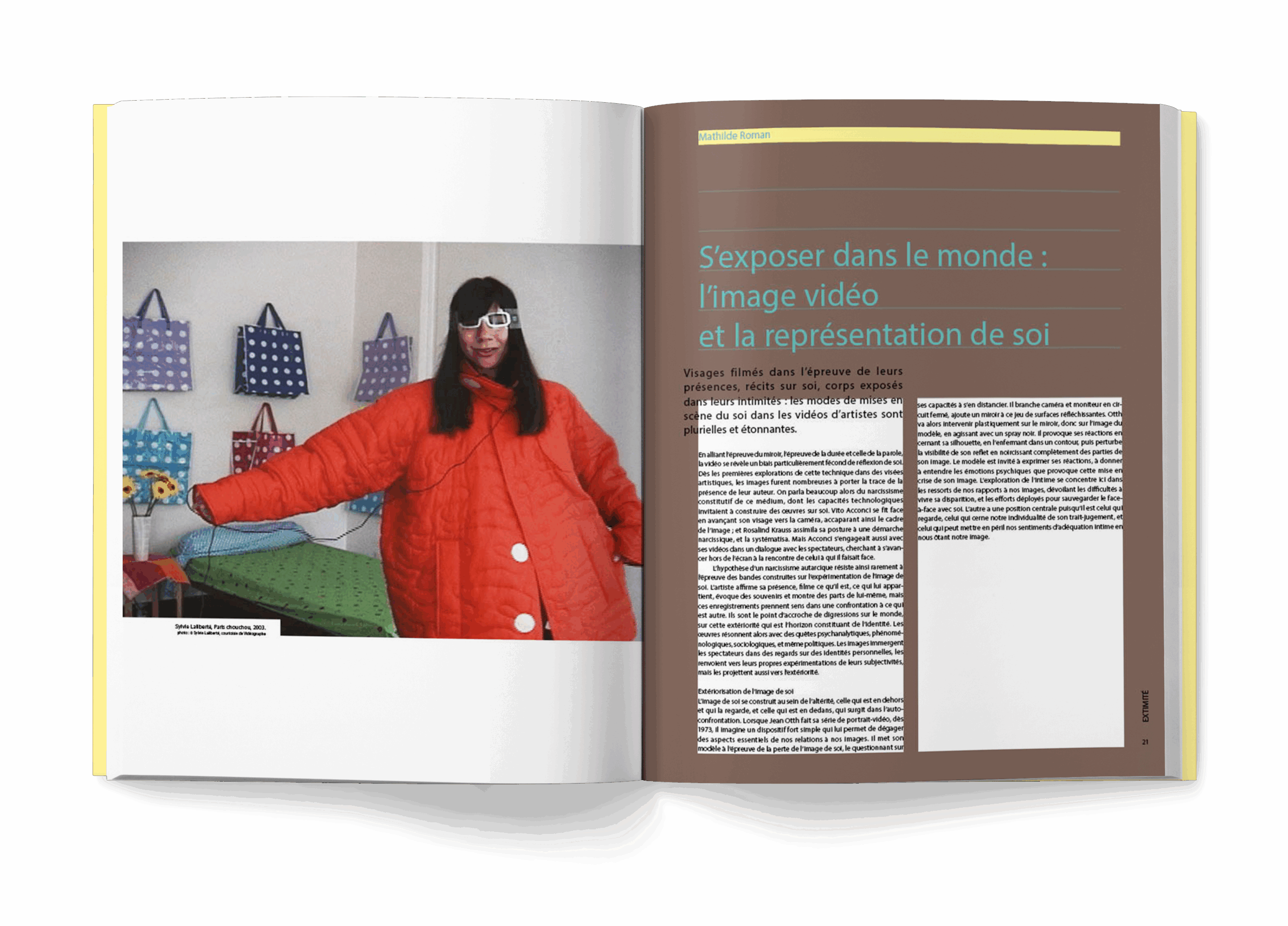
I find an important echo of this last idea in “Exposing Oneself to the World: Video Images and Self Representation,” a text in which philosopher and art critic Mathilde Roman invites us to reflect on “the connection to be found between singularities in order to create shared meanings,” an articulation that would be “complex and in a constant state of renewal.”7 7 - Mathilde Roman, “Exposing Oneself to the World: Video Images and Self Representation,” Esse 58 (Fall 2006): accessible online, (our translation). Roman suggests that how we move forward “on the path that connects the ‘self’ to the ‘we,’” as she puts it, is rooted in how bodies are represented. Rather than comparing collective and personal narratives, we need to consider their continuity and complementarity. Bodies, as the locus of sexist oppression, particularly related to motherhood and sexuality, are prime spaces of investigation for understanding and denouncing such forms of oppression. Hence, writing from the body does not mean foolishly withdrawing into oneself; it’s more a matter of exploring the visible and invisible traces that history leaves within us.
Filiation and Bodily Memory
The notion of violence being reduced to isolated incidents is rejected in feminist and decolonial studies as well as in traumatology. In each of these domains, the body is considered to be a place where historical and systemic traumas associated with gender or racial discrimination and colonialism are inscribed, transmitted, repeated, and embodied, highlighting the structural dimension of oppression. In other words, our bodies carry the memory of a violence that is neither personal nor anecdotal. This bodily memory is not solely a matter for the individual: it is collective, transgenerational, and inseparable from the social structures that produced it. Bodies are living archives that lay bare the marks of domination and resistance. Intimate stories forge filiations, communities whose temporality extends beyond the present. By linking individual experiences with historical and collective legacies, the experience of trauma opens up a space for transmission and transformation. I agree with Saint-Martin, who asserts that, from a feminist perspective, the anecdotal and the personal become intrinsically political when new voices “take root in the old,” their emergence being “as much a sign of continuity as of rupture.”8 8 - Saint-Martin, “Le métaféminisme,” 83 (our translation).
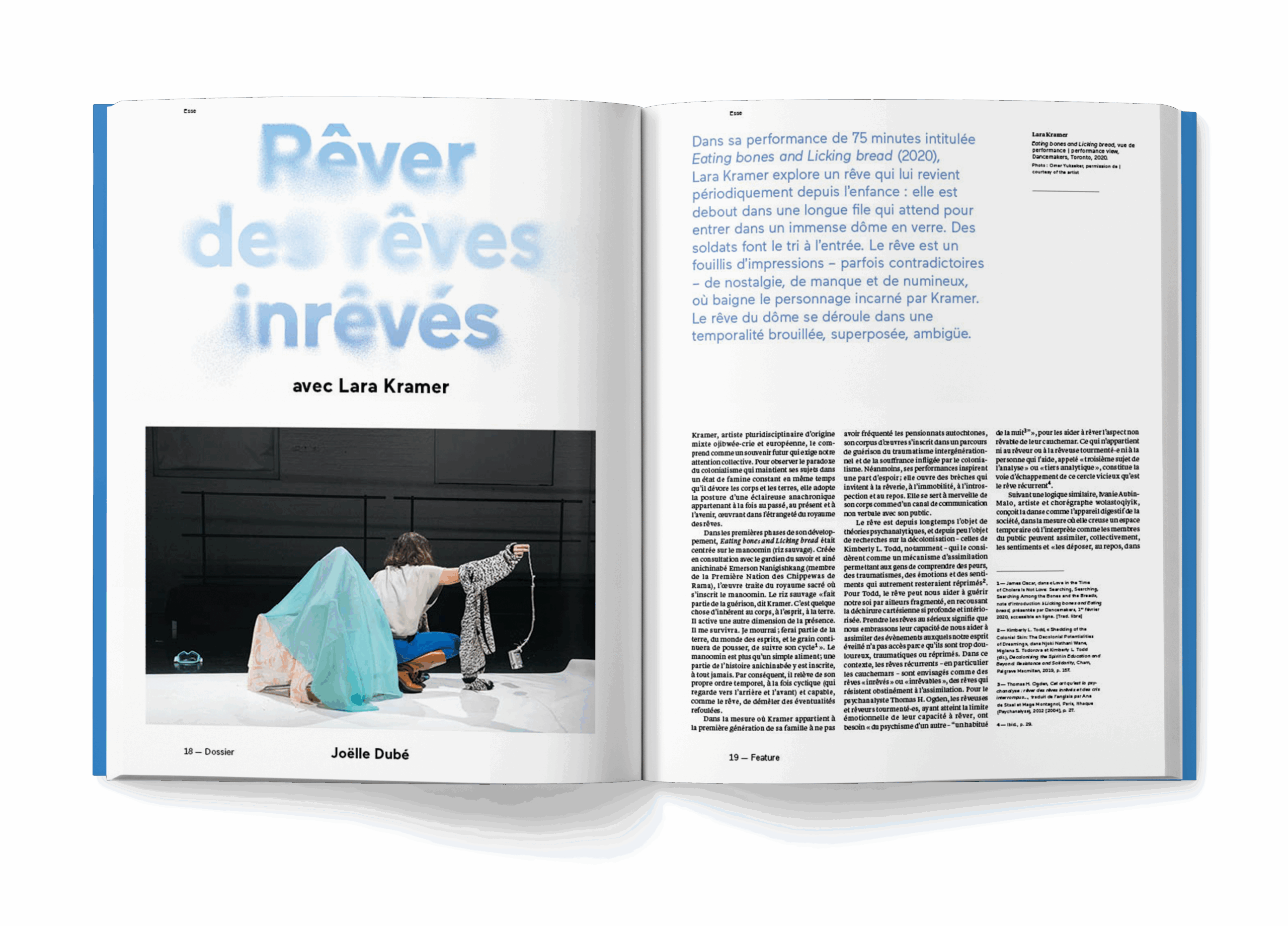
In the same vein, art historian Joëlle Dubé recounts how in her dance performances, Oji-Cree and settler artist Lara Kramer transforms her body into a space-time where knowledge and stories from the past, where the voices of our ancestors and of the future intersect.9 9 - Joëlle Dubé, “Dreaming Undreamt Dreams with Lara Kramer,” Esse 112 (Fall 2024): 22–25, accessible online. This approach draws on Indigenous conceptions of circular and relational temporality, where past, present, and future coexist in bodies, narratives, and territories.
For Mississauga Nishnaabeg researcher and author Leanne Betasamosake Simpson, knowledge and memories are transmitted not only through language but also through embodied practices—songs, dances, gestures—that create continuity between generations.10 10 - Leanne Betasamosake Simpson, “Land as Pedagogy: Nishnaabeg Intelligence and Rebellious Transformation,” Decolonization: Indigeneity, Education & Society. Vol. 3, No. 3 (2014): 1-25, accessible online. The notion of filiation is not limited to biological descendance: it includes an extended community of ancestors, spirits, and future generations. By way of autofiction, I believe engagement takes on a new form, one that is not merely a gesture to the future but a work of transgenerational memory in which the body becomes a place of passage and continuity, where both the wounds of colonial history and the forces of collective healing are re-enacted. It is thus through this intersection of the body and history that autofiction, in my view, reveals its true critical potential. Establishing such a connection does not serve to crystallize certain gender or cultural identities or to confine creators within them, but rather to establish a collective, transgenerational memory, a memory that allows for healing. Hence, autofiction, as a poetics of intimacy, shines light on the political dimension if existence: an existence structured by power relations, yet capable of resistance and transformation.
Translated by Louise Ashcroft
Links to the articles cited: Julie Gauthier Magdalena Olszanowski Manon Huberland et Maude Pilon Lori Saint-Martin Isabelle Boisclair et Catherine Dussault Frenette Mathilde Roman Joëlle Dubé
Cécile Gagnon est docteure en philosophie, spécialiste des théories féministes et, plus particulièrement, des notions de care, de violence et de narrativité. Elle enseigne les théories féministes depuis maintenant quatre ans à l’Université de Montréal comme chargée de cours. Elle est également autrice. Elle a cosigné Existantes, pour une philosophie féministe incarnée (2024). En plus de sa thèse, son premier roman et un essai croisant philosophie, théâtre et poésie paraitront prochainement dans des maisons d’édition québécoises.