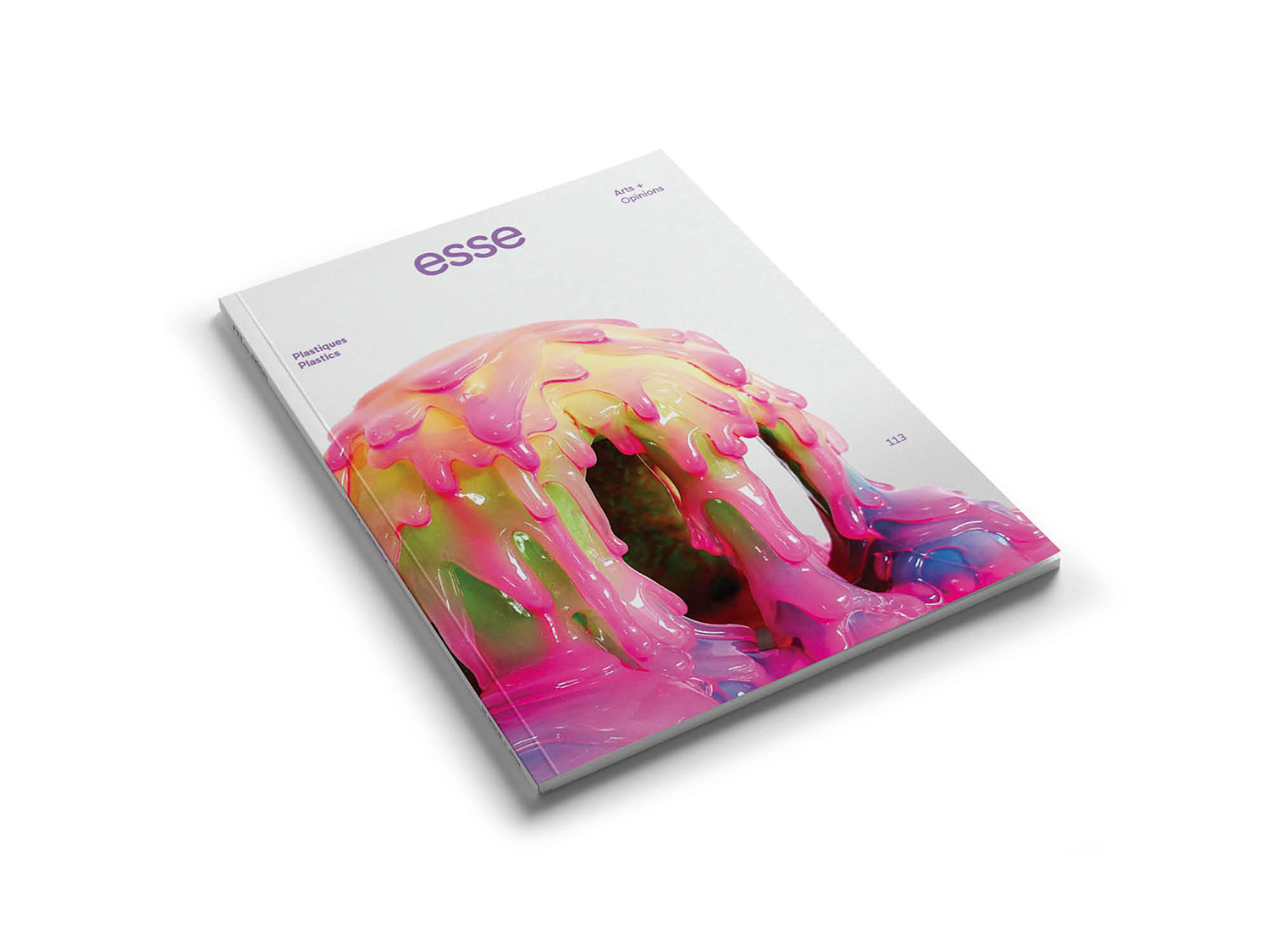
Reshaping the Plasticocene
The material was full of promise. Roland Barthes called it “the stuff of alchemy” in 1957, practically granting it magical properties. Farseeing, the philosopher added that “plastic is wholly swallowed up in the fact of being used: ultimately, objects will be invented for the sole pleasure of using them.”1 1 - Roland Barthes, “Plastic,” Mythologies, trans. Annette Lavers (New York: Noonday Press, 1991), 97 - 9. Now we find ourselves in a world of overconsumption and disposables, the new era of the Plasticocene.
It’s true that some promises were kept: a revolution of daily life, democratization of haute couture, reduction of food waste, contribution to medical hygiene. We have lost count of the advantages of plastic, and its derivatives are so extensive, it’s difficult to identify them all. The mimetic capacity of polymers has perhaps even protected some species (think of celluloid replacing ivory in billiard balls when first discovered), and we still consider plastic as an alternative to animal-based materials (fur, leather, wool, silk, etc.) — although certainly an imperfect one. Living in a plastic-free environment would be a utopia today, which is why the ambitious goal of the world conference held in Busan (South Korea), in November 2024, of developing a treaty to eliminate plastic by 2040 raised both hope and skepticism.2 2 - At the time of writing this editorial, the negotiations came to an end and the drafting of the treaty was postponed to a later date.