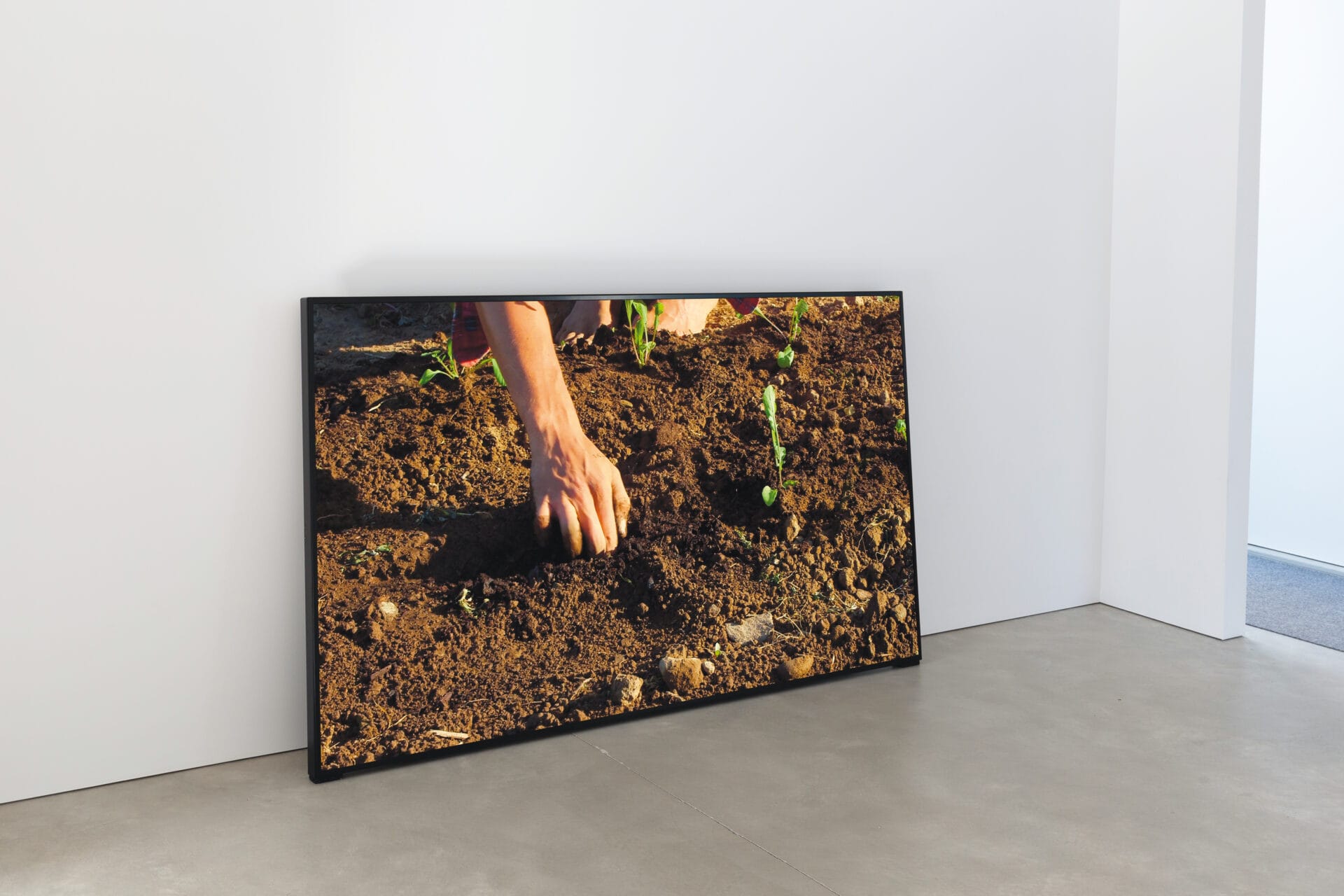
In recent years a growing number of artists engaged in conceptual and performative practices have used the exhibition as both a stage and as a medium to explore their relationship to the archives of their own histories. In other words, they loop art’s own past through the reproducibility of its own presence while acknowledging its increasing self-institutionalization. Artists as well as choreographers (amongst others, Ai Arakawa, Pablo Bronstein, Gerard Byrne, Boris Charmatz, Lynda Gaudreau, Andrea Geyer, Sharon Hayes, Luis Jacob, Xavier Leroy, Sarah Michelson, Paulina Olowska, Sarah Pierce, and Emily Roysdon) who share this interest use the exhibition as a format to investigate the politics of the ephemeral and its physical manifestation as a time-based mode of production rather than a fleeting state of being. Through their performances, choreography, visual recordings, lectures, writing, and installations they actively reflect on the media-based dynamics of these supposedly “dematerialized” art forms, which are in fact often image- and object-based, exploring the chronological layering of the exhibition itself as a performative medium, and relentlessly reading and translating their sources through the framework of the exhibition1 1 - The majority of these artists do not consider themselves performance artists in the classical sense but have adopted performance-based and relational practices as an essential part of their artistic vocabulary, while the above-mentioned choreographers, such as Michelson, Leroy, Gaudreau, Charmatz, and Bel amongst others, are increasingly using the exhibition space as a site-specific space for choreographic exploration, translating choreography into the exhibition.. Their works interweave and counter-read various historical threads, from institutional critique and appropriation art to relational aesthetics and the revival of performance.
Breaking down the fourth wall of performance art’s histories
Two emblematic examples of this mode of production are the work of Brussels- and Berlin-based French artist Jimmy Robert and the Montreal-based, Québécois-Canadian artists Sophie Bélair Clément and her collaborator, choreographer and dancer Marie Claire Forté. Their recent projects, Draw the Line (2013) by Robert, commissioned by the Power Plant in Toronto in the summer of 2013, and Bélair Clément’s 2 rooms equal size, 1 empty, with secretary,(1) examine the parallel notions of the curatorial and the performative in different yet corresponding ways. Clément, in turn, invited Forté to develop a work for her exhibition at Artexte in the fall of 2012 and winter of 2013.2 2 - 2 rooms equal size, 1 empty, with secretary,(1)was a site specific installation and event curated by Eduardo Ralickas at Artexte, on view from September 27, 2012 until January 26, 2013. The title also included the following footnote: (1) “General floor plan for Gallery. 2 rooms equal size, 1 empty, with secretary, phone, desk, file cabinet and catalog. The other has 2 works of each artist.” Seth Siegelaub, guestbook pages and follow-up notes, I.A.43, “January 5-31, 1969” [The “January Show”], The Museum of Modern Art Archives, New York. See http://artexte.ca/sophie-belair-clement2-rooms-equal-size-1-empty-with-secretary1/ (consulted February 27, 2014) They literally break down the fourth wall of the exhibition as a performative space.
This content is available with a Digital or Premium subscription only. Subscribe to read the full text and access all our Features, Off-Features, Portfolios, and Columns!
Already have a Digital or Premium subscription?
Don’t want to subscribe? Additional content is available with an Esse account. It’s free and no purchase will ever be required. Create an account or log in: