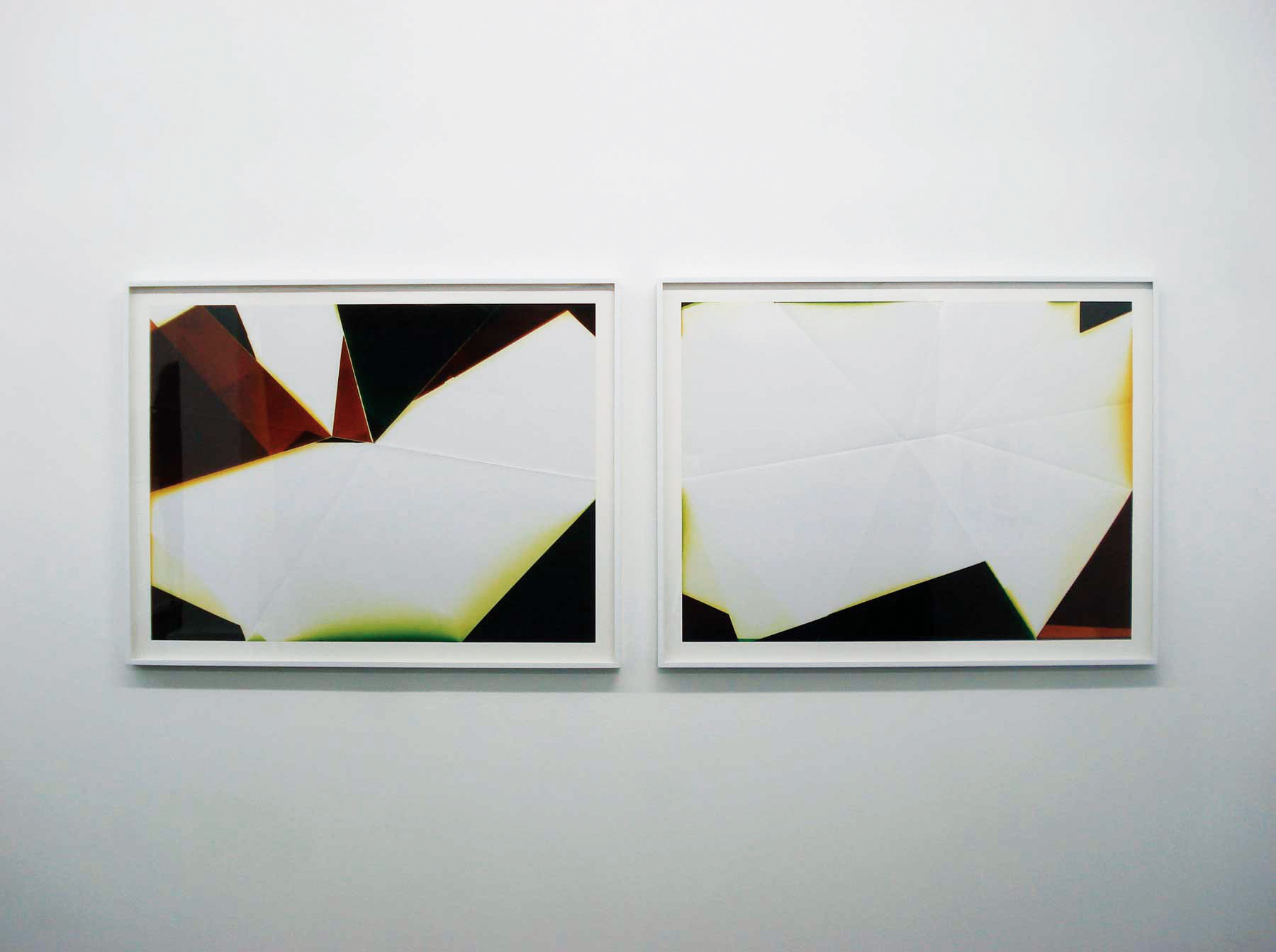
Photo : courtesy Blanket Contemporary Art, Vancouver
March 5–April 10, 2010



Photogenic - Abstract Photography offered a small but important cross-section of works exploring the relationship between photography and abstraction. At first glance, it was a traditional show of small-scale, framed, primarily black and white photographs. This modest display belied the topic’s currency: renewed interest in abstract photography has led to exhibitions in New York, Los Angeles, and abroad, a major publication (The Edge of Vision), and recent articles in Artforum and frieze. What might appear to be a wholesale embracing of modernist abstraction is more likely a re-examination of some modernist tenets and an attempt to combine them with postmodern conceptualism. As well, the genre’s primarily non-figurative, non-narrative, and often non-representational works offered a visual and conceptual palette cleanse for the over-mediated viewer. Accordingly, Photogenic represented a significant addition to Vancouver’s photographic art scene.
Two 1920s images by Hungarian artist László Moholy-Nagy provided historical clout and context to the works of six contemporary artists. His tiny photogram of two merged profiles (Double Portrait [Laszlo and Lucia]) and his photocollage of an aerial tower constructed from women’s calves (The Order of the World) highlighted the value placed on studio experimentation in the show. This emphasis continued in Markus Amm’s almost all-black chemigrams (images made entirely from developer and fixer), in the black-on-white striped Symphony #12 by the long-time experimental photographer James Welling, and in Walead Beshty’s two photograms. Beshty folds photo paper and exposes sections to light sources, resulting in formal studies of shape and colour. The folds in the paper quietly advance the 2D prints into the sculptural realm. The shifting line between figuration and abstraction ran through Mark Soo’s blurred, almost pointillist images of crowds, and, less explicitly, in Liz Deschenes’ work. Deschenes exposes photo paper to moonlight, then fixes the paper in silver toner; the result is a subtly shifting silver surface that merges the image’s photographic representation with the reflected representation of the viewer and gallery. Abstracted portraits of the Three Graces (Aglaia, Euphrosyne, Thalia), by Scottish artist Lorna Macintyre, made reference to the also-abstract realms of poetry and Greek mythology, neatly connecting form and content.
You must log in to read this text! It’s free and no purchase will ever be required. Create an account or log in:
Please note that Editorials, Digital Residencies, Videos, and Archives are always free to access.
Want more? Some content is available with a Digital or Premium subscription only (Features, Off-Features, Portfolios, Columns).