Notice: Function _load_textdomain_just_in_time was called incorrectly. Translation loading for the woocommerce-shipping-per-product domain was triggered too early. This is usually an indicator for some code in the plugin or theme running too early. Translations should be loaded at the init action or later. Please see Debugging in WordPress for more information. (This message was added in version 6.7.0.) in /var/www/staging.esse.ca/htdocs/wp-includes/functions.php on line 6131

Notice: Function _load_textdomain_just_in_time was called incorrectly. Translation loading for the complianz-gdpr domain was triggered too early. This is usually an indicator for some code in the plugin or theme running too early. Translations should be loaded at the init action or later. Please see Debugging in WordPress for more information. (This message was added in version 6.7.0.) in /var/www/staging.esse.ca/htdocs/wp-includes/functions.php on line 6131
The Artist-in-Residence, Just Another Tourist? – Staging – Esse
Liam-Gillick
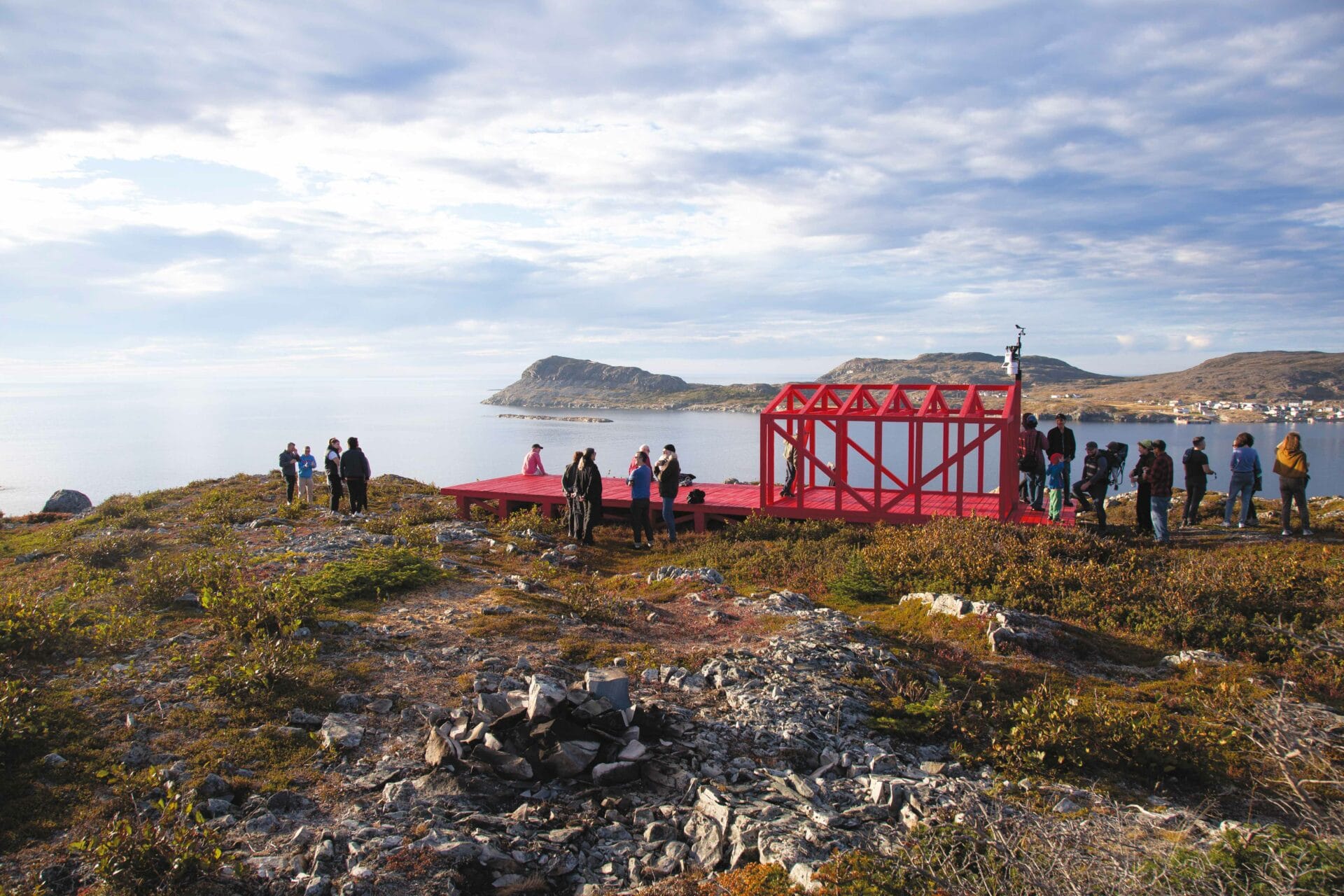
Liam GillickA Variability Quantifier (The Fogo Island Red Weather Station), vinstallation view, ile Fogo, 2022.
Photo: courtesy of the artist & National Gallery of Canada, Ottawa

The Artist-in-Residence, Just Another Tourist?

Nathalie Desmet
Ever since the Grand Tour of Europe came into vogue in the seventeenth and eighteenth centuries, artists have been encouraged to travel and encounter other cultures. The increasing availability of art residencies1 1 - In this article, I do not discuss production residencies, which offer artists technical equipment and support to make work, or mediation residencies, whose primary aim is aligned with a democratization of culture. in distant and unusual places reflects the ever-closer connections to the idea of tourism. Being a tourist implies “temporarily living in places other than in one’s everyday context”2 2 - Giorgia Ceriani, Mathis Stock, Philippe Duhamel, and Rémy Knafou, “Le tourisme et la rencontre de l’autre : Voyage au pays des idées reçues,” [em>L’autre 6, no. 1 (2005): 74 (our translation). and promises — as it does for the artist-in-residence — an experience of time and space outside of the contingencies and constraints of daily life, often entailing travel that has a significant impact on the environment.

Although a vast typology of art residencies exists, there seems to be a consistent mandate to place artists in a local and social context, particularly in the case of research, exploration, and creation residencies. These implicitly or explicitly invite artists to enter into dialogue with the environment and even solve problems, which leads to increasingly profound interactions with the surroundings. In 1996, art critic Hal Foster emphasized the ethical issues stemming from the position and exteriority of artists who appropriate ethnographic methods.3 3 - Hal Foster, “The Artist as Ethnographer,” in The Return of the Real: The Avant-Garde at the End of the Century (Cambridge: MIT Press, 1996), 171 - 204. Just as we might rebuke some tourists for exoticization, the development, through temporary residencies, of transient human relationships without follow-up or redistribution could correspond to a form of social extractivism.

This content is available with a Digital or Premium subscription only. Subscribe to read the full text and access all our Features, Off-Features, Portfolios, and Columns!

Subscribe (starting at $20)

Already have a Digital or Premium subscription?

Log in

Don’t want to subscribe? Additional content is available with an Esse account. It’s free and no purchase will ever be required. Create an account or log in:

My Account

This article also appears in the issue 111 - Tourism
Discover

Suggested Reading