When contemporary artworks are characterized as “spectacular,” it is usually meant in a critical, negatively connoted sense. In this context the term “spectacle” in general is mentioned in the same breath with the name of Guy Debord, whose understanding of this concept seems to have become a universal definition of “spectacularity” when used in relation to an aesthetic category in art history and critique. In his famous publication La societé du spectacle from 1967, Debord describes the spectacle as a deceptive and illusive mechanism devoid of any meaning, the only purpose being to benumb and stupefy the crowd, who will end up paralyzed and incapable of any active or critical mode of thinking or action. The spectacle is understood to preclude the direct and immediate experience of reality and instead gives way to the representation of a mere “pseudo-world” that can be experienced only in a mediated and distanced way and replaces all kinds of authentic social relationships.1 1 - Guy Debord, The Society of the Spectacle (New York: Zone Books, 1994), 12. In the tradition of Marxist theories the potential of the spectacle as an instrument that creates collectivity, commitment, and community is negated by Debord to function only by illusion and false consciousness. Thereby it represents the sheer opposite of communication and cultural exchange. Finally, the spectacle is condemned to lead to the separation and alienation of the members of public society, who end up being a passively consuming audience, irreversibly isolated from each other and without any capacity to respond and react to, or even change, its monolithic relationship towards reality.

Isola bella, video stills, 2007-2008.
Photos: © Danica Dakić / SODRAC (2014), courtesy of the artist
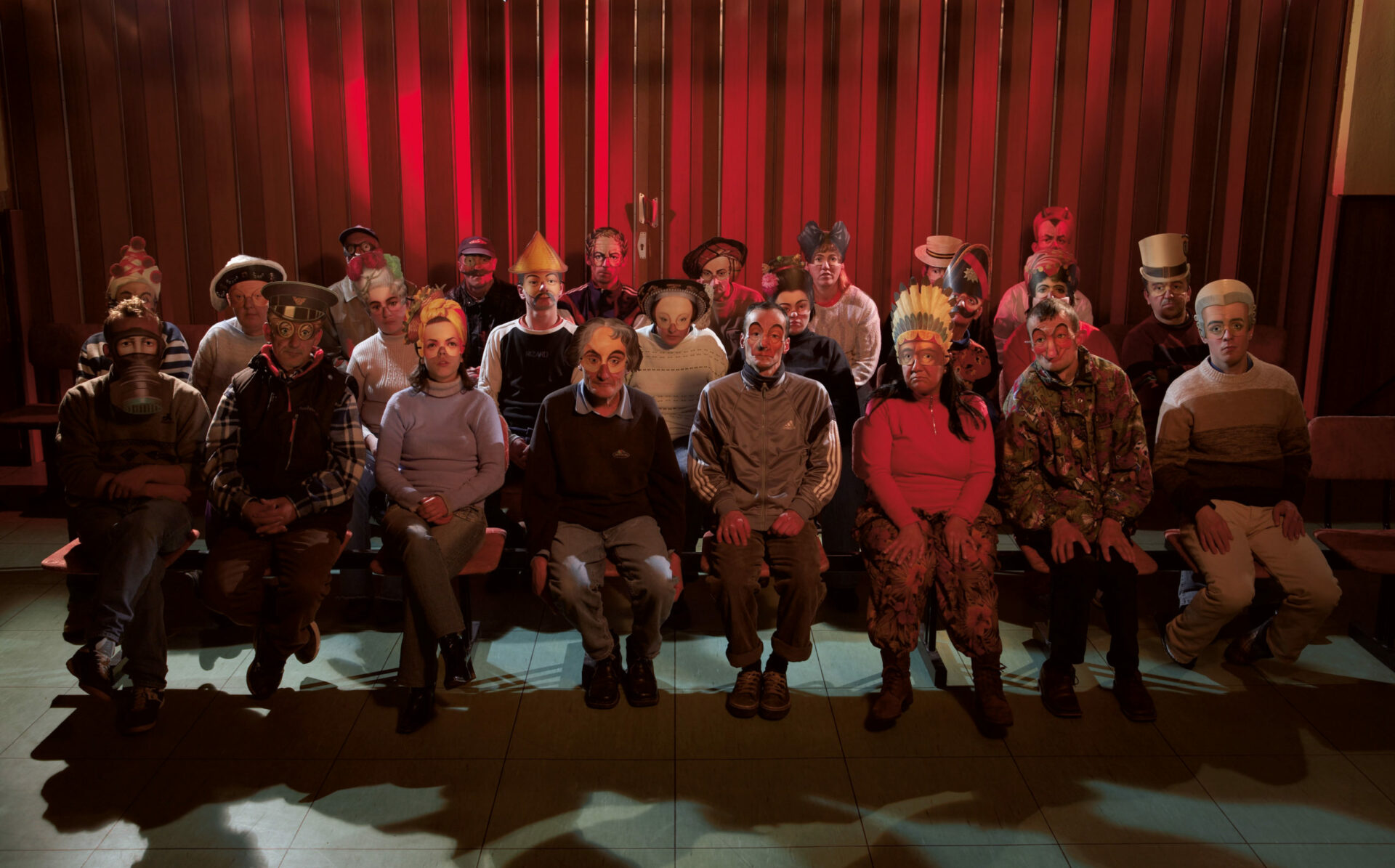
What is often ignored or inadequately differentiated in the synonymous usage of Debord’s concept of the spectacle is the fact that he developed it very specifically to describe the capitalistic society of his time and not to define the term in a common and universal sense. He thus uses it as a metaphor to determine a concrete relationship between visual culture, economy, and politics, whose beginnings he has located in the late 1920s.2 2 - In his Commentaires sur la société du spectacle (1988) Debord specifies that the society of the spectacle had reached the age of forty when his book appeared in 1967. See Jonathan Crary, “Spectacle, Attention, Counter-Memory,” in October 50 (Fall 1989): 97–107. In his descriptions of the spectacle as, for example, a “social relation among people, mediated by images” and “a tendency to make one see the world by means of various specialized mediations”3 3 - Guy Debord, The Society of the Spectacle (Detroit: Black & Red, 1977). one can, however, find more neutral and general definitions of the term, preceding its usage as a critical category to differentiate high and low forms of art and culture.
This content is available with a Digital or Premium subscription only. Subscribe to read the full text and access all our Features, Off-Features, Portfolios, and Columns!
Already have a Digital or Premium subscription?
Don’t want to subscribe? Additional content is available with an Esse account. It’s free and no purchase will ever be required. Create an account or log in: