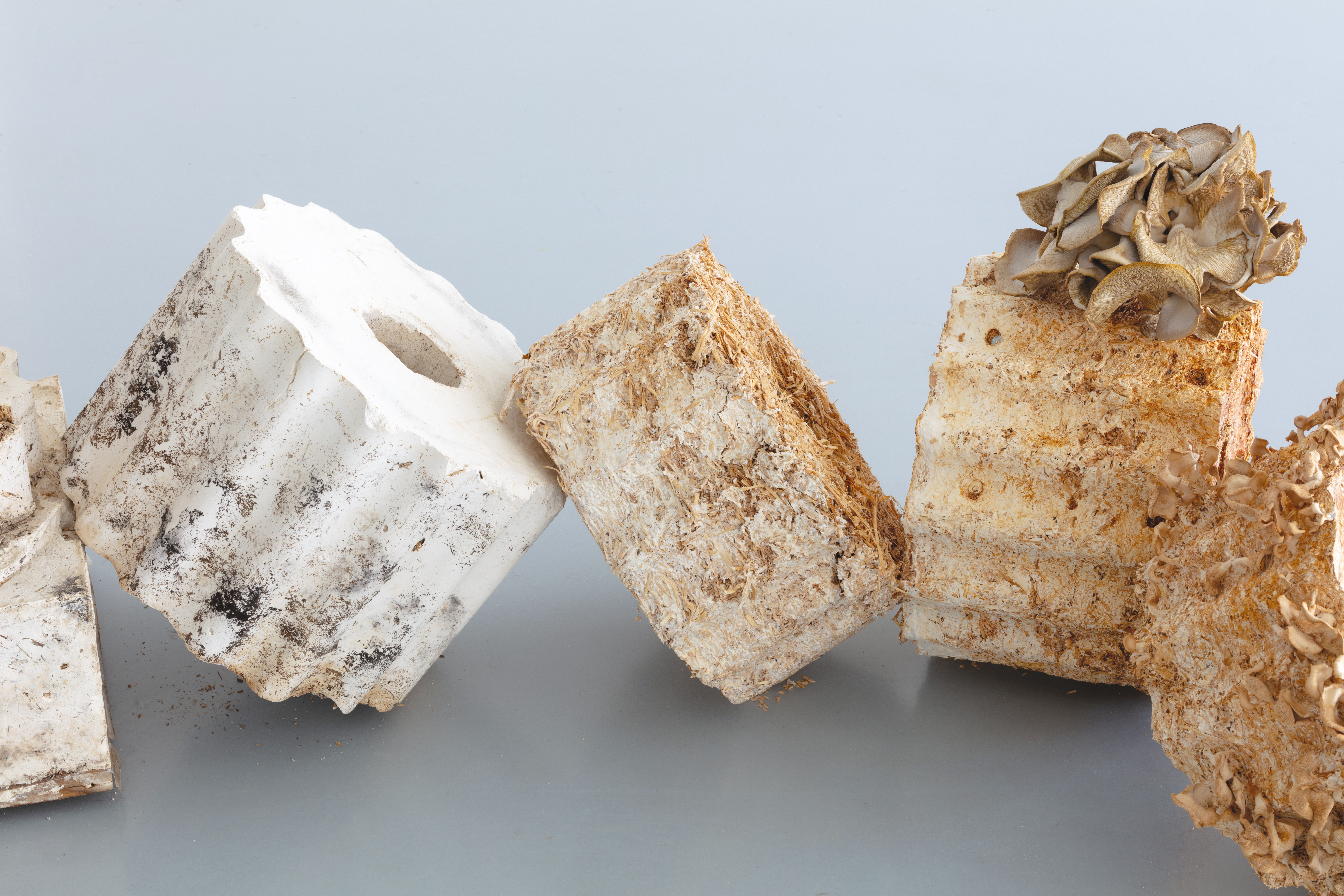
Sara Manente, Deborah Robbiano & Sébastien Tripod
RUINED, 2023-2024, vue d’installation, Pilar, Bruxelles, 2024. 
Photo : Silvia Cappellari, permission des artistes
Sara Manente, Deborah Robbiano & Sébastien TripodRUINED, 2023-2024, installation view,
Pilar, Brussels, 2024.
Photo: Silvia Cappellari, courtesy of the artists

Toward a Mycelial Imagination

Emmanuel Leriche
Closely associated with witches, mushrooms evoke a dark and mysterious world by growing in the secret shadows of forests. Sometimes edible, sometimes poisonous, they are fundamentally ambivalent and symbolize both putrefaction and regeneration. Mycelium, for its part, is a living organism composed of myriad branching threads and constitutes the vegetative part of a fungus that allows it to release its spores. It can sometimes be seen on the forest floor or in decaying wood. Generally, however, it is found underground in a vast network that can extend over kilometres in search of nutrients. Equally complex, mycelium decomposes dead animal, vegetal, and fungal materials in different ecosystems by secreting enzymes that create a natural fertilizer for the surrounding flora.

Mycelial networks do not manifest themselves in the spectacle of catastrophes, but instead bring about slow transformations out of sight. Therefore, they encourage us to redirect our attention to subtle activities that strategize underground, under our feet, in all the places where we are not looking.

This content is available with a Digital or Premium subscription only. Subscribe to read the full text and access all our Features, Off-Features, Portfolios, and Columns!

Subscribe (starting at $20)

Already have a Digital or Premium subscription?

Log in

Don’t want to subscribe? Additional content is available with an Esse account. It’s free and no purchase will ever be required. Create an account or log in:

My Account

Image de la couverture du numéro Esse 115 décomposition.
This article also appears in the issue 115 - Decay
Discover

Suggested Reading