Waste as a narrative device in contemporary artworks

Food and waste seem to stand on two opposite ends of the digestive network’s spectrum: on the one hand, there is that which is destined to be ingested; on the other, that which stands as the result of consumption. There is rarely crossover between the two, for their juxtaposition is sure to generate abjection. While I appreciate how abject matter translates into art, my interest lies elsewhere. I wonder about the temporal qualities of waste and food, their respective values, and their ability to open up unanticipated futures when displayed in artworks.
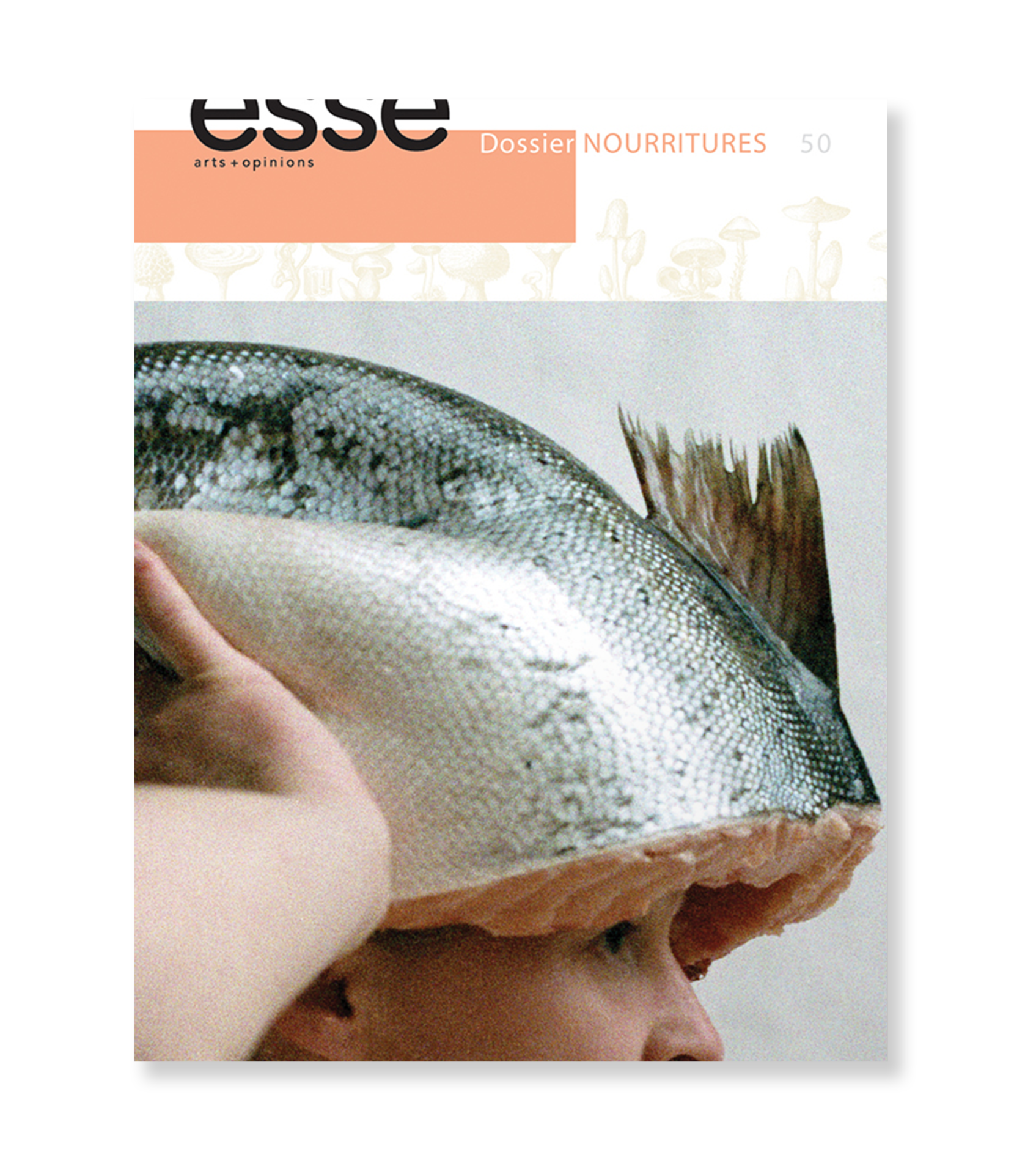
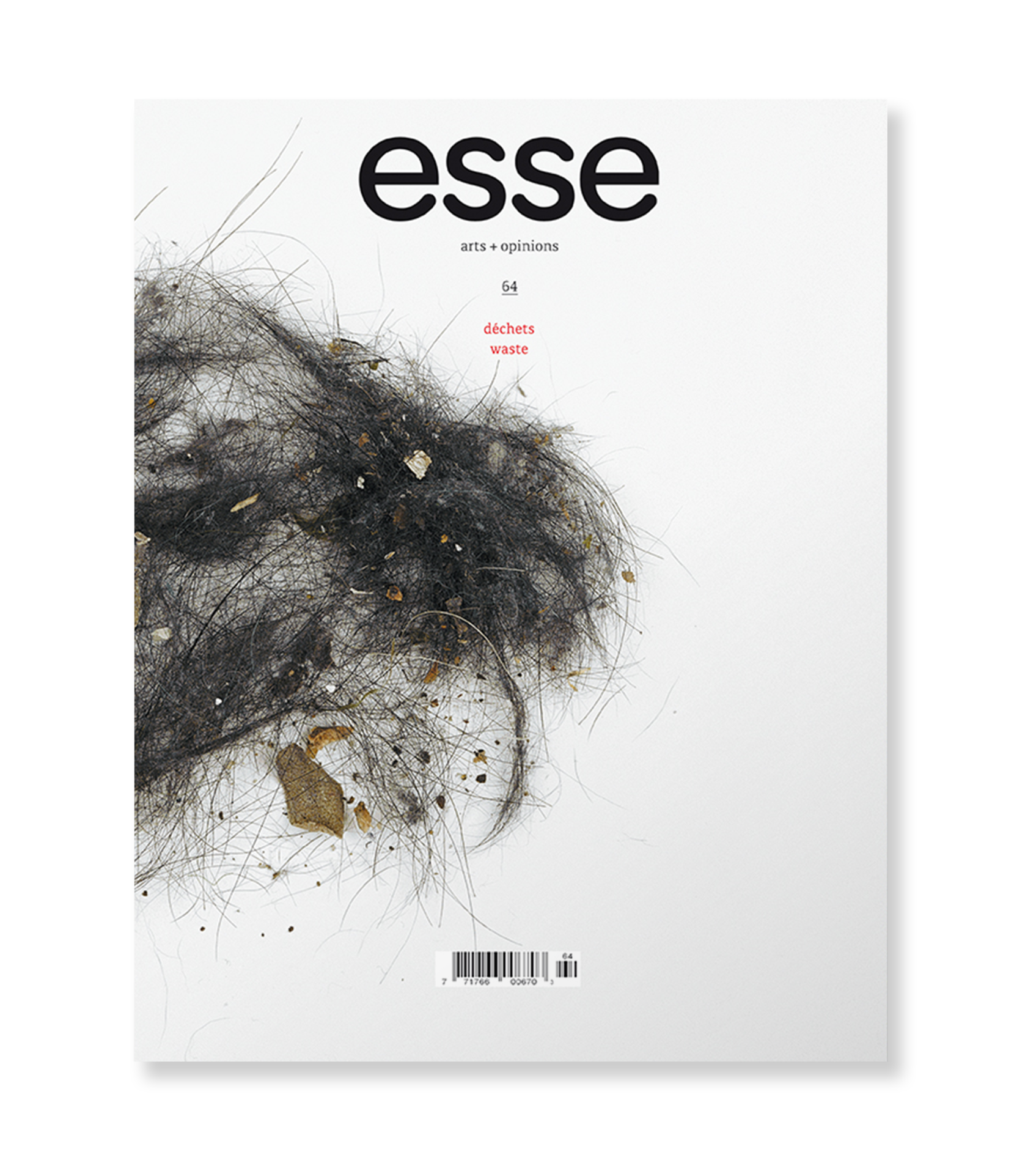
As I explore Esse’s archives, No. 50 Nourritures and No. 64 Waste stand out, for they are both fully dedicated to exploring the display of food, waste, and remains in contemporary art, beyond mere abject provocation. They raise issues that pertain to wasted food, excessive food production, consumption, waste accumulation, programmed obsolescence, and human responsibility in the face of environmental instabilities. In the editorial of No. 64 Waste, Esse’s editor, Sylvette Babin, eloquently comments on how “waste, in its multiple forms and locations, and the artworks derived from it show us a bit more who we are.”1 1 - Sylvette Babin, “Waste: Inspiration or Expiation?” Esse, No. 64 (2008). The mirror-like quality of waste (be it derived from food or objects) is very much at work today, fifteen years after the publication of Waste and almost twenty years after that of Nourritures. For this research residency, I look back on those issues and close in on some of the concepts put forward by their contributors. From these concepts, I seek to develop an understanding of waste and food as narrative and as temporal devices when they are showcased in contemporary artworks, and I wonder if this can be achieved without falling prey to logics of abjection or aestheticization.
Becoming waste
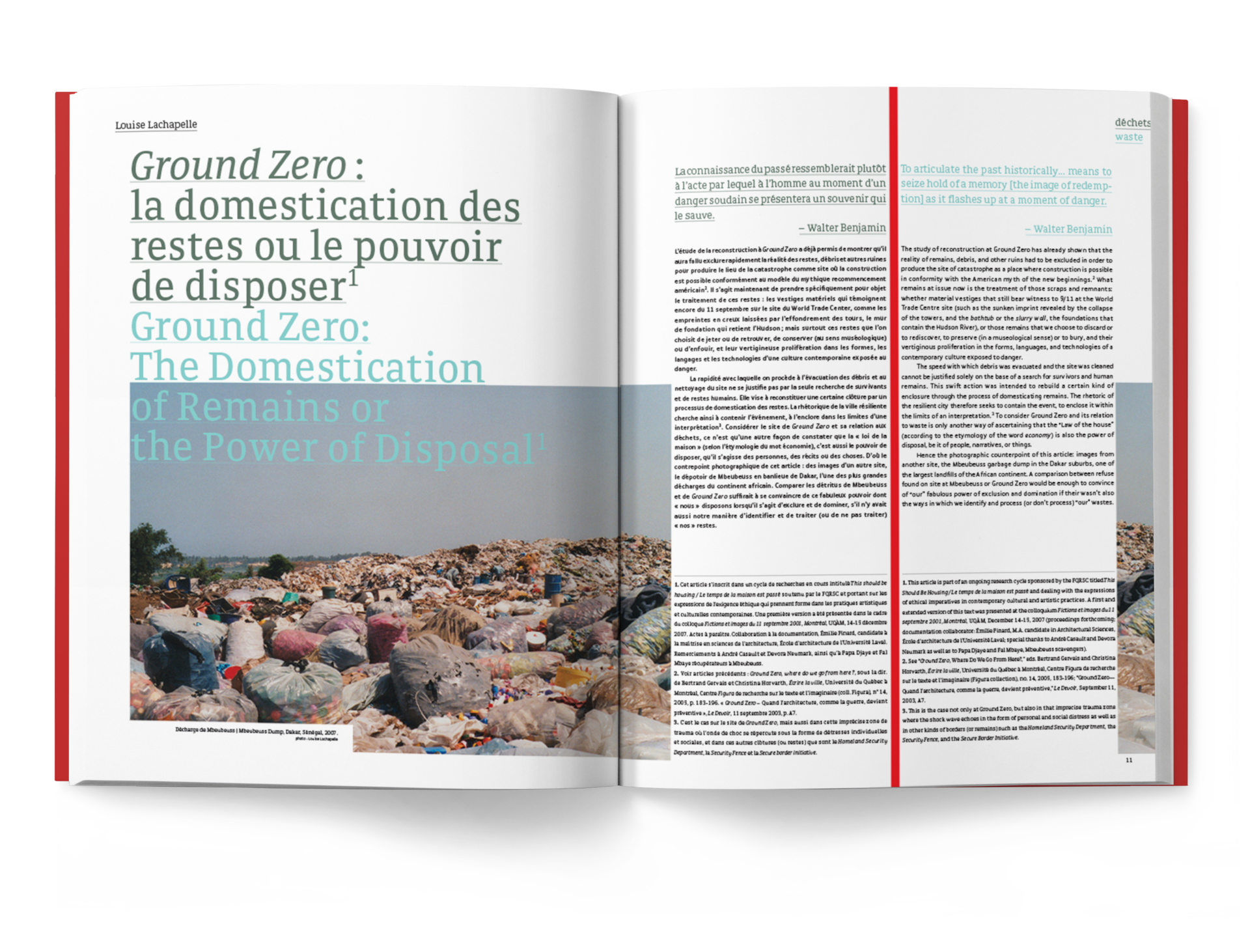
Waste is a term that is paradoxically characterized by its lack of specific determination. Author Brice Jubelin is interested in further defining waste. In his essay Waste and Ontology, he draws out waste’s semantic field in four concentric circles. At the centre are words such as ruin, debris, fragment. If we expand this narrow scope, we find, in the second circle, the words relic, remainder, residue. The third circle comprises words such as rag, moulting, shreds, and the last one is made out of filth, secretion, excrement, refuse.2 2 - Brice Jubelin, “Waste and Ontology,” Esse, No. 64 (2008). Growing from romantic ruins all the way to utter abjection with excrement and secretion, Jubelin’s semantic field can easily be appropriated as a navigational device for finding our way through the convoluted world of waste. From examining this freshly drawn “waste map,” it becomes apparent that it is permeated by a deep sense of uselessness. For Jubelin, waste is “that which has no use, or no longer has any. It is the imperfect, the failed, or the outdated.”3 3 - Ibid. A correspondence slowly emerges among the fragmentary nature of waste, its temporal existence, and the notion of value. All that is now waste was once part of a unified thing. By being dissociated from that thing, that whole, its value is radically put into question, if not outright denied.
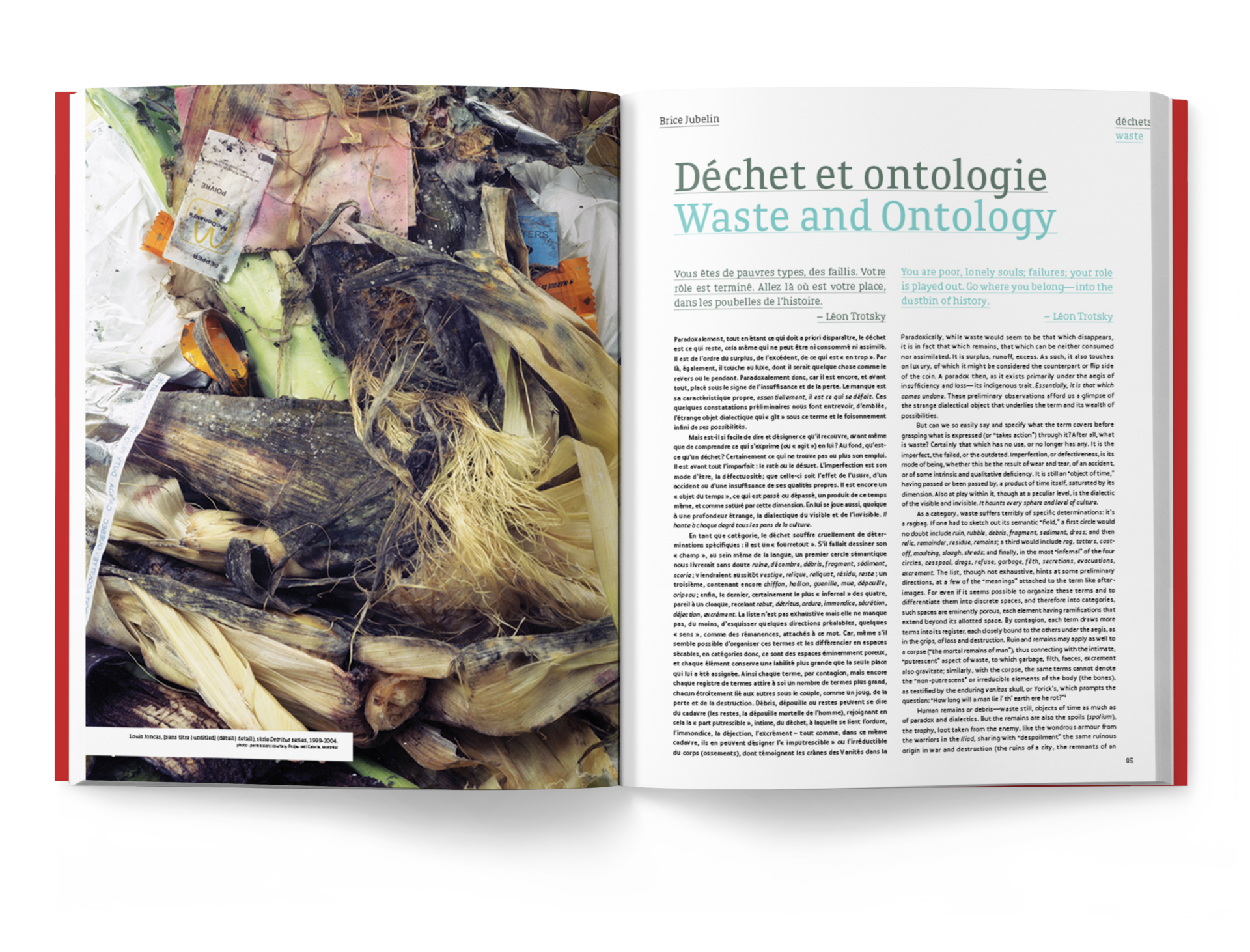
But what exactly is involved in the transition from thing to waste? In other words, when exactly does an object lose its value? What is the tipping point at which value slips away from an object? In Ground Zero: The Domestication of Remains or the Power of Disposal, author Louise Lachapelle reflects on those questions through an analysis of the aftermath of 9/11. In Lachapelle’s view, the swift disposal of the debris generated by the 9/11 tragedy speaks of a “process of domesticating remains.”4 4 - Louise Lachapelle, “Ground Zero: The Domestication of Remains or the Power of Disposal,” Esse, No. 64 (2008). Susan Strasser wrote, in her book Waste and Want: A Social History of Trash,5 5 - Susan Strasser, Waste and Want: A Social History of Trash (New York: Holt Paperbacks, 1999). that the domestication of remains is the process of putting the waste out of sight, treating it promptly, making it disappear as soon as it appears in a motion that might seem to deny the very existence of the event that created said remains. The curatorial act of sorting through waste is akin to that of a rescue mission in which the rescuers must undertake the difficult task of deciding which remains to discard in a landfill, and which to elevate to the status of artefact or even icon—that is, what should recover some of its now lost value and what should be condemned to utter valuelessness. Ultimately, what becomes waste—through domestication—is always the result of a curatorial choice in which the good is deciphered from the bad, the useful from the useless. In the case of 9/11, the criteria for sorting through debris were those of faith and progress, criteria closely aligned with the dominant discourse formulated and relentlessly pushed by the Bush administration. This narrative of resilience was iteratively reinscribed in subsequent museum exhibitions “through photography and institutional or informal archival process.”6 6 - Lachapelle, “Ground Zero.” In turn, this process has contributed, Lachapelle argues, to an aestheticization of remains, as the curatorial choices that were made actively participated in electively revaluing what was then considered to be otherwise devoid of any value.
Although Lachapelle doesn’t analyze artworks in her essay, the work of Peruvian artist Eduardo Hirose immediately comes to mind when leveraging logics of the domestication and revaluation of remains. In his photographic series Ananay (2018), Hirose documents the Peruvian Andean territory, an area characterized by informal and illegal gold mining activities and accumulation of toxic waste.7 7 - Arte Aldía, “Galería del Paseo opens ANANAY, Edi Hirose solo exhibition,” artealdia.com/News/Galeria-del-Paseo-opens-ANANAY-Edi-Hirose-solo-exhibition. In Pallaqueras, a photograph from the Ananay series, we see a small group of women working on a steep escarpment. Wearing red construction helmets and blue dusters, with yellow bags in hand, they meticulously comb through debris generated by mining extraction. Like curators, they glean through the refuse, sorting that which has value (gold) from that which has none, sorting the good from the bad. Basural, another photograph from the Ananay series, showcases a sea of plastic waste against a contrasting sharp-white mountainous background. It is clear that the plastic has been there for quite some time; it has seemingly infiltrated the soil, homogeneously adopting its greyish tones, attesting to the successful domestication of those plastic-made remains—their being put at a distance, their existence and materiality denied. The scholar of environmental history John Scanlan comments on how, “in the well-ordered reality that we like to think we live in, it is easy for the degraded and worthless to be blocked out.”8 8 - John Scanlan, On Garbage (London: Reaktion Books, 2005), 97. Basural functions as a perhaps unwanted reminder of the existence of what is so easily relegated to the margins.
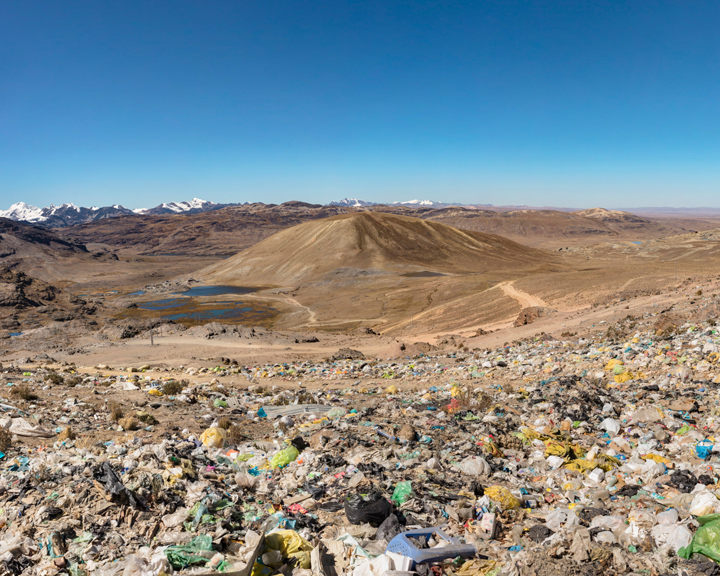
Basural, from the series Ananay, 2018.
Photo: courtesy of the artist
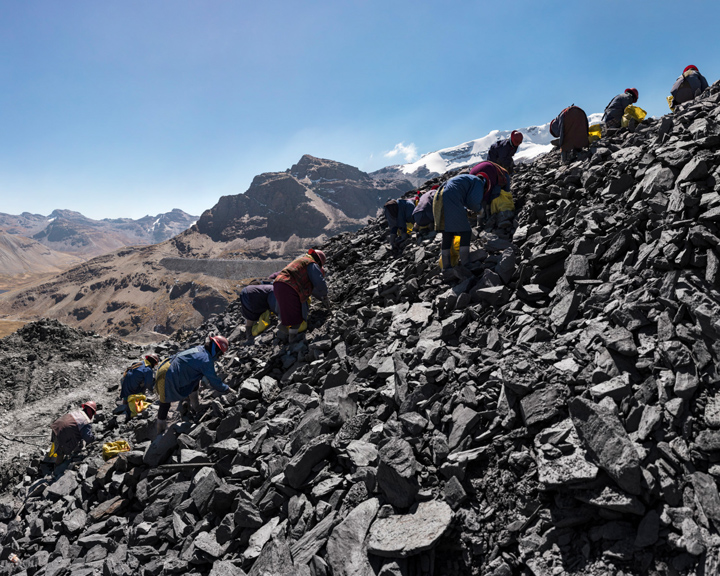
Pallaqueras, from the series Ananay, 2018.
Photo: courtesy of the artist
Aligned with those concerns is German artist Swaantje Güntzel’s artwork SPIELZEUG-VITRINE I (2021): a small sculpture made from a multitude of pocket-sized plastic toys showcased in a vitrine, imitating a cabinet of curiosities of sorts. From a brown hippopotamus to a blue teddy bear, a yellow squirrel, and an orange elephant, the collection of figurines comes across as playful and inviting. In an eerie twist, we learn that all of the toys were retrieved from the carcasses of Laysan albatrosses found on Midway Atoll in the Northwestern Hawaiian Islands.9 9 - Swaantje Güntzel, “SPIELZEUG-VITRINE I,” http://www.swaantje-guentzel.de/#/spielzeugv. What first appeared to be a light-hearted installation reminiscent of a child’s box of toys is now transformed into something more sinister, but also more visceral and embodied. The waste that we domesticate ends up travelling far and is often ingested by a vast array of animal species, the albatross being only one among them. Since they were first made, the toys have been used, discarded, domesticated, and ingested by animals; now, they have been retrieved and have come back to haunt us by becoming art. They also encapsulate the absurdities provoked by our unquenchable need to make remains disappear—absurdities that translate into tangible matter moving in strangely circular ways through the various coexisting digestive networks involved in the process. From human overconsumption of goods, to more-than-humans sourcing their “food” in overconsumption’s remains, to Earth bearing the brunt of fast accumulating heterogeneous material waste, multiple digestive networks are at work simultaneously. What SPIELZEUG-VITRINE I—but also Pallaqueras and Basural—demonstrate is that these networks might very well be saturated; the hauntological return of SPIELZEUG-VITRINE I’s toys, the naturalization of plastic waste as a new ecosystem in Basural, and the devastation provoked by mining extraction endeavours and the gleaning labour that it generates in Pallaqueras all signal digestive systems being confronted, but also saturated, with indigestible matter.
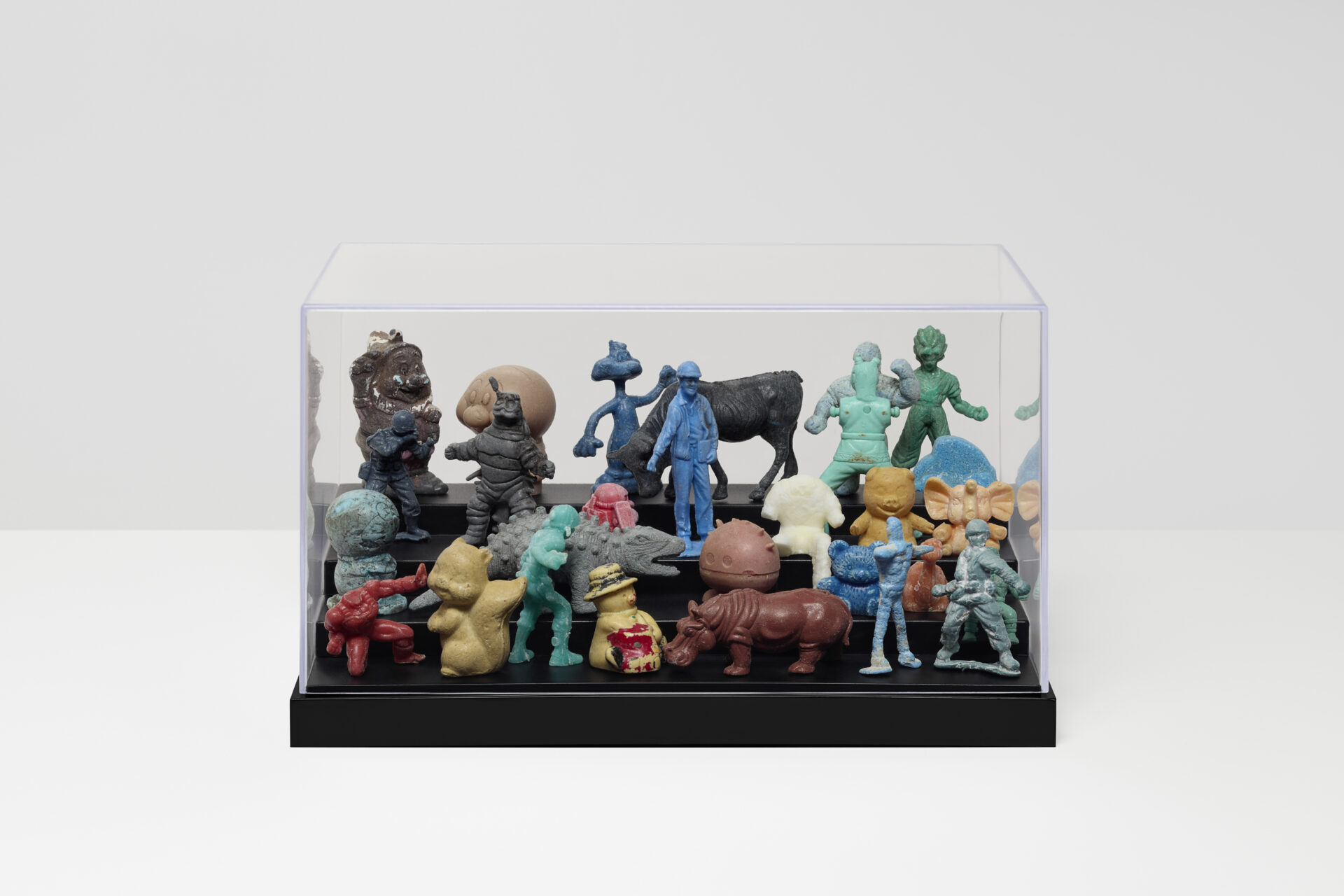
Spielzeug-Vitrine I, 2021.
Photo: Tobias Hübel, courtesy of the artist
Becoming food
In her article falling into matter,10 10 - karen elaine spencer, “falling into matter,” Esse, No. 50 (2004). artist and author karen elaine spencer engages some of these digestive networks and their increasing saturation through notions of desire, food, body, power, authority, and refusal. The relationship that we entertain with food is always an intimate one. In fact, what could be more intimate than welcoming foreign matter into one’s own body and inviting this matter to travel through our mysterious digestive system—essentially, welcoming the Other within us. Eating appears as an act of utter vulnerability, but then again this vulnerability—in the sense of surrendering oneself fully to the Other—is at the same time a prerequisite for staying alive. “You feed upon this other life,” spencer writes, “to sustain your own,” and it is in this regard that eating, while being an act of vulnerability, is also one of power and authority. spencer explores the phenomenon of the hunger strike as an ultimate form of political resistance. Like waste and remains, human bodies, too, can become valueless, especially when a separation is enacted between the human body and the realm of all living things, when the body is fragmented from the rest of the world. For spencer, “The solitary body, refusing to open its mouth, to take in nourishment, is removing itself from the material world, of which I, if living, am formed by and in. The act of separation always points toward the whole, that which it has rendered itself separate from. Hence, this single body, lying open to death, is making known the deep connectedness between my body and all living matter.” Like waste that is detached from fully formed objects, the body that refuses to eat detaches itself from the realm of living beings and transforms from body to cadaver. In a half-eschatological, half-threatening tone, spencer warns readers, “Your body too will fall to the ground, your life energy will be no more, and you will decompose and be considered waste.” One’s bodily energy will, in turn, become food for more-than-human others to feed on. In her acclaimed book Matters of Care (2017), author Maria Puig de la Bellacasa explores the notion of “foodweb models” as that which enables a mapping out of food chains among organisms, with a close focus on “the predation and eating patterns as well as the energy use and processing… [Scientists] describe not only how species feed on each other but how one species’ waste becomes another one’s food.”11 11 - Maria Puig de la Bellacasa, “Soil Times: The Pace of Ecological Care,” in Matters of Care: Speculative Ethics in More Than Human Worlds (Minneapolis: University of Minnesota Press, 2017), 191. When eating (or being eaten), we are always inscribing ourselves in the complex constellation of “trophic” relationships, and that is exactly what spencer demonstrates in her text.
falling into matter is also interesting because spencer weaves into her prose the recounting of a performative act that she carried out while traveling in Italy. The performance consists of her walking up to the fence in front of the Palazzo del Quirinale in Rome. Under the dubious gaze of the guard, she sits down, opens her backpack, takes out an onion, and starts peeling it slowly. Each layer falls onto the ground. spencer peels away until there is nothing left. Visibly annoyed, the guard calls over a colleague. They ask her what she is doing, and she calmly replies that she is peeling an onion. They tell her that she has to pick up the peels, which she does, and she then leaves. More than an act, however discreet, of resistance in the face of authority, spencer’s performance is also to be read in the socio-political context of her visit.
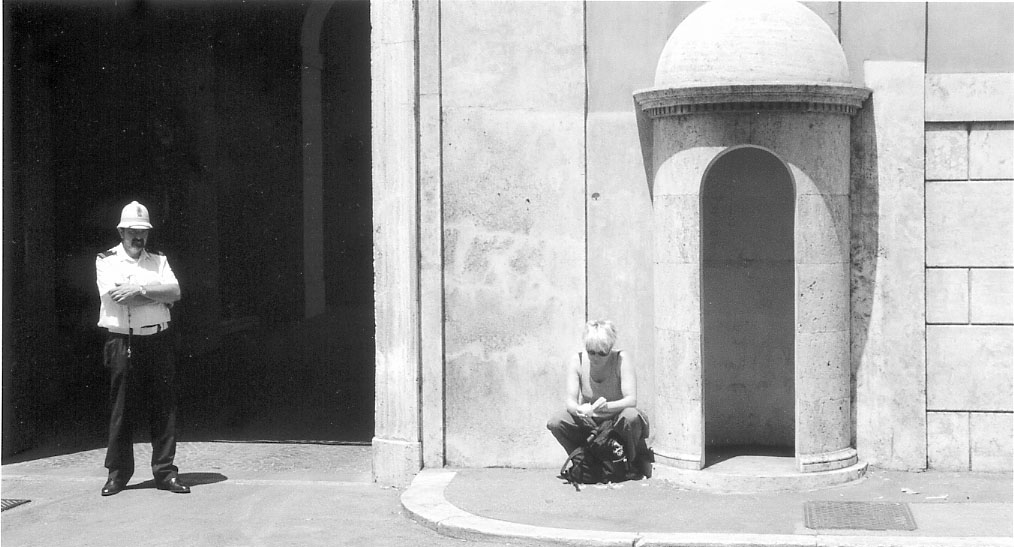
Palazzio del Quirinale, Rome, 2003.
Photo: Marie-Andrée Rho, courtesy of the artist
Becoming artwork
At the time of spencer’s visit to Italy, there is an ongoing societal debate surrounding the potential creation of a dump site designed to welcome nuclear waste produced by other countries. The stakes are high; nuclear waste is anxiety-inducing for the uncertainties that surround it. Is there such a thing as a safe nuclear dump site? How long does it take for nuclear waste to fully decompose and become harmless? How do we effectively communicate to future beings that this site is highly dangerous?12 12 - For more on this, see Michael Peterson, “Responsibility and the Non(bio)degradable,” in Eco-Deconstruction: Derrida and Environmental Philosophy, ed. Matthias Fritsch, Philippe Lynes, and David Wood (New York: Fordham University Press, 2018), 249–60. The rate at which nuclear waste decomposes is hard to grasp on a human-measured timescale. But it is also unclear that we can make sense of it even on a deep-time (or geological) scale. Whereas the logics of trophic relationships suggest that one species’ waste becomes another’s source of nourishment, it is quite doubtful that nuclear waste can ever be assimilated by other species so as to re-enter, in a non-harmful and non-threatening way, various digestive networks. Read against this contextual background, spencer’s onion-peeling performance articulates the multilevel tensions that exist between biodegradability and nonbiodegradability, between healthy trophic relationships and saturated digestive networks, and between small-scale individual acts of resistance in the face of authority and international negotiations surrounding nuclear waste treatment, often held behind closed doors.
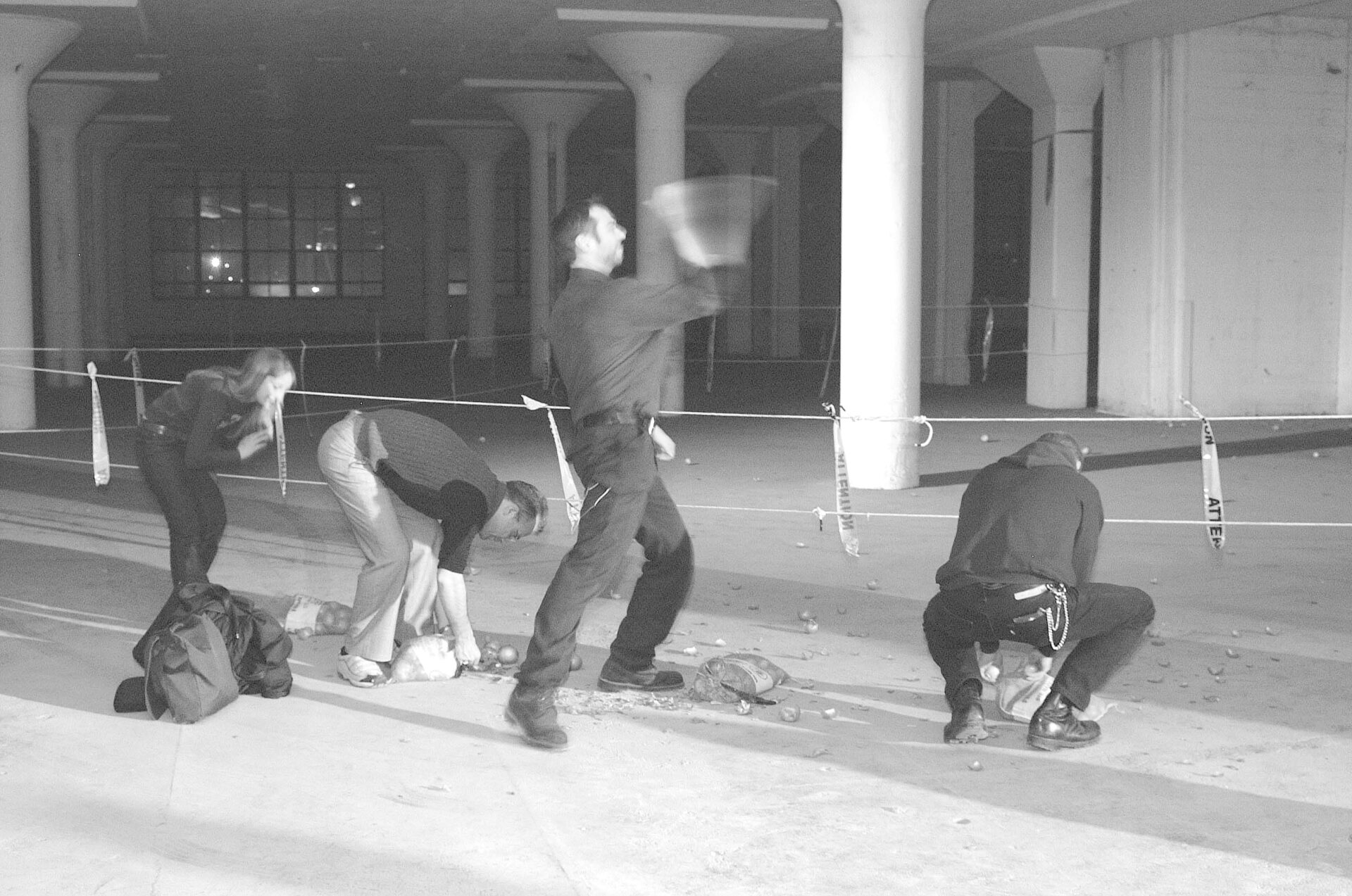
American can(‘t), Espaces émergents, Montréal, 2003.
Photo: Guy L’Heureux, courtesy of the artist
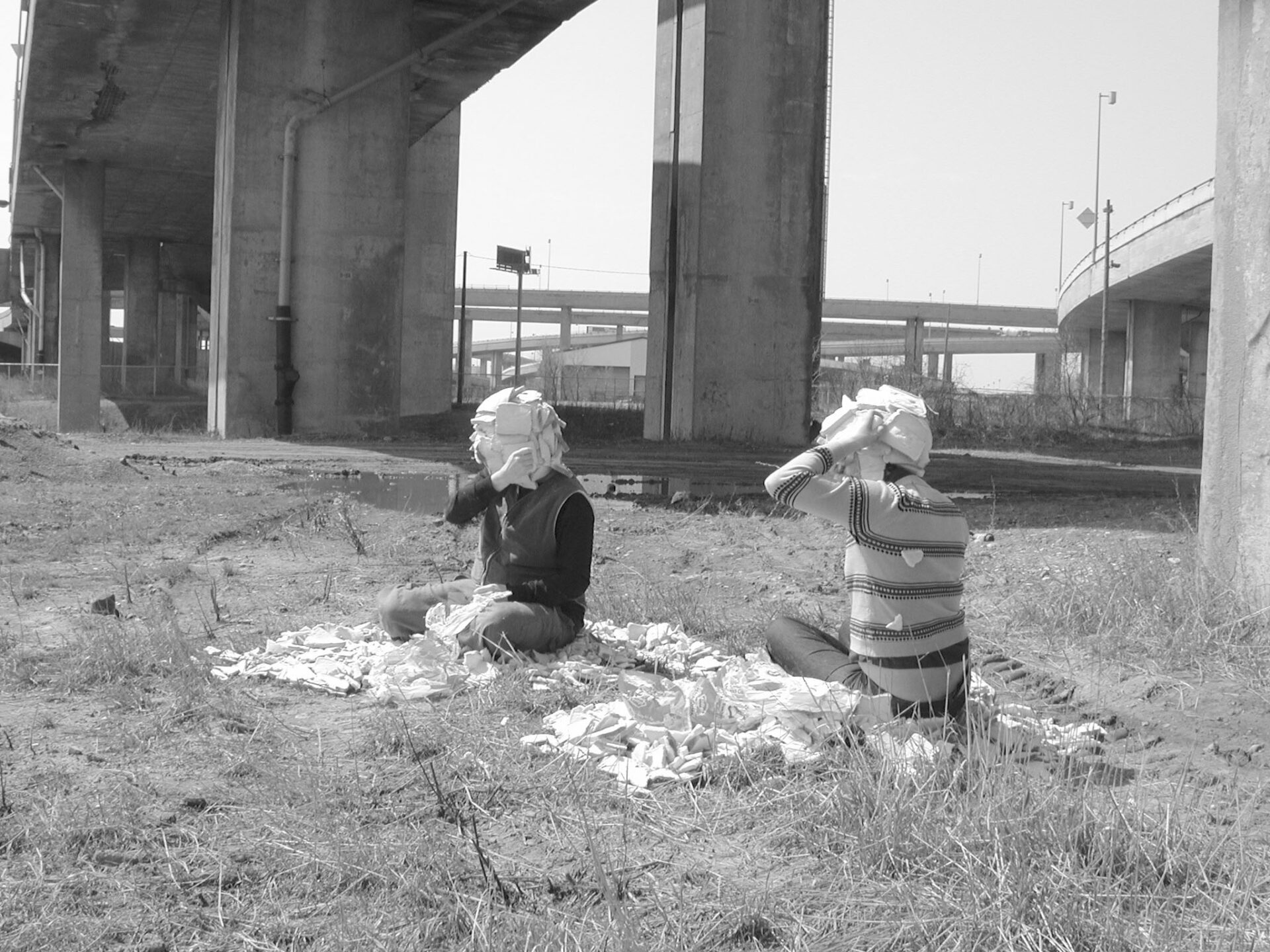
Bread Head, action with Jessica Maccormack under Turcot interchange, Montréal, 2003.
Photo: Guy L’Heureux, courtesy of the artist
Above all else, spencer’s performative act points to the convoluted temporalities of waste. Circling back to Jubelin’s essay, he defines waste as “an ‘object of time,’ having passed or been passed by, a product of time itself, saturated by its dimension.”13 13 - Jubelin, “Waste and Ontology.” Waste, then, as an object in which time’s passing is made visible. And it is exactly in that sense that waste reads as a strong narrative device when showcased in contemporary artworks; its condensed temporal nature drives the plot forward, especially at times of environmental instabilities when our relationship with time is already troubled, stretched as it is between geological and human-measured temporalities. As I conclude this deep dive into Esse’s archives, my initial question remains: how do contemporary artworks, centred around waste, lead us to unanticipated futures? When waste becomes artwork, it is revalued, and in the process, it confuses its own status as an “object of time.” Whereas mere waste signals the passage of time, waste turned artwork creates a space in which we can intentionally orient ourselves toward remains and the unanticipated futures they open to, however anxiety-inducing they may be. Political science and gender studies scholar Drucilla Cornell comments on how, in the wake of the 9/11 tragedy and of dealing with the debris it created, “This fear that ‘even worse is yet to come’ from an elusive ‘them’ is what Derrida foresaw as a true threat to the future.”14 14 - Drucilla Cornell, “Derrida: The Gift of the Future,” Differences: A Journal of Feminist Cultural Studies 16, No. 3 (2005): 70. Although Cornell refers to the looming threat of terrorism, it could be argued that the fear that “even worse is yet to come” is still very tangible today, under the guise of multiplying and fast-accelerating environmental tragedies. How, then, can we free ourselves of those fears? It seems as though hyper-domestication of remains might not be the way forward, for it prevents us from activating the mirror-like quality of remains that we so desperately need. That is not to say that we should surround ourselves with waste and remains. Rather, there is a need for spaces wherein we can coexist with and consider the far-reaching implications of waste. Contemporary artworks that bring marginalized waste back into focus help us understand, as Babin says, “a bit more who we are.”
Links to articles cited: Brice Jubelin Louise Lachapelle karen elaine spencer
Currently pursuing a PhD in humanities at Concordia University, Joëlle Dubé is researching the intersectional temporalities of intergenerational (in)justices and contemporary art. Positing relationality at the centre of her theoretical preoccupations, she investigates ways of rearticulating the relationship between the currently living and life-to-come.


