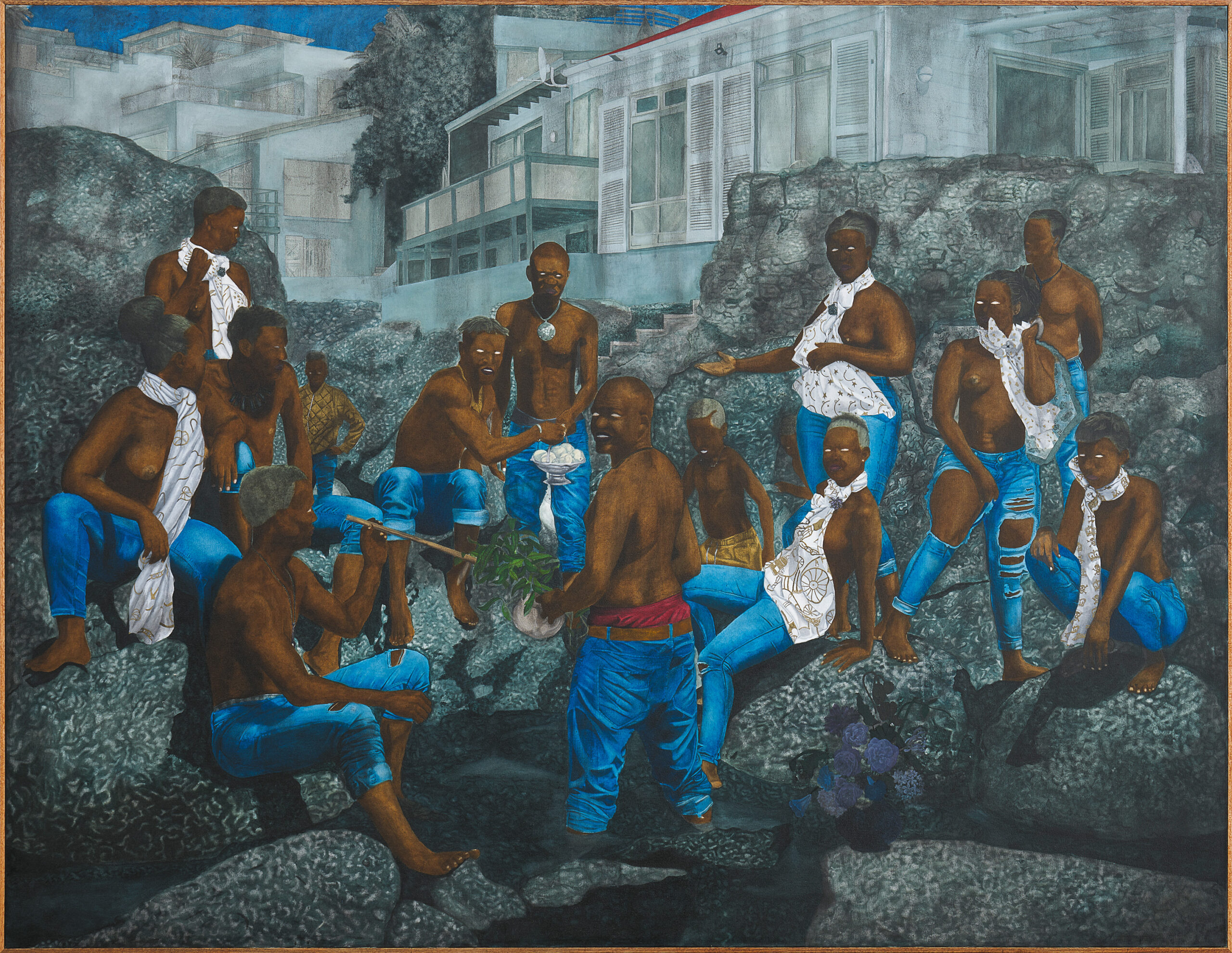
Cinga Samson’s muted pallet and flattened compositions are central to the African anti-sublime aesthetic that distinguishes his work from that of other contemporary painters. Forget the colonial stereotypes of deep blue skies, dusty deserts, and savannahs — through a subtle intertwining of popular culture and lush vegetation, Samson’s paintings radically defy Western expectations of what African life should be. Like thoroughly contemporary, pagan icons, his subjects proudly flaunt consumerist markers of Western capitalism: effigies of the now, ostentatious status symbols, and cheap consumer goods, visually anchor the paintings in the context of cosmopolitan streetwise culture.
This content is available with a Digital or Premium subscription only. Subscribe to read the full text and access all our Features, Off-Features, Portfolios, and Columns!
Already have a Digital or Premium subscription?
Don’t want to subscribe? Additional content is available with an Esse account. It’s free and no purchase will ever be required. Create an account or log in:
Just want this one? Get instant access for $3.00.


